
Related videos:
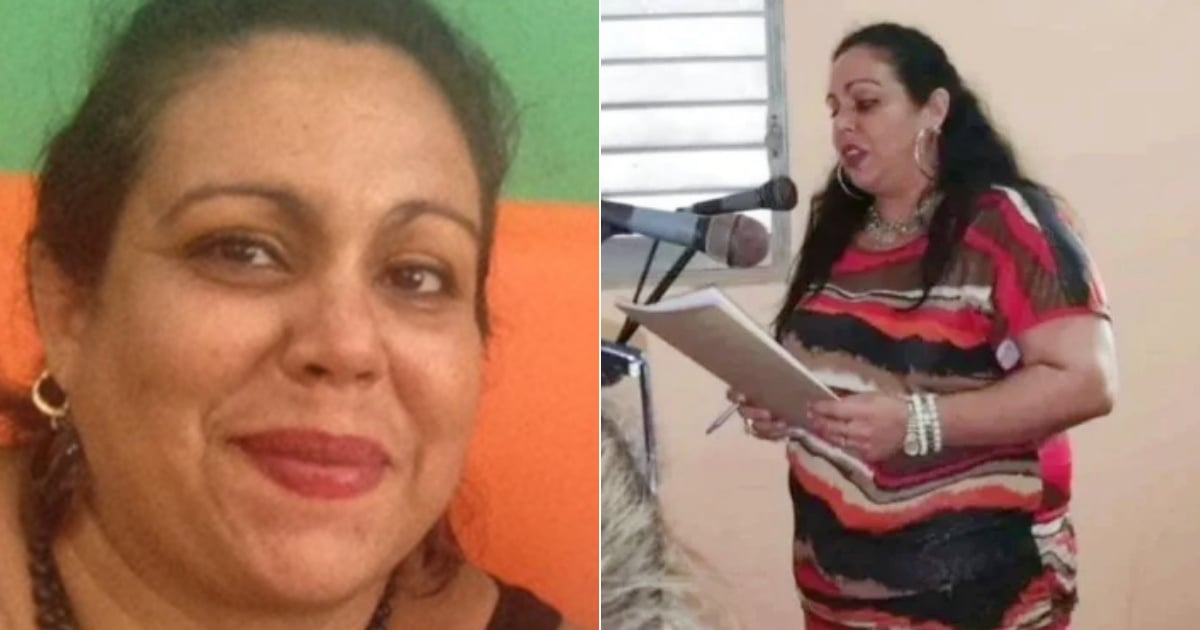
The former Cuban judge Melody González Pedraza, whose request for political asylum was denied by a judge in Florida at the end of May, has been transferred to a different prison and state.
Although she has only a few days left to appeal her deportation, she has not decided whether she will do so, as revealed by the detainee in recent statements to Diario de Cuba (DDC).
If González Pedraza appeals, the deportation order will be suspended until a higher court in the United States provides a favorable response to his asylum request or upholds the denial, and thus, his expulsion.
The mentioned independent media outlet claimed that if she is ultimately returned to Cuba, there are several possible outcomes for the former magistrate.
Melody arrived in the United States on May 30, 2024, as a beneficiary of the humanitarian parole program through Tampa, where she was denied entry, leading her to seek political asylum.
Melody González arrived in the United States days after having issued prison sentences against four young individuals without sufficient evidence, as she herself admitted in statements to DDC.
What would happen if he/she returns to Cuba?
DDC warns that, if returned to the Island, Melody González's situation could lead to multiple scenarios.
The medium pointed out that the first thing that may happen is that the regime refuses to receive her, and alternatively, she could be sent to a third country or remain in the United States in a kind of legal limbo.
If the Cuban regime accepts her return, DDC foresees adverse consequences for the former judge.
They believe she could be arrested and prosecuted for crimes such as "enemy propaganda," "disobedience," "incitement to hatred," "spreading false news," and other acts "against state security," in reference to her statements to the independent media about the manipulated trial in which she handed down sentences without evidence against four young Cubans.
Furthermore, the outlet suggests that, due to her previous position as a judicial official, she could be accused of violating ethical standards, disclosing official secrets, or contributing to acts deemed harmful to state security.
Social isolation and possible reprisals
Even if she is not arrested, they believe that González could face police surveillance, home harassment, preventive summons, interrogations, and media defamation campaigns. According to DDC, this pressure could also extend to her immediate family.
“A certainty that the jurist can have is that she will not be able to work again in the Cuban judicial system and may even find it difficult to secure any other type of employment,” concludes Diario de Cuba.
Alternatives outside the Island
Another possible route would be their subsequent departure from Cuba to countries like Spain, Germany, Mexico, Colombia, Brazil, or Canada, claiming political persecution.
If she resumes her complaints, she could become a witness before international bodies such as the Inter-American Commission on Human Rights (CIDH), the United Nations, or symbolic tribunals regarding Cuba. This role would increase her international visibility, but it would also heighten the risks for her and her family environment on the island.
Lawyer Santiago Alpízar: "She is not a victim."
Many do not share the perception that Melody González is or could become a victim of the Cuban system from now on.
The lawyer Santiago Alpízar, representative of the organization Cuba Demanda, expressed a critical stance in an interview with journalist Mario J. Pentón.
Alpízar lamented that Diario de Cuba "has followed the case treating her more as a victim, when she is actually a perpetrator."
The attorney clarified that the organization he represents actively participated in the judicial process in the United States and submitted a report arguing that González should not be granted asylum.
"We believed that Melody was not a victim of the communist system, but an active agent of the PCC and a repressor who, from her position as a judge, had committed the crime of malfeasance in favor of State Security and the government," he stated.
“She is not a victim. Nothing is going to happen to her when she returns to Cuba; they will probably give her a medal,” Alpízar concluded with irony.
It was also noted that the former judge made use of all the procedural guarantees available in the U.S. legal system, opportunities that she recalls have not been available to many Cubans who are being deported from the U.S.
According to information provided by Mario J. Pentón, Melody González's husband has already been deported to Cuba.
The Cuban regime, for its part, has remained completely silent on the case from the beginning and has not issued any official statements regarding the allegations made by the lawyer, nor about her legal situation in the United States.
If he decides to appeal, González Pedraza could prolong his legal stay in the U.S. by six months to a year while his situation is resolved.
Otherwise, her fate will depend on whether Cuba agrees to receive her again and the conditions she faces upon her return.
Frequently Asked Questions about the Melody González Case
Why was political asylum denied to Melody González in the United States?
Political asylum was denied to Melody González due to her history as a judge in Cuba, where she was accused of participating in arbitrary and repressive trials against opponents of the regime. This past directly linked her to the Cuban repressive apparatus, leading the immigration judge to determine that she does not qualify as a victim of political persecution.
What options does Melody González have to avoid deportation to Cuba?
Melody González has the option to appeal the decision to the Board of Immigration Appeals (BIA). If she decides to appeal, it could extend her legal stay in the U.S. by six months to a year while her case is being resolved. If she does not appeal or if the appeal is denied, she will face deportation.
What consequences would Melody González face if she returns to Cuba?
If she returns to Cuba, Melody González could be arrested and prosecuted for offenses such as "enemy propaganda" and "contempt," among others. She may also face social isolation, police surveillance, and difficulties finding employment due to her criminal record and her statements against the regime.
What is the stance of the Cuban-American community regarding the case of Melody González?
The Cuban-American community, for the most part, supports the deportation of Melody González, viewing her as an oppressor of the Cuban regime who does not deserve asylum in the United States. Politicians like María Elvira Salazar and Carlos A. Giménez have publicly expressed their support for the decision to deport her.
Filed under: