
Related videos:
Fears of a large-scale regional war in the Middle East have drastically escalated, according to U.S. officials.
Iran has prepared missiles and military equipment to carry out retaliatory attacks against U.S. bases, in case Washington decides to intervene directly in the conflict between Israel and Tehran, according to officials in statements reported by the U.S. press.
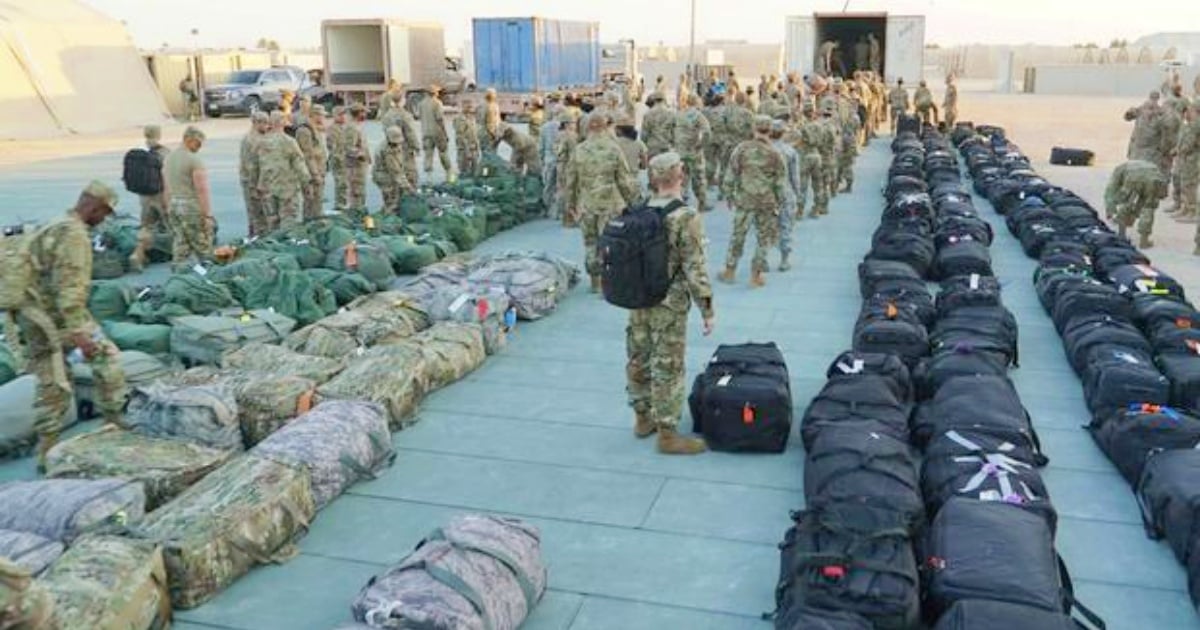
Although the U.S. military intervention has not materialized, the armed forces of the United States in the region have been placed on maximum alert, including their troops in the United Arab Emirates, Saudi Arabia, and Jordan.
This mobilization occurs while more than 40,000 American soldiers are already deployed in the theater of operations.
The Turning Point: The Fordo Nuclear Facility
One of the scenarios that concerns the Pentagon the most is an attack on Iran's Fordo nuclear enrichment facility, which is deeply buried within a mountain.
Israel has urged the United States to take part in that operation, something that, if realized, would trigger—according to multiple officials—a swift response from Iran and its allies throughout the region.
This would include: missiles launched at U.S. bases in Iraq, Qatar, Bahrain, or the Emirates; attacks by pro-Iranian militias in Syria and Iraq; a resumption of Houthi attacks on commercial and military vessels in the Red Sea; and mining the Strait of Hormuz to obstruct maritime traffic and isolate U.S. forces in the Persian Gulf.
Iranian officials confirmed to The New York Times that “Iran would attack any American base in Arab countries if it becomes militarily involved.”
The role of the United States and the deterrence strategy
The Trump administration has deployed around three dozen tanker aircraft in Europe, which could be used to extend the reach of bombers or refuel fighters defending bases in the Middle East.
In the words of President Trump, “we have total and complete control of the skies over Iran”, which reflects his belligerent stance towards the Iranian regime.
According to military sources, the most likely option for an attack on Fordo would involve stealth bombers B-2 armed with the bunker-buster bomb GBU-57, known as the "bunker destroyer."
This 30,000-pound weapon can penetrate underground structures such as those that safeguard the Iranian nuclear program.
Nevertheless, the B-2s would have to depart from Missouri, on a 30-hour flight, with multiple in-air refuelings, as there are currently no units deployed in the Middle East.
Israel does not possess either this weaponry or the necessary aircraft, which makes U.S. support essential if there is a desire to significantly damage Iran's nuclear infrastructure.
A real threat: capabilities and precedents
The Iranian Foreign Minister, Abbas Araghchi, stated: “our enemies must know that they cannot impose their will through military attacks.”
And he warned that if the conflict escalates, the blame will lie with Israel and its main allies.
Iran has already demonstrated its ability to inflict damage: in January 2024, a militia backed by Tehran carried out a drone attack against a U.S. base in Jordan, killing three soldiers.
Furthermore, the Houthis have regularly attacked commercial vessels, despite U.S. reprisals.
U.S. officials also warned that Iran would not need much time to launch a significant attack due to its strategically located missile bases near the Gulf.
The nuclear dilemma and internal pressure in Washington
U.S. intelligence agencies have been indicating for some time that Iran is technically close to building a nuclear weapon, but so far it has not made that decision formally.
Some analysts within the government believe that the recent Israeli attacks may have convinced Tehran to move toward actual nuclear deterrent capability.
This would increase pressure on the Trump administration to intervene before Iran achieves that goal. The president has reiterated that "he will not allow Iran to obtain a nuclear weapon," and has demanded their unconditional surrender.
Deterrence or escalation?
In the face of military escalation, some academic voices and analysts in Washington are advocating for restraint.
"It is never too late to not start a war," stated Rosemary Kelanic, director of the Middle East program at the group Defense Priorities. For her, direct intervention would only multiply Iran's incentives to acquire an atomic bomb, seeing its national security compromised.
“Once you get involved, it's very difficult to step back. You're just going to go all in,” Kelanic warned.
The military response underway: U.S. presence in the region
The United States has strengthened its presence with:
-Fighter jets and tankers in Europe (England, Spain, Germany, Greece).
-Constant aerial patrols over bases in the Middle East.
Warships such as the USS The Sullivans, the USS Arleigh Burke, and the USS Thomas Hudner have intercepted Iranian missiles targeted at Israel.
The aircraft carrier USS Carl Vinson and its strike group in the Arabian Sea, ready to protect U.S. troops.
The USS Nimitz, en route to the region from the Indo-Pacific, to relieve the Vinson.
In addition, troops at key bases have been authorized to allow families to voluntarily leave the facilities as a preventive measure in anticipation of a possible outbreak of hostilities.
The situation in the Middle East hangs by a thread. The U.S. military's deployment and Iran's preparation for massive retaliation outline a scenario of direct confrontation, the outcome of which will depend on political decisions in Washington and Tehran.
Frequently Asked Questions about the Military Tension between the U.S. and Iran in the Middle East
What is driving the escalation of tensions between Iran, Israel, and the United States?
Tensions have escalated due to the recent cross-attacks between Israel and Iran, driven by the Iranian nuclear program and pressure from the United States. Israel has conducted bombings on Iranian nuclear facilities, while the United States has bolstered its military presence in the region, increasing the risk of a larger conflict.
What is the stance of the United States regarding the possibility of a military conflict with Iran?
The president, Donald Trump, has declared that the military option is on the table, but he has not yet made a final decision about directly intervening in the conflict between Israel and Iran. Trump has insisted that Iran must not obtain a nuclear weapon and has demanded its unconditional surrender.
What does the control of Iranian airspace by the United States imply?
Trump stated that the United States has total control over the skies of Iran, which suggests a superior capability for surveillance and aerial response. This statement aligns with the president's belligerent stance and reinforces the pressure on Iran amid the crisis.
How has Iran responded to the threats from the United States?
The Supreme Leader of Iran, Ayatollah Ali Khamenei, has stated that Iran will not surrender and that any U.S. military intervention will have serious and irreparable consequences. Iran has vowed to retaliate in response to Israeli attacks and has intensified its strikes against Israel.
What measures has the United States taken to protect its troops in the region?
The United States has strengthened its military presence in the Middle East with fighter jets and tankers, as well as warships ready to protect its troops. Furthermore, it has authorized the voluntary departure of troops' families from key bases as a precautionary measure.
Filed under: