
Related videos:
Twenty-five years after he became a political icon, Elián González, now 31 years old, returned to the public eye, this time to pay tribute to the man who —in his own words— saved him, raised him, cared for him, and, it seems, also sent him cartoons on cassette: Fidel Castro.
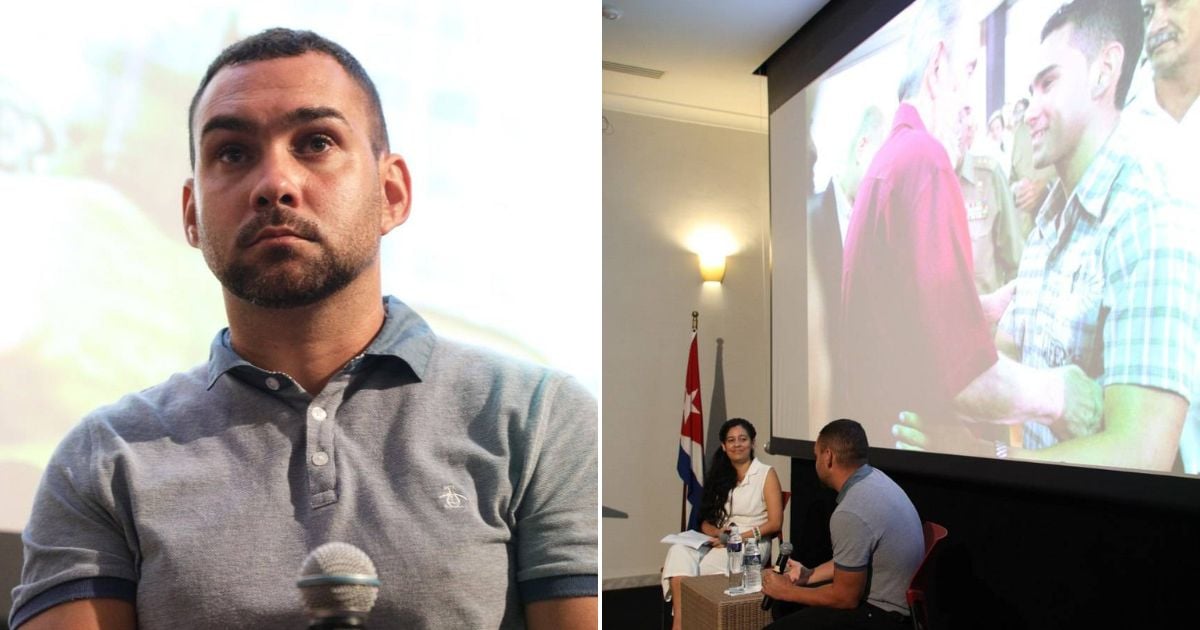
The scene took place at the Centro Fidel Castro Ruz, in the space "With Its Own Light," where Elián appeared holding hands with his young daughter, closing the loop of a perfectly woven and almost surreal story.
This case highlights that when it comes to Fidelista propaganda, the regime does not hold back on initiatives to pay tribute to someone who supposedly refused to have them.
The boy who in 1999 starred in an international drama, which ended with federal agents pulling him out of a house in Miami at gunpoint, now reappears as a grateful adult, transformed into a deputy and a defender of the revolutionary narrative, recalling—without hesitation—the figure of the Commander as that of a tender grandfather, an omnipresent protector, and even a confidant.
In other words, for Elián, Fidel was God on earth. Plain and simple.
Who was once a symbolic child evoked Fidel's gestures with the tenderness of someone recalling a close relative: the affectionate whisper, the chocolates with books, the visits to the house, the games interrupted by the leader arriving to ask about the school snack... a whole sweetened narrative typical of a machinery that knows that there are fewer and fewer symbols in the nauseating "Cuban Revolution."
During his speech, Elián expressed gratitude not only for his return to his family, but also for the way his reintegration into Cuba was handled: without press coverage, without interviews, with the classroom intact, the same teacher, and the same classmates.
A staging of normalcy, directed—according to him—by the genius of Fidel. That this sheltered childhood was also a strategy of political control does not appear in the script, but let’s say that the memories of his childhood (privileged under Fidel's protection) have made him forget that he became a standard-bearer for Fidel's cavalry.
The testimony is filled with meticulously woven anecdotes: Fidel waiting "delicately" to meet him, obeying his little brother when he commanded "Stand firm!", sitting down to lunch with him while they talked about the proteins in the bean stew, organizing painting classes and ball games according to the child's preferences.
Everything with the naturalness of a grandfather in full-time mode... who, coincidentally, was also the dictatorial leader of a country.
The devotion – not to say worship – does not stop there. González has started to talk to his four-year-old daughter about Fidel as if he were a real grandfather, which is nothing more than a homegrown replica of the regime's indoctrination machinery.
“When he sees it in a photo, he already recognizes it,” she says with tenderness. She still doesn’t dare to tell him the whole story —perhaps due to its complexity or perhaps for convenience— but the moment will come. For now, it is enough to plant the seed of unconditional affection, so that the idolization at the altar does not die.
In a country in crisis, where the official memory is upheld more by acts of worship than by historical debate, Elián represents the perfect continuity: the rescued boy, transformed into an exemplary adult within the ideological mold, who pays tribute to the eternal leader without a crack, without a question, without a doubt.
Because if there is one thing his intervention made clear, it is that the commitment never ends: “Until the last moment,” he said, “I will do everything to fulfill my duties to Fidel and to Cuba.”
And with that, another chapter of the revolutionary narrative was sealed: that of the child who one day became a symbol… and chose to continue being one.
Frequently Asked Questions about Elián González and his tribute to Fidel Castro
Why does Elián González pay tribute to Fidel Castro?
Elián González considers Fidel Castro as a savior and paternal figure who protected and nurtured him during his childhood. In his statement, Elián expressed his gratitude towards Castro for his return to Cuba and the life he led under his protection. This viewpoint reflects a narrative aligned with the propaganda of the Cuban regime.
What does Elián González symbolize for the Cuban regime?
Elián González has become a symbol of the Cuban revolutionary narrative. He represents an example of the ideological continuity that the regime seeks to perpetuate. His gratitude and devotion to Fidel Castro are used as tools to reinforce the cult of the deceased leader's figure and to legitimize the current government's power.
How is Elián González's tribute related to the current situation in Cuba?
The tribute to Elián González is part of a broader strategy by the regime to keep the image of Fidel Castro alive amid a severe economic crisis in Cuba. While the country faces power outages, shortages, and social discontent, the government continues to invest in propaganda to uphold its ideological model, using personalities like Elián González to strengthen its narrative.
What is the impact of Fidel Castro's figure on current politics in Cuba?
Fidel Castro remains a central pillar in the propaganda of the Cuban regime, used to legitimize its continuity and divert attention from the current issues facing the country. Through tributes and the glorification of his figure, the government strives to maintain its power and control the historical narrative, despite the growing economic and social difficulties faced by the Cuban population.
Filed under: