
Related videos:
A Cuban migrant highlighted the difficult context for finding work in the Mexican border city of Tapachula, where she arrived seven months ago intending to continue her migration route to the United States.
A report published by the local media Diario del Sur revealed that although the Cuban Bárbara Güero arrived in the city seven months ago, she has been unable to regularize her immigration status or find formal employment.
Due to an error with her email, she was unable to complete her process on time and had to restart it.
"I have been treated wonderfully in Mexico, but the difficult part is finding a job. I believe it has to do with my age, as I have applied for any job and have not had any luck," said Güero to the Mexican press.
Without a formal job, the woman has turned to cleaning houses to earn money and buy a little food: "They scold me, but I prefer that to losing my freedom if I return to Cuba."
His struggle coincides with that of other migrants who have been left in limbo after Donald Trump eliminated the CBP One programs and the humanitarian parole.
Many Latin Americans who aspired to
The note also highlighted the case of Herlinda Montoya, a Honduran woman who has been in Tapachula for six months without papers.
"The most challenging aspect has been managing to work and obtain the necessary documents. We hope that someone can help us improve our family's situation," he said.
Unable to find formal employment, her husband began working in construction, and thanks to that, they have been able to get by.
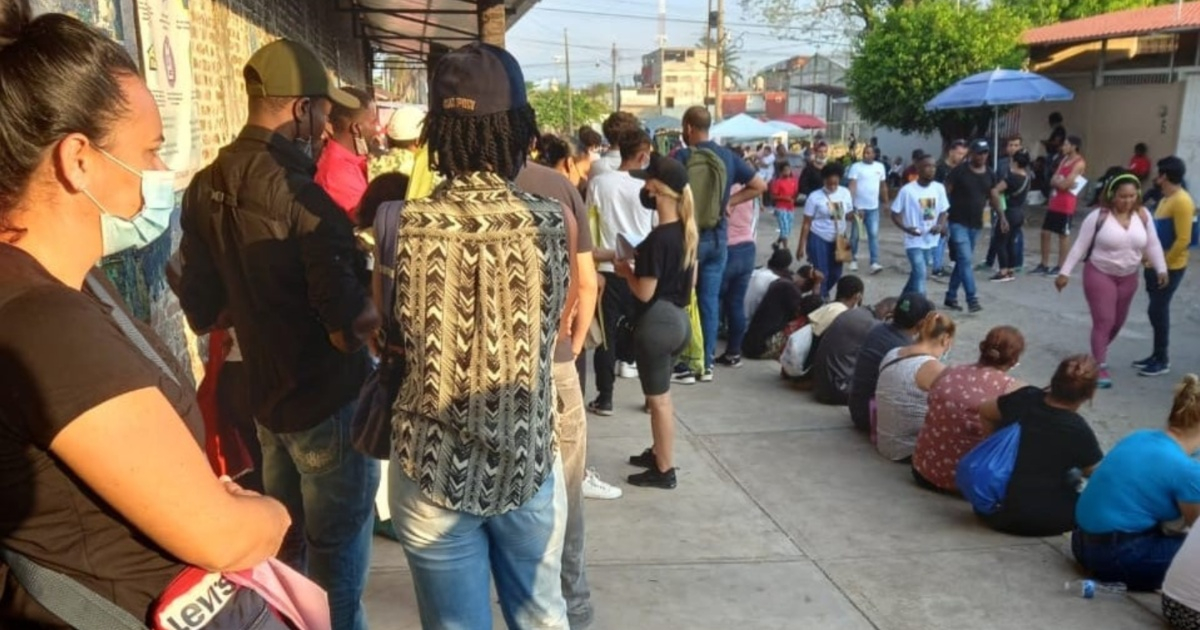
Although the arrival of migrants in Tapachula has drastically decreased, thousands remain in irregular situations in that border city.
In a migratory limbo
According to the Mexican authorities, during the first four months of 2024, Tapachula received an average of over 13,000 migrants per month, while in the same period of 2025, the figure did not exceed 2,000 monthly.
Undocumented individuals, mostly of Cuban origin, have faced delays in receiving a resolution for their asylum cases. Many have been waiting for over six months without a response and could continue in this situation for more than a year.
While they await legal permission to reside in Mexico, they engage in informal work to ensure their survival.
Without contracts, migrant workers labor up to 12 hours to earn an average of 1,500 (78 USD) to 2,000 Mexican pesos bi-weekly or even monthly. Most of the jobs accessible to them, as highlighted by Diario del Sur, are at counters in city businesses, in cleaning tasks, or in construction.
Frequently Asked Questions about the Immigration Status of Cubans in Mexico
Why are many Cubans choosing to stay in Mexico?
Many Cubans are choosing to stay in Mexico due to the tightening of immigration policies in the United States under the administration of Donald Trump. The cancellation of the CBP One program and the inability to legally cross into the United States have made Mexico a final destination for many, now referred to as the "Mexican dream."
What challenges do Cuban migrants face in Mexico when looking for employment?
Cuban migrants in Mexico face several challenges in finding employment, including a lack of legal documentation and saturation of the labor market in cities like Tapachula. The majority of available jobs are informal and poorly paid, such as work at counters, cleaning, and construction. Additionally, opportunities are limited by the stigma associated with their immigration status and age.
How has the United States' immigration policy affected Cuban migrants in Mexico?
The immigration policy of the United States, especially the cancellation of programs like CBP One, has left many Cuban migrants stranded in Mexico. This has led to an increase in asylum requests in Mexico and has overwhelmed the offices of the Mexican Commission for Refugee Assistance (Comar). Furthermore, it has created a migratory limbo where many migrants cannot move forward to the United States nor return to Cuba.
What options do migrants have to regularize their status in Mexico?
To regularize their situation in Mexico, migrants can apply for asylum through the Mexican Commission for Refugee Assistance (Comar). However, the process is slow and the demand is high, which complicates obtaining a quick response. Some migrants choose to seek informal jobs while awaiting the resolution of their immigration procedures.
Filed under: