
Related videos:
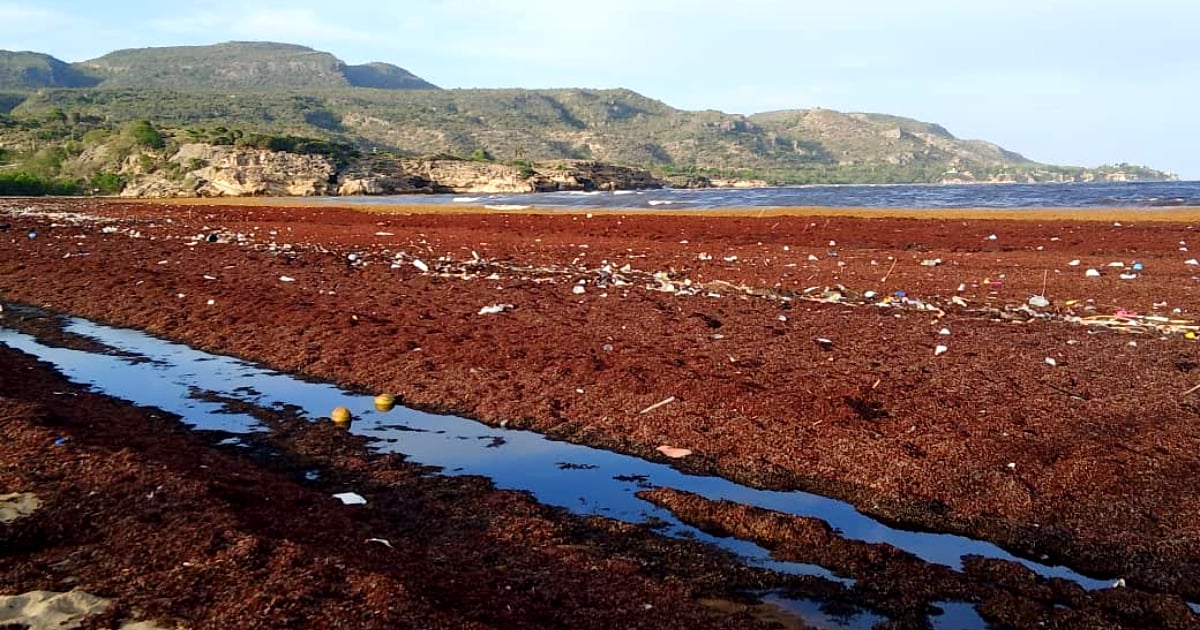
The Ministry of Science, Technology, and the Environment (CITMA) of Cuba issued a maximum alert on Monday due to the massive arrival of sargassum on the shores of Guantánamo province in the eastern part of the country.
According to an official note from the CITMA delegation in that region, the high concentration of these marine algae poses health risks due to the release of toxic gases such as hydrogen sulfide and ammonia during their decomposition.
These substances can cause irritation in the eyes, nose, and throat, as well as headaches, nausea, dizziness, and respiratory complications, especially in individuals with asthma or allergies.
The statement also warns about the risk of skin and gastrointestinal infections, as decomposed sargassum harbors bacteria that can affect the skin or the digestive system if there is direct contact or ingestion of contaminated water.
CITMA explained that this phenomenon is associated with climate change, particularly the increase in sea temperature, alterations in ocean currents, changes in wind patterns, and pollution from excess nutrients such as nitrogen and phosphorus.
In response to the accumulation of algae in coastal areas such as Baracoa and San Antonio del Sur, local authorities and volunteers, including students and professors from the Medical Sciences, organized cleanup efforts in recreational areas like Tortuguilla Beach, reported the state-run Cuban News Agency.
Experts monitoring the satellite evolution of sargassum have observed a large belt of these algae moving across the Atlantic, which could lead to a record influx into the Caribbean this year.
If no weather phenomena, such as a tropical cyclone, disperse it, the situation could exceed the maximum recorded in 2018, when over 522,000 tons of sargassum arrived in the region.
Authorities recommended that the public avoid contact with these algae and stay informed through official channels.
Where does the sargassum affecting the Caribbean come from?
The large banks of sargassum that arrive each year in the Caribbean primarily originate in the so-called Sargasso Sea, a vast area of the North Atlantic located between the currents of the North Atlantic Gyre.
However, in the last decade, scientists have detected that much of the sargassum arriving at Caribbean shores originates from a new region known as the Great Atlantic Sargassum Belt, located between the western coast of Africa and Brazil.
These algae, driven by ocean currents and trade winds, travel thousands of kilometers until they reach the Caribbean Sea and the Gulf of Mexico. The accelerated growth of these floating masses is facilitated by the warming of the waters and the influx of nutrients from rivers like the Amazon and the Congo.
Growing impact and lack of response in Cuba
The alert issued by CITMA comes amid a situation that is already severely affecting communities in eastern Cuba.
In recent days, areas such as Baitiquirí and El Guanal, on the southern coast of Guantánamo, have seen their beaches transformed into fields of decomposing sargassum. Fishermen and locals report unbearable odors, respiratory issues, the death of marine species, and corrosion of metal structures.
The Guantánamo Fishing Company and local media warned that this phenomenon jeopardizes fishing, drives away tourism, and generates increasing discomfort among the population.
Without the necessary resources to address the crisis, Cuba faces an environmental threat that, according to experts, is no longer seasonal but structural.
Filed under: