
Related videos:
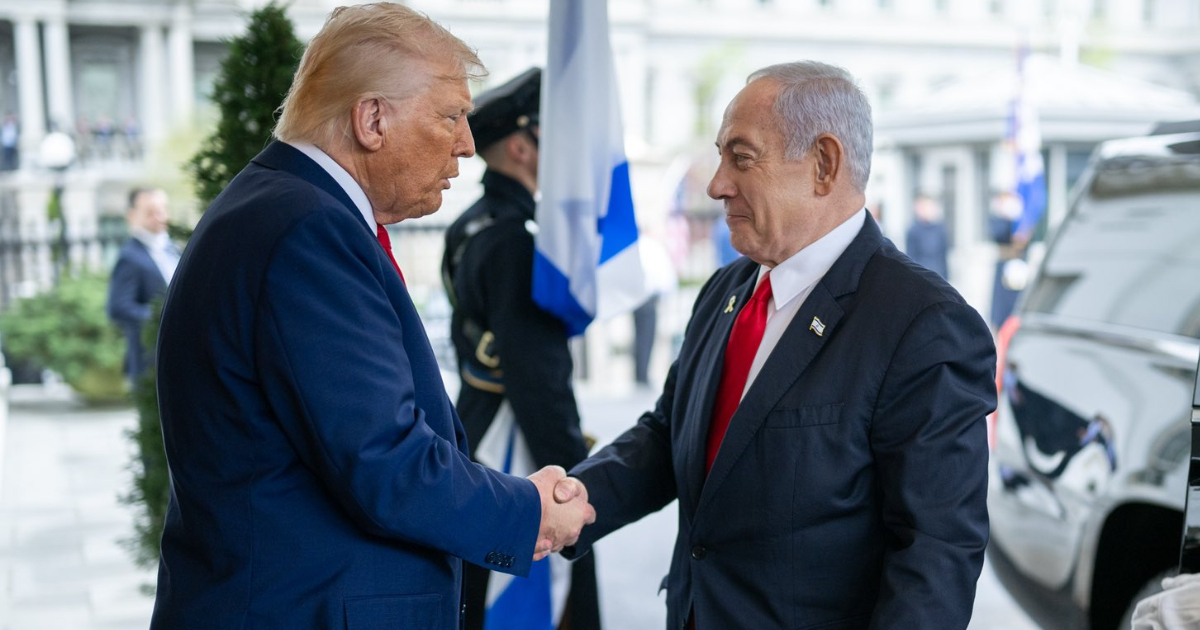
Israel announced on Tuesday the immediate suspension of new attacks against Iran following a conversation between Prime Minister Benjamin Netanyahu and U.S. President Donald Trump, who stated that the ceasefire "is in effect."
According to a report from EFE, the decision was officially communicated by the Office of the Israeli Prime Minister, which indicated that the Jewish state has refrained from continuing military operations following discussions with Trump.
However, the same statement accused Iran of violating the ceasefire agreement on at least two occasions, which, according to the Israeli government, justified a targeted strike: the destruction of a radar near Tehran.
The bombing was reported by the Iranian state network Press TV, which noted that explosions were heard in the northern part of the Iranian capital.
Additionally, the Iranian newspaper Etemad reported that air defenses were activated in three cities of the northern province of Mazandaran, reflecting the ongoing tension despite the alleged ceasefire.
According to the American outlet Axios and the Israeli Walla, a senior Israeli official confirmed that Trump explicitly requested Netanyahu to cancel the planned attack. He refused, claiming that he needed to respond to Iran's "violation of the ceasefire," but agreed to reduce the scale of the aggression.
The clearest confirmation came from the social network Truth Social, where Trump stated: "Israel is not going to attack Iran. All the planes will turn around and return home, while giving a friendly salute to Iran. No one will be hurt, the ceasefire is in effect!"
Hours earlier, the leader expressed his frustration over Israel dropping bombs "just after the agreement" and demanded that ongoing operations be halted. "They need to calm down now!" he said before heading to The Hague to attend the NATO summit.
"Israel, do not drop those bombs. If you do, it will be a serious violation. Bring your pilots home, now!" Trump demanded on Truth Social.
Despite these efforts, Iran accused its adversary of bombing its territory after the ceasefire began—officially starting at 7:00 Israeli time (4:00 GMT).
Israel, for its part, accused Iran of launching a missile an hour after the ceasefire began, a claim that Tehran denied.
The agreement that ended the 12-day war
The announcement of the freezing of attacks by Israel comes one day after Donald Trump declared the end of the war between Israel and Iran, following 12 days of clashes.
On Monday, Trump announced that both nations had reached a "complete and total ceasefire," which would be implemented in stages: first Iran, then Israel, with a 12-hour interval between each, culminating in a day free of violence.
"Congratulations to everyone! Israel and Iran have fully agreed that there will be a total ceasefire (in about six hours, when both countries complete their ongoing final missions)," Trump wrote. He added, "The war will be officially considered over."
Trump hailed the agreement as a diplomatic achievement that avoided an escalation with potentially catastrophic consequences for the entire region.
"This is a war that could have lasted for years and destroyed all of the Middle East, but it didn't, and it never will!" assured the president.
The official response channel of Trump's White House 47, Rapid Response 47, endorsed the president's announcement on the social network X, giving institutional shape to the agreement.
However, in Iran, the tone was more cautious. The official account on X of the supreme leader, Khamenei.ir, wrote: "Those who know the Iranian people and their history understand that this is not a nation that surrenders," a statement that conveyed skepticism about the definitive end of the conflict.
Fatemeh Mohajerani, spokesperson for the Iranian government, reiterated that stance: "Our policy is clear: we do not start wars, but we will defend the life and dignity of our people until the last moment." While she did not rule out a ceasefire, her statement made it clear that Iran will maintain a firm position.
On Monday, the conflict reached its most critical point when Iran launched multiple missiles at U.S. military bases in the Middle East in retaliation for airstrikes ordered by the United States on three key Iranian nuclear facilities.
That same day, Israel completed what it described as its "most extensive" offensive on Iranian soil since the onset of the war on June 13. According to the military spokesperson, 50 Israeli aircraft dropped over 100 munitions on various targets in Tehran.
The conflict originated with a series of Israeli bombings targeting key positions of the Iranian nuclear program, justified by Tel Aviv as a response to Tehran's advancements in ballistic missile development and atomic capabilities.
The consequences were devastating: over 400 dead in Iran—most of them civilians, including women and children—and 24 dead in Israel, all civilians, due to the Iranian missiles launched in retaliation.
Now, after the ceasefire agreement and the suspension of new offensives, the immediate future of the conflict seems to have entered a phase of containment. Nevertheless, tensions and mutual skepticism still cloud the diplomatic horizon between both countries.
Frequently Asked Questions about the Suspension of Israeli Attacks on Iran and the Ceasefire
Why did Israel decide to freeze the offensive against Iran?
Israel suspended attacks against Iran following a conversation between Benjamin Netanyahu and Donald Trump, where the importance of maintaining a ceasefire was highlighted. Trump stated that the ceasefire "is in effect," and the decision was officially communicated by the Office of the Prime Minister of Israel.
What initially triggered the conflict between Israel and Iran?
The conflict originated with Israeli bombings of Iranian nuclear facilities, justified by Israel as a response to Iran's development of ballistic missiles and atomic capabilities. This confrontation resulted in a 12-day war with hundreds of casualties in both nations.
How did Iran react to the ceasefire announced by Trump?
Despite the announcement of a ceasefire, Iran showed skepticism and determination to defend its dignity. The Iranian Supreme Leader, Ali Khamenei, and the government spokesperson, Fatemeh Mohajerani, expressed that Iran does not easily surrender and will maintain its firm stance in defense of its people.
What was the role of the United States in the conflict between Israel and Iran?
The United States directly participated in the conflict through bombings of nuclear facilities in Iran, as confirmed by President Donald Trump. Despite denying direct involvement in the Israeli attacks, Washington played a crucial role in the ceasefire negotiations.
Filed under: