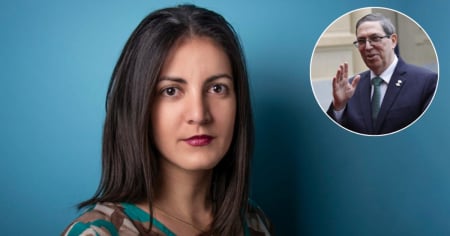
The Organization of American States (OAS) chose this Friday the Cuban opposition figure Rosa María Payá as a new member of the Inter-American Commission on Human Rights (IACHR), a historic event that marks a turning point both in representation within the organization and in the fight for human rights on the continent.
“Deeply honored by the trust that the states of the Americas have placed in me to defend the human rights of all people in our region. It will be an honor to serve all the peoples of the Americas,” expressed the activist on social media, daughter of the late dissident Oswaldo Payá.
The appointment of Payá, proposed for this position by Secretary of State Marco Rubio, was met with enthusiasm by human rights advocates and democratic sectors in the region.
Cuban activist Víctor M. Dueñas celebrated the news with a message on his X account: “It’s official! @PayaIACHR becomes a member of the Human Rights Commission of the @OEA_oficial.”
The election of Payá is significant not only for her activism against the Cuban regime, but also because it marks the first time that an openly opposition figure to the Havana government holds a seat in the IACHR, an autonomous body responsible for the promotion and protection of human rights in the Americas.
Payá has been one of the most prominent voices of the Cuban dissidence on the international stage.
Founder of the initiative Cuba Decide, has repeatedly denounced the systematic violations of human rights on the island and has advocated for a peaceful transition to democracy.
His appointment represents a triumph for many Cuban exiles and activists who have been seeking greater representation in regional forums for decades.
The new member of the Inter-American Commission on Human Rights will assume her mandate amid a challenging landscape for human rights in Latin America, characterized by political repression, authoritarianism, migration crises, and structural violence.
From his new position, Payá -who has received support from the U.S. for the nomination- is expected to actively contribute to highlighting the critical situations in the region, including that of his own country.
The Inter-American Commission is composed of seven independent members, elected by the General Assembly of the OAS. Its mandate includes monitoring the human rights situation in member states and issuing reports, precautionary measures, and recommendations to governments.
Frequently asked questions about Rosa María Payá's election to the IACHR
Who is Rosa María Payá and why is her election to the IACHR significant?
Rosa María Payá is a Cuban activist and human rights defender, daughter of the late dissident Oswaldo Payá. She founded the initiative Cuba Decide, which advocates for a plebiscite for a democratic transition in Cuba. Her election to the Inter-American Commission on Human Rights (IACHR) is significant because it is the first time an openly opposing figure to the Cuban government holds this position, representing a recognition for Cuban exiles and support for the Cuban opposition.
What is the role of the Inter-American Commission on Human Rights (IACHR)?
The IACHR is an autonomous body of the Organization of American States (OAS) responsible for promoting and protecting human rights in the Americas. Its mandate includes overseeing the human rights situation in member states, issuing reports, precautionary measures, and recommendations to governments. It is composed of seven independent members, elected by the General Assembly of the OAS.
How has the international community reacted to Rosa María Payá's appointment to the IACHR?
The appointment of Rosa María Payá has been received with enthusiasm by human rights defenders and democratic sectors in the region. The United States, which nominated her, expressed its support for her commitment to human rights. Her election is seen as a political endorsement of the Cuban opposition and reaffirms the OAS's commitment to democratic principles in the region.
What challenges will Rosa María Payá face in her new role at the CIDH?
Rosa María Payá will assume her mandate in a challenging context in Latin America, characterized by political repression, authoritarianism, migration crises, and structural violence. She is expected to help highlight critical situations, including those in her homeland, Cuba, where systematic human rights violations are an ongoing concern.
Filed under: