
Related videos:
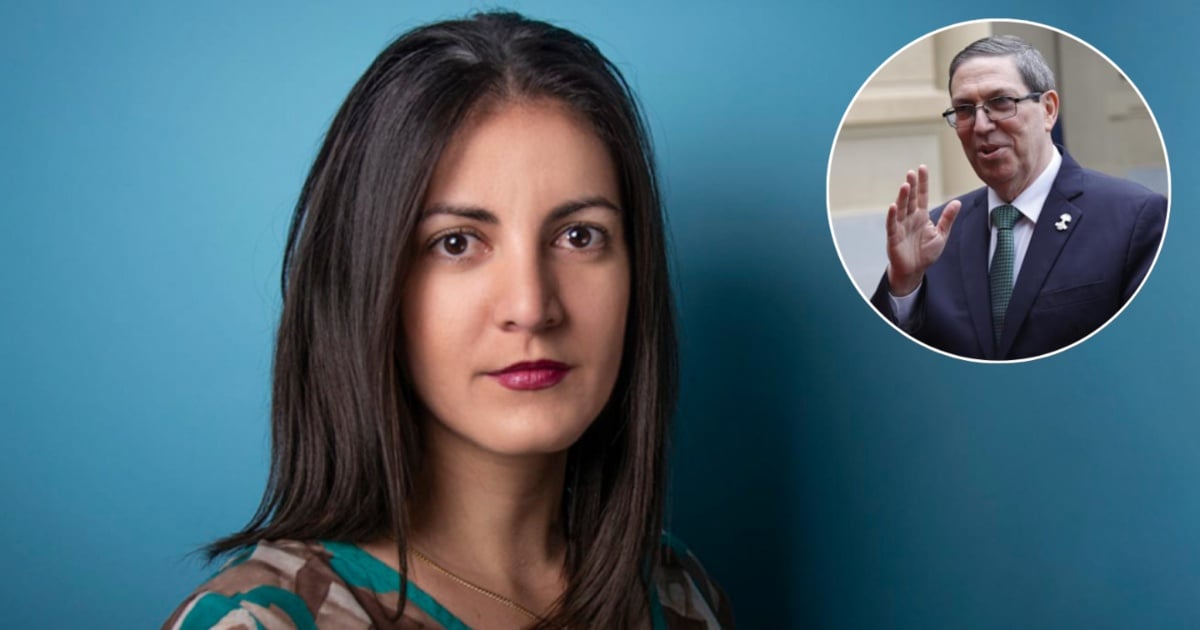
The Cuban regime launched an attack against the opposition activist Rosa María Payá, whom they labeled as a "mercenary" after she was
In an official statement, the Ministry of Foreign Affairs denounced that the election of Payá was driven by an alleged "operation" by the U.S. Secretary of State, whom they accused of attempting to turn "an outstanding member of their payroll" into an impartial human rights expert.
The chancellery stated that the activist would have been elected "by a narrow margin" following political pressures and budgetary blackmail to regional governments.
The Cuban government's reaction also included criticisms of the IACHR and the OAS, institutions that, according to the regime, lack legitimacy and authority over Cuban sovereignty.
The statement from MINREX questioned Payá's independence, and from a research center aligned with the government, which pointed out his "limited knowledge" of international law and an alleged "disregard for human rights."
The Cuban Foreign Minister, Bruno Rodríguez Parrilla, also questioned the legitimacy of the activist and denounced that the OAS "imposed" on the IACHR a person who advocates for "coercive policies" universally rejected, and that her political activities cast doubt on the apparent independence of the organization.
Rosa María Payá, daughter of the late dissident Oswaldo Payá, was elected on June 27 at the OAS General Assembly as the first openly opposing figure to the Cuban regime to hold a seat on the IACHR.
The activist, founder of the initiative Cuba Decide, thanked for her appointment on social media and stated that she feels "deeply honored" by the trust placed in her by the states of the hemisphere.
Rosa María has been a constant critical voice against human rights violations in Cuba and has advocated for a peaceful transition to democracy. Her appointment represents a vindication for many Cuban exiles and activists.
The election was celebrated by legislators and activists from the Cuban exile community, who viewed this event as a historical vindication and an important step to highlight the repression on the island from international forums.
Frequently Asked Questions about the Election of Rosa María Payá to the IACHR and Its Impact on Cuba
Why did the Cuban regime label Rosa María Payá as a "mercenary" after her election to the IACHR?
The Cuban regime labeled Rosa María Payá as a "mercenary" following her election to the CIDH because it views her election as an imposition by the United States and a threat to its sovereignty. The accusation aims to delegitimize her appointment by associating her with foreign interests and alleged political pressures exerted by the United States.
What does the selection of Rosa María Payá for the Inter-American Commission on Human Rights mean?
The election of Rosa María Payá as a member of the CIDH is an historic event and a turning point in representation within the organization, as she is the first openly opposition figure to the Cuban regime to hold a seat on this commission. Her appointment is seen as a support for the Cuban opposition and a commitment to democratic principles in the region.
What has been Rosa María Payá's role in the defense of human rights in Cuba?
Rosa María Payá has been one of the most visible voices of the Cuban dissidence on the international stage. She is the founder of the initiative Cuba Decide, which promotes a binding referendum so that Cubans can freely and democratically choose their political future. Her activism focuses on denouncing human rights violations on the island and advocating for a peaceful transition to democracy.
How has the Cuban government reacted to the Human Rights Commission's criticisms regarding human rights?
The Cuban government has disqualified the CIDH, deeming it lacking legitimacy and authority over Cuban sovereignty. The criticisms are part of a defense of the regime against reports documenting human rights violations on the island, maintaining its stance that external sanctions are responsible for internal problems.
Filed under: