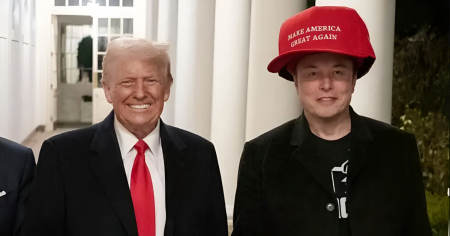
Elon Musk launched a harsh critique against the draft of the fiscal and budget plan promoted by President Donald Trump, which was submitted for review by the Senate.
The tech mogul warned that the latest version of the text, known as the "big and beautiful bill," will destroy millions of jobs in the United States and cause "immense strategic harm to the country."
"He's giving money to the industries of the past while severely damaging the industries of the future," Musk wrote on Saturday on X, where he shared an analysis by Professor Jesse Jenkins, an energy expert at Princeton University.
The academic warned that the project will increase energy costs, eliminate hundreds of billions of dollars in new investments in energy and manufacturing, increase pollution, and limit the ability to compete with China in artificial intelligence.
"Absolutely crazy and destructive," Musk declared.
His statements reaffirm the warnings he made in early June, when he described the Trump plan as a "repugnant abomination" and pointed out that its approval in the House of Representatives on May 22 was "a colossal mistake."
The Senate finally approved on Saturday to open formal debate on the president's controversial budget, which includes expanding the tax cuts implemented during his first term, increasing military spending, and strengthening immigration control.
All of this is accompanied by cuts to social programs such as Medicaid and food stamps.
The Congressional Budget Office, an independent agency, estimates that the law would increase the national debt by $2.4 trillion over the next 10 years.
Trump is looking to approve it before July 4th, Independence Day, to sign it that day as a key political victory ahead of the 2026 midterm elections.
Background: a political rupture between allies
Musk's criticism is not an isolated incident, but rather the latest chapter in a public rift between Trump and one of his most influential allies.
For months, both maintained a strategic relationship marked by collaboration and mutual support, which has deteriorated rapidly in recent weeks.
The breaking point came with Musk's departure from the Department of Government Efficiency (DOGE), an office created by Trump.
Although the end of the relationship was presented as the conclusion of a temporary contract, tensions arose when Musk referred to Trump's new tax plan as a "repugnant abomination," asserting that it destroyed the progress he had made in government efficiency.
In response, Trump turned to his social media platform Truth Social to discredit Musk, stating that "he went crazy" after losing his electric vehicle mandate, and threatened to cancel all federal contracts held by the tycoon's companies, including Tesla and SpaceX. He even claimed that he himself had requested Musk's departure from the government.
The escalation continued when Musk openly called for an impeachment against Trump, stating that it was impossible to operate "with a government that acts out of personal revenge."
Musk also hinted at Trump's links to the Epstein scandal, an accusation he later withdrew, although he insisted that "the truth will come to light." Trump responded by calling the claims "old news" and labeled the businessman as "disrespectful."
The conflict has had economic repercussions. Tesla's shares plummeted more than 8% in a single day following the cross attacks, reflecting market nervousness over the potential loss of key contracts and subsidies.
On the other hand, Musk stated that without his financial and media support, Trump would have lost the 2024 elections.
He recalled donating 250 million dollars to his campaign, but clarified that in the future he will only support candidates who uphold "solid economic principles, not partisan loyalties."
The president, for his part, threatened Musk with "serious consequences" if he decides to support Democratic candidates in the legislative elections of 2026.
In the midst of this confrontation, the Senate president, JD Vance, has attempted to tone down the dispute, labeling Musk as "an emotional guy" and suggesting that the tension could dissipate. However, the rift between the two billionaires seems to be definitive.
The relationship, which was publicly celebrated in May with ceremonies and mutual praise, has now transformed into an open battle with political, economic, and technological implications for the country.
Frequently Asked Questions about the Conflict between Elon Musk and Donald Trump
Why does Elon Musk criticize Donald Trump's tax plan?
Elon Musk criticizes Donald Trump's tax plan because he believes it will destroy millions of jobs and cause strategic harm to the country. Musk argues that the proposal favors industries of the past while penalizing future ones, such as renewable energy and electric vehicles, which would negatively impact the technological competitiveness of the United States against countries like China.
How will the tax bill affect renewable energy and electric vehicles?
The proposed tax bill by Trump would eliminate tax incentives for renewable energy and electric vehicles, in addition to increasing taxes on wind and solar energy projects that have not yet commenced. This could hinder the development and adoption of clean technologies in the United States.
What is the expected economic impact of Trump's fiscal plan?
The Congressional Budget Office estimates that Trump's fiscal plan would increase the national debt by $2.4 trillion over the next ten years. Additionally, it is expected to significantly increase the budget deficit, which could have negative consequences for the country's economy in the long term.
What has caused the rift between Elon Musk and Donald Trump?
The rift between Elon Musk and Donald Trump has been caused by Musk's criticism of Trump's tax plan and the subsequent response from the president, discrediting Musk and threatening to cancel federal contracts with his companies. This conflict has escalated into a public dispute with political and economic repercussions.
What repercussions has the conflict between Musk and Trump had on the market?
Tesla's shares plummeted more than 8% following the public conflict between Musk and Trump. The uncertainty stemming from the dispute and the fear of losing key contracts and federal subsidies have negatively impacted the markets.
Filed under: