
Related videos:
The U.S. President, Donald Trump, announced that he will make a final decision in the coming weeks on whether or not to exempt agricultural and construction workers from deportation, two key sectors of the national economy that are highly dependent on migrant labor.
The statements were made during the inauguration of the controversial immigration detention center nicknamed Alligator Alcatraz, located in the midst of a protected wetland in South Florida.
"We will make a decision very soon. We are analyzing the situation of agricultural and construction workers. We know these are sensitive sectors, but we also have to protect our borders," said Trump, as quoted by EFE.
Raids, fear, and an economy in jeopardy
The immigration plan promoted by Trump - which includes the deportation of up to 3,000 people per day - has instilled fear in essential productive sectors, especially in construction and agriculture, where a significant proportion of workers are immigrants without legal status.
In the construction sector, 25.7% of employees are immigrants, and at least 14.1% are undocumented, according to the American Immigration Council. In agriculture, the figure rises to 42%, according to the Department of Agriculture.
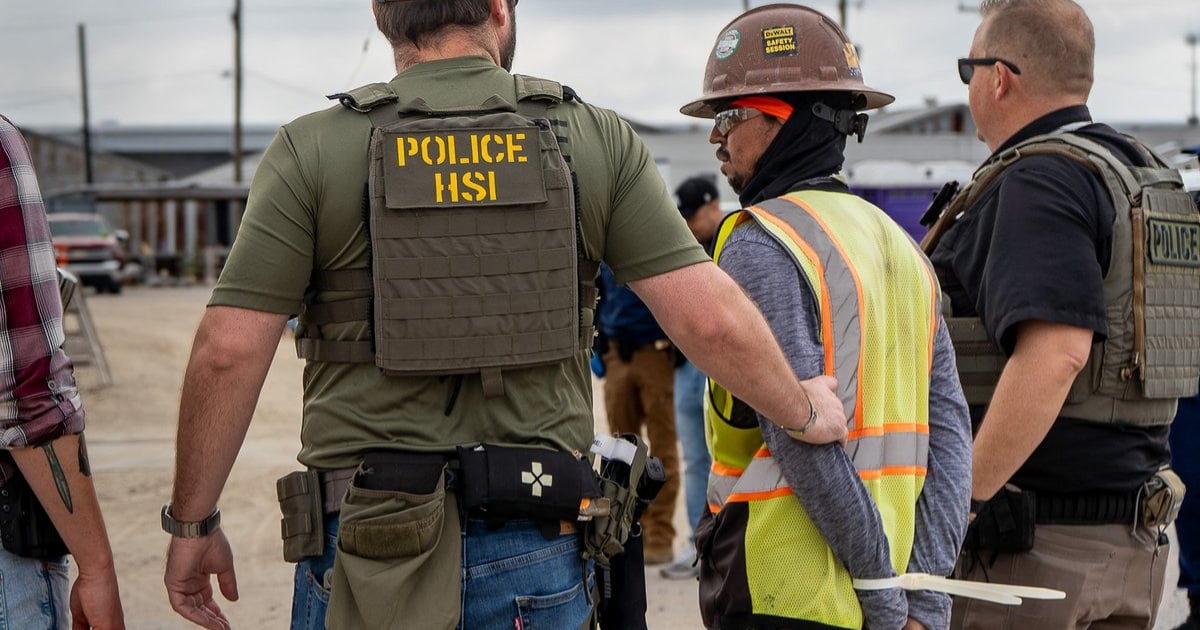
The raids by Immigration and Customs Enforcement (ICE) have severely impacted these industries, halting projects, reducing harvests, and exacerbating the labor shortage.
In communities in southern Florida, the effects are already clearly noticeable: declining agricultural activity, restaurants closing early, hotels without staff, and empty stores.
A "temporary pass" under review
Last week, Trump outlined the possibility of implementing a "temporary pass" for migrant workers, which would allow certain agricultural employees to remain in the country under the supervision of their employers, while ensuring tax payments and a potential return with legal visa.
The idea, as he explained in a television interview, is to prevent the authorities from "coming in and taking everyone away," referring to immigrants who have been working in the fields for years.
“We are going to work to establish some kind of temporary pass where people pay taxes, allowing farmers to have some degree of control,” he explained.
The plan, however, has not yet materialized and has been accompanied by mixed signals from the White House. While some senior officials discuss temporary relief measures, ICE has resumed raids even in rural areas, following a brief pause in mid-June.
Trump also recently admitted that entrepreneurs in the hotel and tourism sector are dissatisfied due to the worker shortage caused by the deportation policy.
"Our farmers and people in the hotel sector have been stating that our aggressive immigration policy is taking excellent workers away from them. Those jobs are nearly impossible to replace," he wrote on his Truth Social network.
Structural impact
Economic experts and business leaders warn that the policy of mass deportations is beginning to erode the very foundation of growth in states like Florida, Texas, and California.
Key sectors—such as agriculture, construction, hospitality, and healthcare—heavily rely on immigrant workers, whether legal or not.
The Hispanic community, which represents a significant portion of the workforce in these areas, has been particularly affected by the measures.
Uncertainty, the fear of being detained, and the decrease in job mobility are directly impacting production, investment, and consumption.
Trump himself seemed to acknowledge this reality in a cabinet meeting in April, where he suggested allowing some undocumented agricultural workers to later return to the country with legal status.
"A farmer will come with a letter stating that his workers are excellent. We will hold back a bit for them, and then ultimately we will bring them back," he stated.
Expectation and tension
Meanwhile, both employers and workers are awaiting clarity about the future.
The possibility of a partial or temporary exemption for certain sectors represents an exception within a policy that, until now, has focused on the strict enforcement of immigration laws and expedited deportation.
The decision that Trump has promised "in the coming weeks" could determine not only the course of his immigration policy in the short term but also the immediate fate of hundreds of thousands of essential workers and the economic sectors that depend on them for survival.
Frequently Asked Questions About ICE Raids and Their Impact in Florida
Which economic sectors are being most affected by ICE raids in Florida?
The most affected sectors are agriculture, construction, hospitality, and health, as they heavily rely on immigrant labor. The raids have caused a decline in economic activity and a shortage of workers in these areas, leading to a slowdown in operations and a decrease in production.
Is Trump considering any measures to mitigate the impact of deportations in key sectors?
Yes, Trump has mentioned the possibility of implementing a "temporary permit" that would allow certain immigrant workers to remain in the country under the supervision of their employers. This permit would allow workers to continue contributing to the economy while their immigration status is regularized, although the idea has not yet been finalized and continues to generate mixed signals from the administration.
What is the reaction of business owners to Trump's deportation policies?
Business owners have expressed their dissatisfaction and concern over the loss of essential workers due to the raids. Many report that their operations have slowed down by as much as 50% and that finding replacements for immigrant workers is challenging, which is negatively impacting productivity and the economy as a whole.
Why have Trump's immigration policies generated so much fear in immigrant communities in Florida?
ICE raids and the official rhetoric that criminalizes immigrants have created an atmosphere of fear and uncertainty, affecting thousands of essential workers who fear being arrested and deported. This fear has led many immigrants to stay home, negatively impacting both their daily lives and the local economy.
Filed under: