
Related videos:
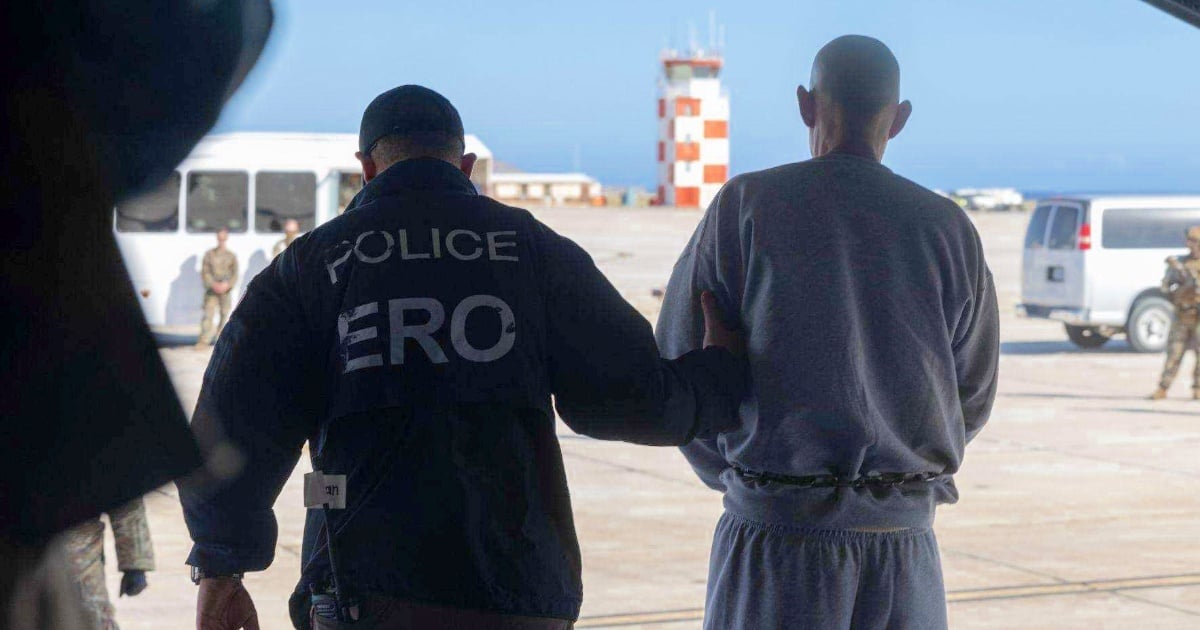
The United States Department of Homeland Security (DHS) has publicly revealed the names and offenses of several migrants currently detained at the Guantanamo Naval Base, in an unprecedented move aimed at sending a message of zero tolerance towards crimes committed by foreigners on American soil.
In an official statement, the Deputy Assistant Secretary of DHS, Tricia McLaughlin, justified the release of the names by asserting that these are “the worst of the worst”, individuals who, according to the agency, pose a direct threat to public safety in the United States.
“We are arresting illegal criminal foreigners and removing them from the streets of the United States. Guantanamo Bay houses the worst of the worst, including child predators, rapists, and murderers,” McLaughlin stated.
"Whether it's CECOT, Alligator Alcatraz, Guantánamo Bay, or another detention facility, these dangerous criminals will not be able to terrorize American citizens. President Trump and Secretary Noem are using all available tools to remove foreign criminals from our streets and from our country. Our message is clear: criminals are not welcome in the United States."
McLaughlin also added that each of these detainees has been identified by their history of violence, recidivism, or particularly heinous crimes.
"This is not about arbitrary arrests, but rather a focused and systematic effort to eradicate those who, having entered illegally, have made their presence even more dangerous through criminal acts. We are doing what the American people expect of us: protecting our communities, restoring the rule of law, and ensuring that those who abuse our hospitality face clear consequences."
With this stance, the DHS reinforces its policy of prolonged detention and immediate deportation for foreign criminals, using extraterritorial facilities such as Guantánamo to separate these individuals from the regular prison system.
Detained in Guantánamo, classified by country
The published list includes individuals from at least 12 countries who were arrested for serious crimes ranging from sexual assault and kidnapping to homicide, drug trafficking, and child abuse.
Vietnam
Five Vietnamese citizens are among the names revealed, convicted of extremely serious crimes such as kidnapping and armed assault
-Hung Vo – robbery with a weapon.
-Quan Phung – aggravated assault with a weapon.
-Hieu Tran – robbery.
-Tien Minh Cao – kidnapping.
-Khang Huy Trang – kidnapping for ransom.
Honduras
Three Hondurans face sentences for sexual and physical assaults, including offenses against minors
-Andis Noe Cortes Zepeda – sexual assault.
-Antonio Erazo-Ramos – assault.
-Franklin Almendarez-Alvarez – lewd acts with a minor.
China
Four Chinese citizens are detained for crimes including homicide, robbery, and kidnapping:
-Xiang Liu – robbery.
-Jin Feng Lu – homicide.
-Wen Lin – robbery.
-Yong Liang – kidnapping.
Colombia
Three Colombians were included for crimes related to drugs and armed violence
-Ramiro Villanueva – cocaine trafficking.
-Luis Fernando Ospina Tabarez – heroin trafficking.
-Brayan Vasquez-Montero – aggravated assault with a weapon.
El Salvador
Three Salvadorans are detained for sexual offenses, weapons charges, and assault
Carlos Olivo Orellana – lewd acts with a minor.
Jose Diego Pereira Valdez – aggravated assault with a firearm.
Victor Bonilla-Alvarez – arms trafficking.
Guatemala
Two Guatemalans were identified for domestic violence and assault
-Olma Juarez-Mendez – domestic violence.
-Guillermo Gonzales-Tiul – assault.
Citizens from India, Venezuela, Romania, Liberia, Jamaica, and the United Kingdom are also included:
Shubham Singh (India) – child pornography.
Larry Medina (Venezuela) – sexual assault.
Ilie Bogde (Romania) – theft.
Nathaniel Akeen (Liberia) – theft.
Eric Gresford Miller (Jamaica) – aggravated assault with a firearm.
Nigel Tomlinson (United Kingdom) – child sexual abuse.
Guantánamo: from military prison to immigration detention center
Although historically associated with the detention of terrorism suspects, the military base at Guantanamo Bay has been repurposed under the Trump Administration to house migrants with criminal convictions.
This practice, which raises concerns among human rights advocacy groups, marks a new chapter in the use of extraterritorial facilities in the U.S. to address the migration phenomenon with a national security approach.
The DHS did not specify whether more names will be published in the future, nor the final legal immigration status of these detainees, but it reiterated that their deportation is underway, and that they "will be permanently removed from U.S. territory" once the corresponding international legal procedures are completed.
Frequently Asked Questions about the Detention of Migrants in Guantánamo
Why are migrants being detained at the Guantánamo Naval Base?
The administration of Donald Trump has decided to use the Guantanamo Naval Base as a detention center for immigrants accused of serious crimes. The goal is to separate these individuals from the regular prison system and relieve the pressure on detention centers within U.S. territory. This measure is part of a broader strategy to strengthen control over illegal immigration.
What types of crimes have the migrants detained in Guantánamo committed?
The migrants detained in Guantánamo have been accused of serious crimes such as homicide, drug trafficking, sexual assault, kidnapping, and child abuse. According to the Department of Homeland Security, these individuals are regarded as "the worst of the worst" and pose a direct threat to public safety in the United States.
What impact does this policy have on the international relations of the United States?
The use of Guantánamo as a detention center for migrants has generated international criticism, including concerns about possible human rights violations. The Cuban government has strongly rejected the measure, labeling it as "brutality," while other countries have expressed their discontent over the potential transfer of their citizens to the base. In addition, human rights advocacy organizations have voiced their concerns regarding the conditions of detention.
What are the main criticisms of the detention of migrants in Guantánamo?
The main criticisms focus on the conditions of detention and the use of a historical facility associated with human rights violations. Civil rights organizations have questioned the legality of holding migrants detained outside of U.S. territory and without guaranteed access to legal protection. The high operational cost and the negative symbolic burden of using Guantánamo for these purposes have also been highlighted.
Filed under: