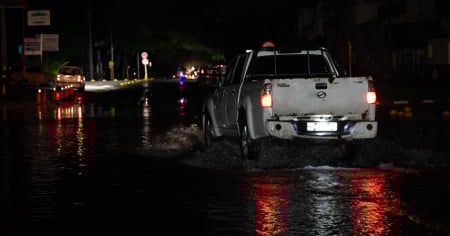
An intense storm caused flooding on Wednesday in several areas of the city of Santa Clara, in the province of Villa Clara, after an accumulation of 250 millimeters of rainfall in just two hours, according to reports from the Provincial Meteorological Center.
The event, which took place late in the evening, caused the overflow of the Bélico River at the intersection of Martí and Toscano streets, where the waters exceeded the bridge and entered nearby homes, creating alarm among the residents.
Although no loss of life or injuries were reported, this event once again highlights the vulnerability of urban infrastructure to extreme weather phenomena.
The volume of water flooded streets and swept away debris and garbage, forcing immediate action from the authorities and the Civil Defense. After midnight, the water level began to recede.
The First Secretary of the Communist Party in Villa Clara, Susely Morfa González, and the provincial vice governor Noel Cecilio Chinea, toured the areas most affected by the river's flooding, accompanied by other government officials.
Several residents have reported on social media that these floods are not new and that the main issue is the lack of maintenance on the channels and drainage systems. "To that, we add the lack of river sanitation, which has never been done again, and of course, it contributes to the overflow," pointed out some citizens.
Other accounts describe the event as "too much rain without stopping for almost two hours" and warn that the Martí Street bridge is elevated, highlighting the magnitude of the phenomenon.
Through images shared on social media by journalist Minoska Cadalso, flooded homes, stranded vehicles, and water violently overflowing the banks of the Bélico River can be seen.
The phenomenon highlighted not only the fragility of the city's hydraulic system, but also the lack of structural preventive measures and the urgency for a comprehensive sanitation program for urban waterways.
The authorities announced immediate cleaning and sanitization efforts in the Bélico River and its surroundings, although no long-term strategy has been reported so far to prevent similar events from occurring again with even greater consequences.
This Tuesday, a severe local storm caused heavy flooding in the city of Bayamo, Granma province. The weather forecast had predicted rain for Wednesday morning, but the event occurred earlier and caught the residents of the city by surprise.
The heavy rains quickly saturated the drainage systems of Bayamo, causing flooding in areas such as Siboney, El Valle, Roberto Reyes, and Antonio Guiteras.
Frequently Asked Questions about Flooding in Santa Clara and Infrastructure in Cuba
What caused the recent floods in Santa Clara?
The floods in Santa Clara were caused by an intense storm that delivered a total of 250 millimeters of rain in two hours. This phenomenon led to the overflow of the Bélico River, particularly affecting the intersection of Martí and Toscano streets. The lack of maintenance in the waterways and drainage systems contributed to the issue, according to residents' complaints.
What are the recurring problems in Cuba's urban infrastructure?
The urban infrastructure in Cuba shows serious deficiencies, particularly in the drainage system and the lack of maintenance of channels and sewers. These problems are often evident during extreme weather events, such as heavy rains, which cause flooding in various cities. Residents often report the accumulation of waste and the lack of sanitation as additional causes of these situations.
What measures are the Cuban authorities taking in response to the floods?
The authorities have announced immediate cleaning and sanitation efforts in the affected areas, such as the Bélico River. However, there has been no report of a long-term plan to prevent future flooding. This lack of strategic planning is a recurring concern among citizens, who demand definitive solutions to avoid these disasters.
How do the recent floods in Santa Clara compare to other similar events in Cuba?
Flooding in Santa Clara is part of a broader pattern of vulnerability to intense rainfall in Cuba. Recently, other cities such as Bayamo and Ciego de Ávila have also faced similar problems due to the saturation of their drainage systems and lack of maintenance in the infrastructure. These events highlight the urgent need for long-term solutions to enhance urban resilience against extreme weather phenomena.
Filed under: