
Related videos:
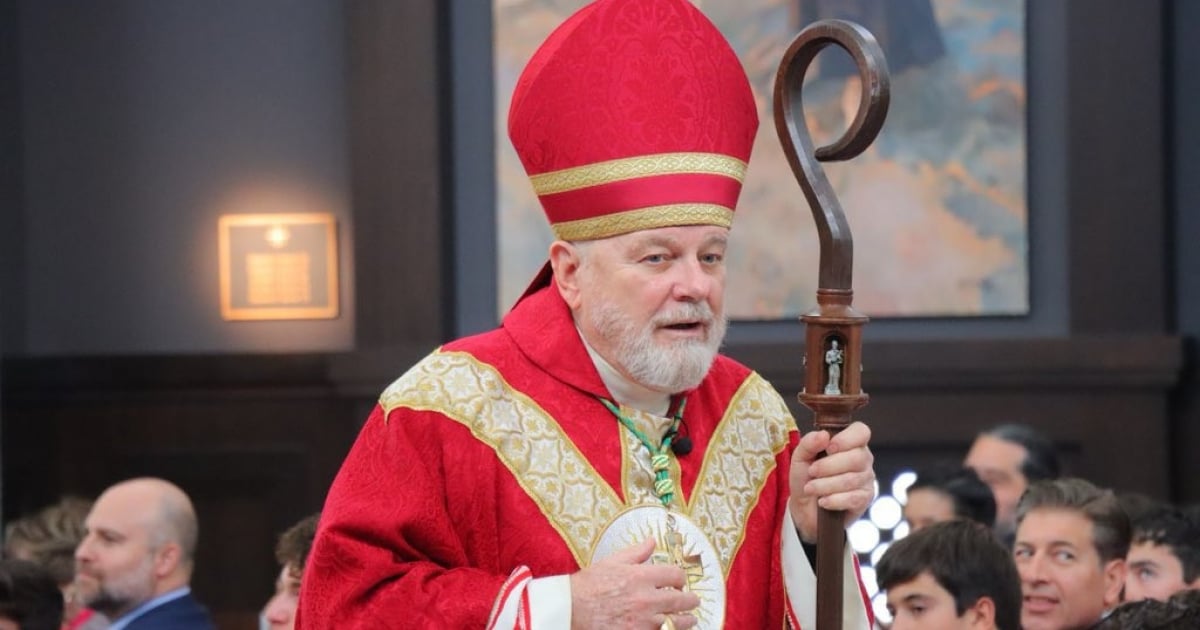
In a statement published by the Archdiocese of Miami, Archbishop Thomas Wenski expressed serious concerns regarding the current enforcement of immigration laws in the United States, particularly following the opening of the new immigrant detention center at Dade-Collier Airport, known as "Alligator Alcatraz."
Wenski recalled that the bishops of the United States have been advocating for "reforms that will improve our immigration system, respect human dignity, and promote the common good" for years.
According to the prelate, while the government has effectively managed to control the border and acts firmly against those who commit serious crimes, most immigrants are "hardworking and honest" and are simply seeking a better future for themselves and their families.
The archbishop warned about the diverse legal situations of immigrants in the country.
Many of them, although they do not have permanent legal status, have temporary protection such as TPS, parole, or pending asylum applications.
"Some (Haitians, Cubans, Venezuelans, and Nicaraguans) arrived with special humanitarian visas valid for two years, but the conditions in their home countries have not yet improved," he noted, referring to the beneficiaries of the humanitarian parole program, revoked by Donald Trump.
Wenski emphasized that deporting immigrants who already contribute to the welfare of the country "will only exacerbate" the current labor shortage in key sectors such as health, services, and agriculture.
"Instead of spending billions to deport people who are already contributing positively to the well-being of our nation, it would be more sensible, both financially and morally, for Congress, in collaboration with the Administration, to expand legal avenues to regularize their status," he stated.
Concern about the conditions in "Alligator Alcatraz"
Regarding the newly opened detention center in Collier County, Wenski urged for an evaluation of the progress in immigration law enforcement and reiterated the "need for measures that go beyond purely coercive ones."
He harshly criticized the use of intimidating practices and questioned the treatment of all undocumented immigrants as dangerous criminals.
"The masked and heavily armed agents who do not identify themselves during control activities are shocking, as is the apparent lack of due process in the deportation procedures of recent months," he noted.
He also described the rhetoric of some public officials as "intentionally provocative," particularly when referring to the presence of alligators and pythons around the detention center.
"It is inappropriate for public officials and harmful to the common good to speak of the deterrent value of 'caymans and pythons,'" he said.
"Common decency requires us to remember that those who are detained are fathers and mothers, brothers and sisters of relatives in need," he emphasized.
He also expressed concern about the physical conditions of the center: its geographic isolation, the precariousness of the tent structures under Florida's extreme heat, and the lack of quick access to medical services. Additionally, there is a potential risk in the event of hurricanes, given the facility's vulnerability.
Call to prayer and ethical commitment
Wenski requested that chaplains and pastoral ministers be allowed to assist migrants in custody.
Finally, he concluded his message with a call to compassion and spiritual action.
"Pray for our government officials, for the individuals in immigration custody and their families, for those who work in law enforcement, and for justice for all in this nation, to whose prosperity immigrants have always contributed," he requested.
The priest's statement comes at a time when debates over immigration policy, detentions, deportations, and respect for human rights within detention centers in the United States are intensifying.
Frequently Asked Questions about Criticism of Trump's Immigration Policy and the "Alligator Alcatraz" Center
What criticisms has the Archbishop of Miami expressed about Trump's immigration policies?
Archbishop Thomas Wenski has criticized Trump's immigration policy for its harshness and lack of humanity. In his statement, he emphasized that the majority of immigrants are hardworking and honest, and that deporting those who contribute to the well-being of the country would only worsen the labor shortage in key sectors such as health and agriculture.
Why is the new immigrant detention center in Florida called "Alligator Alcatraz"?
The detention center is called "Alligator Alcatraz" because of its location in the Everglades, surrounded by alligators and pythons. This name also evokes the Alcatraz prison, suggesting an intimidating and isolated environment for the detainees. The criticism focuses on the inhumane conditions and the use of the natural surroundings as a deterrent barrier.
What are the concerns about the "Alligator Alcatraz" detention center?
Concerns include inhumane conditions, lack of due process, and environmental impact on the Everglades. The geographical isolation of the center has been criticized, as well as the precariousness of the tent structures in Florida's extreme heat, along with the lack of access to medical services. Additionally, there are criticisms regarding the ecological and social impact of the project.
What impact could Trump's immigration policies have on key economic sectors?
Trump's immigration policies could exacerbate the labor shortage in sectors such as healthcare, agriculture, and construction. The mass deportation of immigrants could negatively impact the economy, particularly in states like Florida, where a large portion of the workforce in these sectors is made up of immigrants.
Filed under: