
Related videos:
In an island plunged into one of its worst humanitarian crises, with empty shelves, hospitals lacking supplies, and a population exhausted by shortages, an initiative driven from California by a mother and her daughter has made a difference for the Jewish community of Cuba.
Roe Gruber and her daughter Daniella, members of the B’nai Israel Congregation in Tustin, California, lead the so-called "Mitzvah Missions", humanitarian trips that bring food, medicines, and medical equipment to Cuba.
In their latest mission, carried out between February and March, they managed to deliver over 15,000 dollars in humanitarian aid, enough to feed dozens of families for four or five months, as they mentioned in an interview with Jewish Journal.
“Food deliveries are what is keeping them afloat”, said Roe Gruber, who lived in Cuba in the 2000s and knows firsthand the challenges faced by local communities.
Currently, it is estimated that between 600 and 800 Jews live in Cuba, primarily concentrated in Havana, although there are also small communities in Santa Clara and Cienfuegos. Many are elderly, impoverished by decades of crisis, emigration, and restrictive policies.
The Jewish community on the island has significantly dwindled since the days prior to the Revolution, when it numbered nearly 15,000 people. Emigration to the United States and Israel, along with the religious restrictions of the past, led to a high rate of mixed marriages and a loss of generational identity.
According to The Jews of Cuba, many of the Jews on the Caribbean island are refugees from World War II, who live in absolute precariousness, like the majority of the population: crumbling apartments, broken wheelchairs, rationed food, and almost no access to medication.
An example they mention is that of Eva Nissembaum, 78 years old, who shares two concrete rooms with three brothers. Her brother Máximo, 69, cannot leave the apartment because his wheelchair is unusable. Like them, hundreds rely on external solidarity to survive.
For decades, practicing any religion in Cuba was synonymous with stigma and repression. It was only after the visit of Pope John Paul II in 1998 that religious life began to be tolerated with greater openness, allowing the Jewish community to restore synagogues, reactivate community centers, and even perform conversions.
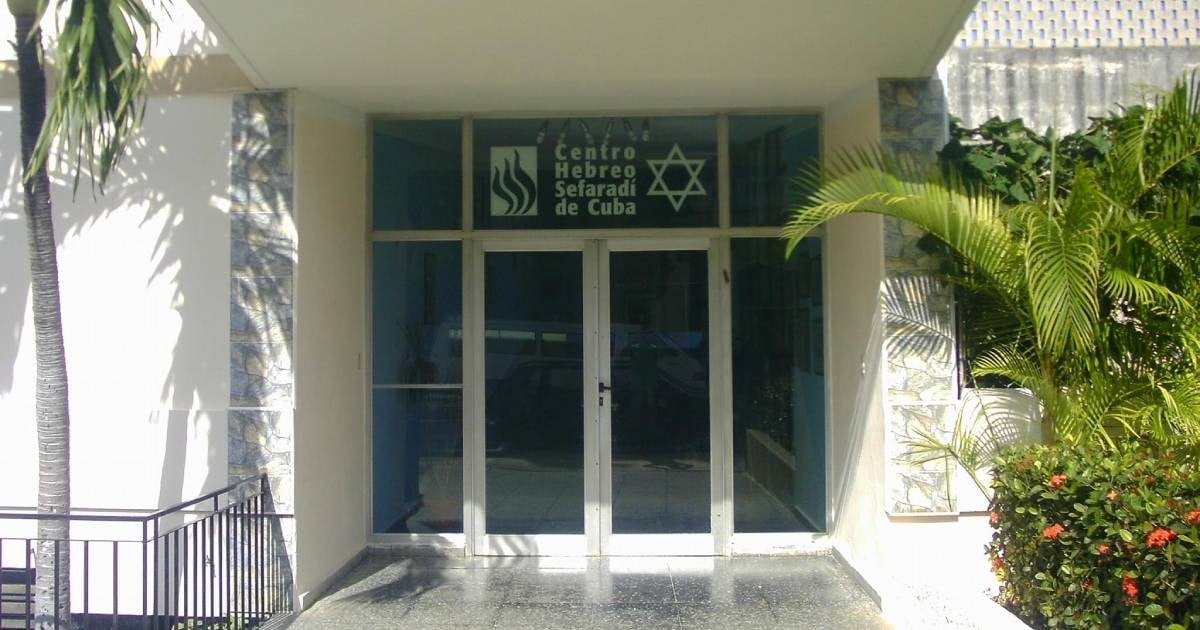
In Havana, three synagogues operate: Beth Shalom (community center), Adath Israel (Orthodox), and the Sefardí Center, which also serves as a dining facility for elderly individuals. In these spaces, in addition to praying, food and medicine are shared, many of which have arrived thanks to these “Mitzvah Missions.”
“A Cuban doctor we met was recovering from a hip operation without any painkillers. The only thing we had on hand was a Tylenol. That was all we could give her,” recounted Daniella Gruber.
The trip costs around $4,000 per person, including airfare and accommodation. A portion of the amount ($500) is donated directly to Jewish Cuba Connection, a non-profit organization that purchases food packages for needy Jewish families and elderly individuals on the island.
Stan Falkenstein, founder of the organization, was emphatic about the current situation: “The current leadership is more interested in enriching themselves than in ensuring the well-being of their people”.
Despite the restrictions imposed by Donald Trump's administration on American travel to the island, these humanitarian missions are permitted under the category of "religious activities."
“We want to repeat these missions because the need is immense. And because the people who help truly feel good doing so,” said Roe Gruber.
In a country where every act of solidarity can make the difference between survival and neglect, the commitment of this Jewish community in the United States not only nourishes bodies but also comforts souls.
Filed under: