
Related videos:
The administration of President Donald Trump plans to build five new mega detention centers for immigrants in various Republican-led states, following the model of the "Alligator Alcatraz" in Florida, a prison located in a swampy area filled with alligators.
The Secretary of Homeland Security, Kristi Noem, confirmed on Monday that they are in discussions with five state governments to "replicate" the Florida facility, as part of a new offensive against irregular immigration in the United States, reported the news agency EFE.
These statements were supported by Stephen Miller, advisor to Trump and architect of his immigration policies, who urged all Republican states to join the effort.
“Pick up the phone, call DHS, work with us to build facilities in your state so we can take out the illegals and criminals,” Miller said to Fox News.
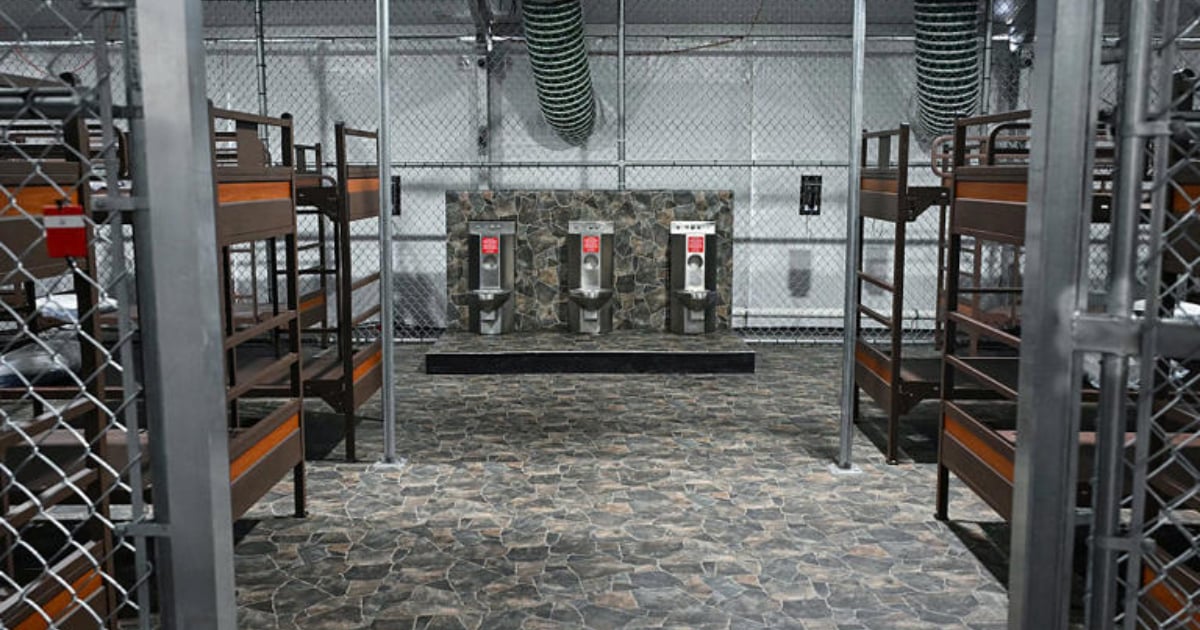
‘Alligator Alcatraz’ is the model to follow for Republicans in government. Located in Ochopee, in the heart of the Everglades, the center has faced harsh criticism from human rights organizations, environmentalists, religious leaders, and Democratic legislators.
On the past Saturday, a group of congress members visited the facility and reported that approximately 750 migrants were locked up “in cages,” under conditions they described as “inhuman.”
Testimonials gathered by local media describe an alarming scenario: makeshift tents, stifling temperatures, extreme humidity, a shortage of drinking water, and spoiled food. The press has not been allowed access to the site.
Even the Archdiocese of Miami labeled the center as a "corrosive and inappropriate solution" for managing migration.
A joint report from The Miami Herald and Tampa Bay Times revealed that 95% of those detained in Alligator Alcatraz come from Latin America. The most common nationalities are Guatemala (22%), Mexico (21.5%), and Cuba (11.6%).
There are also immigrants from Honduras (9.5%), the Dominican Republic (5.1%), Nicaragua (4.9%), as well as Colombia, Venezuela, El Salvador, and Haiti, among others.
According to these sources, more than half of those detained have not committed violent crimes, but are facing immigration violations.
Only a third have criminal records, although the records do not specify the nature of the alleged offenses.
Frequently Asked Questions about the New Detention Mega Centers for Immigrants in the United States
How many new immigrant detention megacenters will be built, and where will they be located?
The Trump Administration plans to build five new megacenters for immigrant detention in various Republican-led states, following the model of the newly opened center in Florida, known as “Alligator Alcatraz.”
Why is the detention center in Florida called "Alligator Alcatraz"?
The detention center in Florida is nicknamed "Alligator Alcatraz" due to its location in the Everglades, a marshy area filled with alligators. The name conjures images of extreme confinement and isolation, akin to the historic Alcatraz prison in San Francisco.
What is the situation of migrants detained in these centers?
Reports reveal that, although the center is intended for migrants with criminal records, more than half of the detainees have not committed violent offenses and are facing immigration violations. The conditions in the center have been described as "inhumane" by congress members and human rights organizations.
What criticisms has the detention megacenter project received?
The project has faced strong criticism from human rights organizations, religious leaders, and environmentalists. The main criticisms focus on the inhumane detention conditions, the damage to the Everglades ecosystem, and the hasty construction without environmental impact studies.
Filed under: