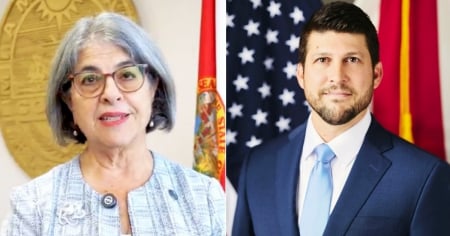
The Miami-Dade County is facing a significant financial crisis that has compelled its mayor, Daniella Levine Cava, to present a lean budget for the fiscal year 2025-2026, aiming to address an estimated deficit of 402 million dollars.
It represents the worst budget imbalance since the 2008 recession, and its effects are already being felt in various areas of public services.
Why is there such a large deficit?
During a press conference, the mayor explained that the origin of the fiscal hole is a “perfect storm of challenges”, where several factors converge:
The establishment of five independent constitutional offices, required by a state amendment approved in 2018, represents almost half of the deficit.
These include the Office of the Sheriff, the Tax Collector, the Supervisor of Elections, the Comptroller, and the Office of the State Attorney.
"Expanding our budget to cover six county governments instead of just one is costly for taxpayers," noted Levine Cava.
-The loss of state and federal revenues, which represents a decrease of 78 million dollars in the budget for 2026.
-The elimination of state taxes such as commercial leasing and adjustments in utility rates, with an additional impact of 65 million.
-Previous local decisions, such as tax cuts in 2023 and 2024, the use of federal funds to prevent increases in garbage fees, and the 46 million in subsidies for the 2026 World Cup (of which 36 million must be paid in this fiscal cycle).
What measures are being proposed to balance the budget?
To close the budget gap without raising the property tax rate, the mayor proposes a series of austerity and restructuring measures that include:
Dismissals and salary freeze
-Elimination of 360 jobs, including 142 currently held positions.
- Salary increases for county employees are frozen.
-Reduction of executive salaries.
-Merger and consolidation of departments
They will be merged: Information Technology with Communications; Cultural Affairs with Libraries; Community Action and Human Services with Youth Services.
-Overall reduction of departmental budgets between 10% and 35%.
-Public transport: higher fares, no cuts in service.
-There will be a 50-cent increase in the fare for public transportation (Metrobus and Metrorail), from $2.25 to $2.75 starting October 1.
-Elimination of the free transportation program MetroConnect.
No cuts are proposed for the Metromover, Metrorail, or Metrobus routes.
Cuts in Parks and Recreation
-25% reduction in the frequency of lawn mowing in parks and roads, to save 3.5 million.
-Elimination of funds for tree planting, estimated savings: 1.6 million.
-Closure of lifeguards in some parks, implementing the policy of "Swim at your own risk" (savings: $770,000).
-Removal of security guards at: Arcola Lakes Senior Center; North Pointe Community Center; and Oak Grove Park.
-$5 parking fee at parks like AD Barnes and Tropical, with an expectation to generate $3.6 million annually.
Closure of centers for the elderly and community meals
-Closure of two senior care centers: Little River and South Dade.
-Closure of three collective dining centers: Florida City, Leonard Batz, and Perrine.
These closures, according to the city council, affected few people and will result in combined savings of over $700,000.
Elimination or reduction of social offices
-Office of New Americans eliminated. It provided integration services to immigrants and permanent visa holders.
-The Community Security Office has also been eliminated. It worked on the revitalization of public spaces and the prevention of armed violence.
Cuts in community and business programs
Reduction of 1.17 million in grants for small family businesses.
-Close of a team of 10 people from the Street Crime Treatment Alternatives program, resulting in a savings of 1.5 million.
And what about property taxes?
Levine Cava has proposed to maintain a fixed tax rate, without increases.
However, some Republican commissioners are proposing to further reduce the rates, a move that, if approved, could exacerbate the budget gap.
The current proposal represents a modest growth in the county's total spending of just 1.3%, with a total workforce increasing to 31,900 employees, including those in the new offices.
Political reactions and upcoming vote
The budget has generated mixed reactions among the commissioners:
Juan Carlos Bermúdez advocates for prioritizing essential services: "Security, health, and the environment must be protected."
Roberto González described the mayor as a "spendthrift liberal" and called for the budget to be rebuilt from scratch: "line by line."
The proposed budget of 12.9 billion dollars will be subject to negotiations and public hearings. The commissioners will discuss this week the limits on property tax rates, and the final vote is scheduled for September, ahead of the start of the new fiscal year on October 1.
Despite the severe measures, Levine Cava warned that more cuts could come if the necessary consensus is not achieved to approve the budget.
In the words of the mayor: “We don't know where else to cut. We would have to reduce bus routes. We would have to eliminate parks altogether. It’s a rather serious situation.”
The fiscal crisis in Miami-Dade highlights the tension between public services and budget sustainability, in a context where cuts are already impacting sensitive areas of residents' daily lives.
As Levine Cava warned, "it's a perfect storm."
Frequently asked questions about the financial crisis in Miami-Dade and its measures
What is the main cause of the $400 million deficit in Miami-Dade?
The main cause of the deficit in Miami-Dade is the creation of five independent constitutional offices, mandated by a state amendment passed in 2018, which accounts for nearly half of the deficit. Additionally, the loss of state and federal revenue and previous local decisions have contributed to the financial imbalance.
What measures are being implemented to balance the Miami-Dade budget?
To close the budget gap without raising the property tax rate, layoffs, a wage freeze, and increases in public transportation fares are proposed. It also includes the merger of departments and budget cuts in various areas.
What impact will the fare increase in public transportation in Miami-Dade have?
The increase of 50 cents in the public transportation fare, which will rise from $2.25 to $2.75, aims to generate additional revenue without cutting services. However, the free MetroConnect transportation program will be discontinued.
How will budget cuts affect parks and recreation in Miami-Dade?
The cuts include a 25% reduction in the frequency of lawn mowing in parks, elimination of funds for tree planting, and the closure of lifeguards in some parks, applying the policy of "Swim at your own risk."
Is it possible that property taxes in Miami-Dade will decrease in the near future?
Although Mayor Daniella Levine Cava has proposed keeping the tax rate fixed, some Republican commissioners are suggesting further reductions in rates, which could worsen the budget gap if approved without an adequate compensation plan.
Filed under: