
Related videos:
The Cuban regime acknowledged this Wednesday that over 310,000 people are currently in a state of poverty or social vulnerability in the country, a recognition that comes amid a deep economic crisis and intense public controversy over recent official statements that denied the existence of homelessness on the island.
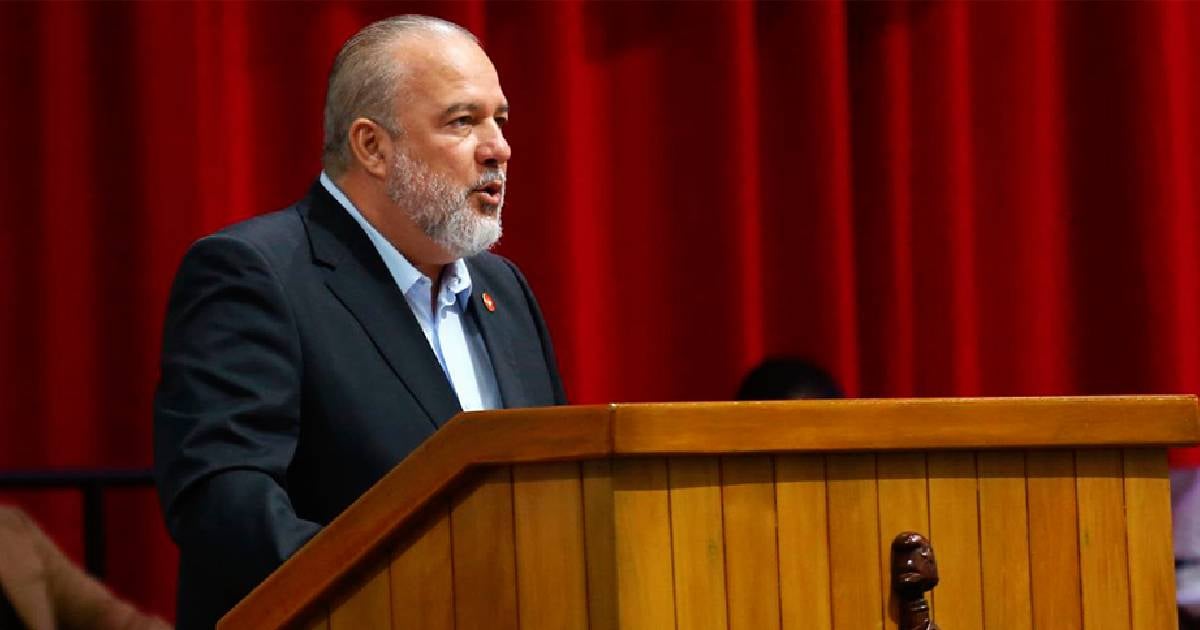
During a recent appearance before Parliament, Cuban Prime Minister Manuel Marrero Cruz stated that the social assistance budget has supported the care of 182,506 families, which includes over 310,000 vulnerable citizens living in those households.
For this effort, 2.672 million Cuban pesos have been executed, which represents 45% of the planned annual target, aimed at both cash benefits and material resources, it was noted.
"We acknowledge that these 182,000 families and 310,000 individuals are not all the people in vulnerable situations in the country; the economic situation has led to an increase in the individuals experiencing economic vulnerability," said the official.
He added that the State is currently prioritizing the social transformation of 1,252 communities across the country, and has pledged to continue efforts aimed at improving the quality of social services, as well as increasing institutional capacity in this area.
This recognition comes in response to the recent statements made by the former Minister of Labor and Social Security, Marta Elena Feitó Cabrera, who asserted in Parliament on Monday that there are "no beggars" in Cuba, but rather "disguised" individuals who she also referred to as "drunks" and "hypocrites."
His statements denying the existence of hunger on the island and blaming citizens for their situation of poverty sparked an outburst of outrage on social media, independent media, and among sectors of the population.
Hours later, the Political Bureau of the Communist Party of Cuba and the Council of State accepted her resignation, which was submitted, according to official sources, following a “joint analysis” with the government leadership.
In a note published by Cubadebate, it was indicated that the decision was made "due to the lack of objectivity and sensitivity with which she addressed issues that are central to current political and governmental management.”
Marta Elena Feitó Cabrera had held the position since 2019. Her resignation has been viewed as an attempt by the Government to mitigate the political cost of her remarks at a time of significant economic tension and social discontent.
Frequently Asked Questions about the Poverty Situation in Cuba
How many people are currently in poverty in Cuba?
More than 310,000 people in Cuba are living in poverty or social vulnerability. This figure was acknowledged by the Cuban government in the context of a deep economic crisis. Despite budgetary efforts, the economic situation has increased the number of vulnerable individuals in the country.
What did former minister Marta Elena Feitó comment about poverty in Cuba?
Marta Elena Feitó, former Minister of Labor and Social Security, stated that in Cuba "there are no beggars," but rather "disguised" individuals, which sparked a wave of indignation. Her statements denied the existence of indigence and placed responsibility on the citizens for their poverty situation. This led to her resignation following the intense public controversy.
What measures has the Cuban government taken to address the situation of vulnerability?
The Cuban government has allocated a social assistance budget to support families in vulnerable situations, prioritizing the social transformation of 1,252 communities. 2,672 million Cuban pesos have been executed, representing 45% of the planned annual budget. However, the execution of the budget has been insufficient in some regions, and the economic crisis continues to severely impact the population.
How has the government reacted to the controversy surrounding the statements made by former minister Feitó?
The Prime Minister Manuel Marrero and the leader Miguel Díaz-Canel expressed ambiguous messages about the need to avoid superficial analysis of poverty. However, they have not issued public apologies nor announced effective support programs, which has been interpreted as an attempt to manage the fallout without assuming political responsibility.
Filed under: