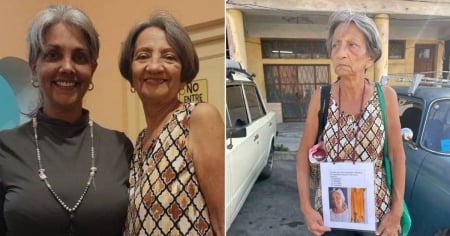
Romelio Martínez Zamora, a Cuban father residing in the La Lisa municipality of Havana, does not lose hope of finding his daughter Misleydis Martínez Aleaga, who has been missing since October 18, 2024.
Nine months later, the case still lacks answers from the authorities, and the family lives in uncertainty.
"I just want to know if she is alive," declared the elderly man in a conversation with CubaNet, the outlet that reported the story.
The woman, 49 years old, suffers from schizophrenia, a severe mental illness that has required multiple hospitalizations at the Psychiatric Hospital of Havana (Mazorra).
According to her father, Misleydis had previously been missing from home on other occasions, but she always returned with the assistance of the police.
This time, however, the silence has been absolute: no trace of her whereabouts, nor any clues in the official reports. "The police say they can't find her, that she doesn't seem to be anywhere," she lamented.
The situation worsens due to the social and economic conditions the family is left in after the disappearance.
The Ministry of Labor and Social Security canceled the social assistance check that Misleydis was receiving on the grounds that the benefit would only be reactivated if she reappears.
"She was given 2,600 pesos intended for her and her son. But they took it away without considering that this money also belongs to her son, who is a minor and has no father," denounced Martínez Zamora.
In addition to searching for his daughter, the elderly man has had to take on the upbringing of his grandson, who is now in a state of complete vulnerability.
"They should have taken him to some state institution," he questioned, referring to the lack of institutional response.
The disappearance of Misleydis Martínez Aleaga adds to a growing list of similar cases in Cuba, where there are no official search protocols or public databases for missing persons.
In the face of institutional void, independent collectives such as YoSíTeCreo en Cuba and the Gender Observatory of Alas Tensas have been the only ones to document and highlight these events, especially in cases involving women and girls.
Meanwhile, Romelio continues to wait for an answer. His voice, like that of so many other Cuban families, demands one thing: to know the truth.
Frequently Asked Questions about Disappearances in Cuba
Why is it so difficult to find missing persons in Cuba?
The lack of official search protocols and public databases is a fundamental problem in Cuba. The government has not established efficient alert systems nor does it provide sufficient resources to the police to investigate these cases, which leads families to turn to digital means and independent organizations for help.
What role do independent organizations play in the disappearances in Cuba?
Organizations such as YoSíTeCreo in Cuba and the Gender Observatory of Alas Tensas document and highlight cases of disappearances, especially of women and girls. These organizations face obstacles in accessing information but continue their efforts to draw attention to the issue and demand concrete actions from the government.
How does the lack of medication affect people with psychiatric illnesses in Cuba?
The shortage of medications in Cuba destabilizes patients with psychiatric disorders, increasing their vulnerability and the risk of them becoming lost or disappearing. Affected families are seeking help through social media, looking for support in light of the authorities' inefficiency in addressing these crises.
What challenges do the families of the disappeared face in Cuba?
Families of missing persons in Cuba face desperation and helplessness due to institutional inaction. Without alert systems or official protocols, they rely on community solidarity and social media to search for their loved ones. This creates a significant emotional and economic burden, especially when the disappearances continue for an extended period.
Filed under: