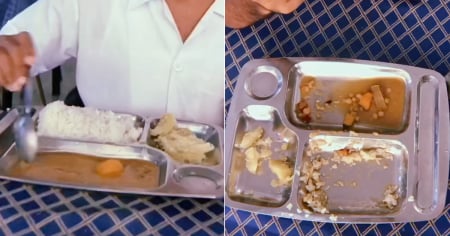
The Minister of Domestic Trade of Cuba, Betsy Díaz Velázquez, recently boasted about the production of banana croquettes and the introduction of a "base broth" among the culinary alternatives as part of the "progress" in the country's commercial network.
According to statements made by the official at the National Assembly of People's Power (ANPP), these "initiatives" are "positive examples" of a creative response to the complex economic and supply situation that the island is experiencing.
In her address to deputies and officials from the sector, the minister praised various experiences in areas such as Imías and San Antonio. “We saw initiatives of all kinds: banana croquettes, fish base broth, in short, there are alternatives,” affirmed Díaz Velázquez.
The regime's representative highlighted that in certain municipalities, the connection between businesses, producers, and the Family Care System (SAF) has allowed for the daily provision of essential protein for the most vulnerable sectors, thanks to improved self-management and administrative control.
“We arrived very motivated; when we got to Imías, we mentioned that there was a connection, and the party secretary explained to us that for all the fishermen, the delivery is mandatory. Here there are municipalities where every day the SAF has protein guaranteed, for lunch and dinner,” he stated.
In her intervention, the Minister of Domestic Trade emphasized that, due to the decrease in products in the basic basket, it has become necessary to enhance self-management and seek solutions using available local resources.
He exemplified that processing centers linked to non-state economic actors can partially address the shortage of regulated food, initially directing their production to public commerce.
However, he acknowledged deficiencies in the management and integration of these experiences, warning about the need for the initial products from these centers to be directed to the commercial system and for fair prices and clear rules to be established so as not to disadvantage consumers.
Despite these "best practices," the minister stated that the program is not without its shortcomings, and pointed to the quality of service and the lack of complementary offerings for the beneficiaries as responsible factors.
Banana croquettes and the base broth emerge as "creative" food solutions, while broader challenges in the supply system and banking continue to persist.
According to Díaz Velázquez, what is "important" is that food alternatives effectively reach the commercial network and, ultimately, the table of the Cuban people.
In the midst of a deep economic crisis in Cuba, with salaries insufficient to meet basic needs, frequent blackouts, and increasing social inequality, the minister continues to make statements that reveal the authorities' disconnection from the economic reality faced by Cubans.
Frequently Asked Questions about the Food Crisis in Cuba and Government Measures
What are the banana croquettes and the base broth mentioned by the Minister of Domestic Trade of Cuba?
Banana croquettes and the base broth are "gastronomic alternatives" that the Cuban government presents as creative solutions in response to the supply crisis. These initiatives aim to tackle the shortage of regulated foods in the country. However, these measures have been criticized for their disconnection from the economic reality of Cubans, who struggle to meet their basic needs due to food shortages and high prices.
What are the main criticisms of the supply system in Cuba?
The supply system in Cuba faces criticism for its inefficiency and lack of capacity to ensure basic products for the population. The chronic shortage of food, delays in the distribution of the basic basket, and the reliance on improvised alternatives like banana croquettes reflect the government's inability to manage the food crisis. Furthermore, the partial dollarization of the economy has created inequalities, as many Cubans do not have access to foreign currency to purchase basic products available in stores that sell in dollars.
How does the economic crisis affect the distribution of the basic basket in Cuba?
The economic crisis in Cuba has led to delays and shortages in the distribution of the basic food basket, severely affecting the population. The lack of inventory and the reduction in the number of products allocated through the ration book have created uncertainty and challenges in meeting the basic food needs of Cubans. The emergency measures implemented by the government, such as the sale of alternative products, have not managed to resolve the root problem.
What role do dollar stores play in the current Cuban economy?
The dollar stores in Cuba are part of a government strategy to attract foreign currency amid the economic crisis. These stores offer products that are sold exclusively in dollars or through cards linked to foreign currency accounts, which limits access for those Cubans who do not receive remittances from abroad. This measure has been criticized for increasing economic inequality and discriminating against the population that receives their salary in Cuban pesos, while basic products remain scarce in stores that operate in national currency.
Filed under: