Carlos Martín González, a 26-year-old Mexican tourist with a valid visa, was arrested on July 7 on a highway in Florida for a minor traffic violation.
However, what began as a simple administrative infraction evolved into a serious immigration detention.
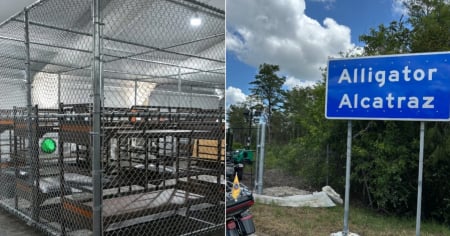
Despite having a valid tourist visa and having entered the United States legally, Carlos was placed in federal custody and transferred to the detention center known as Alligator Alcatraz, where he has remained incommunicado since then, without access to lawyers, family visits, or consular assistance.
A questioned arrest from the outset
The Florida Highway Patrol (FHP) stopped Carlos during a traffic operation in which they confirmed that the vehicle he was traveling in did not have valid registration.
Despite the fact that this violation does not usually lead to immigration consequences, the authorities immediately issued an "immigration hold," activating their transfer to the federal immigrant detention system.
Since then, Carlos was sent to the immigration center Alligator Alcatraz, located in a swampy area of Florida and known for its extreme isolation conditions.
According to reports from family members and human rights organizations, his case exemplifies the abuses and gaps in the current U.S. immigration system, especially under the mass deportation policy promoted by the Donald Trump administration.
Caught in migratory limbo: Without a file, without a defense
Despite the time that has passed, the young man still does not have a migration case number, which prevents any legal action from being taken by his lawyers or the Mexican consulate.
This situation has left Carlos completely isolated in legal terms.
"The problem is that as long as they are not assigned a migration case number, no one can legally intervene in their defense," explained their relatives in statements to Univision.
His family, which has been actively seeking his release, has reported that even the Mexican consul in Orlando has been unable to make progress in his representation due to the lack of a formal file.
Carlos's father traveled from Mexico with the hope of visiting him, but he was denied access to the center.
“We don't understand why they are treating him like an undocumented immigrant. He has a valid visa and entered legally. Why lock him up in a center like that?”, questioned the young man's father in an interview with the cited media outlet.
So far, the only means of communication has been through brief prepaid calls lasting less than five minutes, without privacy or confidentiality.
Outrage, diplomatic pressure, and legal vacuum
The situation has generated outrage in various sectors.
The President of Mexico, Claudia Sheinbaum, announced the sending of a "diplomatic note so that the Mexicans detained in Alligator are returned immediately" to the country.
"The lawyer has sent letters, but there has been no response. There is no litigation because there is no case number," insisted one of the relatives interviewed by media outlets such as Univision and SDP Noticias.
As of now, Carlos Martín González remains trapped in a legal and physical limbo. His case calls into question the guarantees provided by the U.S. immigration system at this time, even for those who, like him, meet all the legal requirements to enter the country.
Alligator Alcatraz: Reports of inhumane conditions
The detention center Alligator Alcatraz, where Carlos is held, has been the subject of numerous complaints since its opening on July 1st.
According to reports from the media, more than 700 people are being held at that location, whose conditions have been described as inhumane by lawmakers and civil rights advocates.
“There is overcrowding, spoiled food, extreme temperatures, and a clear inability to maintain contact with the outside world,” stated U.S. congress members who recently visited the center.
Alligator Alcatraz was inaugurated as part of Trump's immigration strategy, who promised to carry out the largest deportation operation in the country's history.
The current measures include operations in collaboration between federal agencies and state security forces, which have led to arbitrary arrests, such as that of Carlos, according to warnings from human rights organizations.
Frequently Asked Questions about the case of Carlos Martín González and the Alligator Alcatraz detention center
Why was Carlos Martín González detained in Alligator Alcatraz if he had a valid visa?
Carlos Martín González was arrested despite having a valid visa due to a minor traffic infraction, which triggered an immediate immigration hold and his transfer to the Alligator Alcatraz detention center. This situation has been described as an abuse of the immigration system, affecting even those with all their documents in order.
What are the conditions at the Alligator Alcatraz detention center?
The conditions at the Alligator Alcatraz detention center have been widely criticized for being inhumane. detainees face overcrowding, spoiled food, extreme temperatures, and lack of access to basic health and hygiene services. Moreover, there have been reports of a lack of privacy and difficulties in maintaining contact with the outside world.
What actions have the Mexican authorities taken in the case of Carlos Martín González?
The President of Mexico, Claudia Sheinbaum, announced the sending of a diplomatic note to demand the release of the Mexicans detained in Alligator Alcatraz. However, the lack of a formal file for Carlos has hindered significant progress in his legal representation, which has caused frustration and outrage among his family members and legal representatives.
How does Trump's immigration policy affect those detained in Alligator Alcatraz?
Trump's immigration policy has tightened conditions for immigrants, promoting mass detentions and extreme conditions in facilities like Alligator Alcatraz. Despite having no criminal charges, many detainees face an opaque legal process without guarantees, which raises concerns about respect for human rights and due process.
Filed under: