
Related videos:
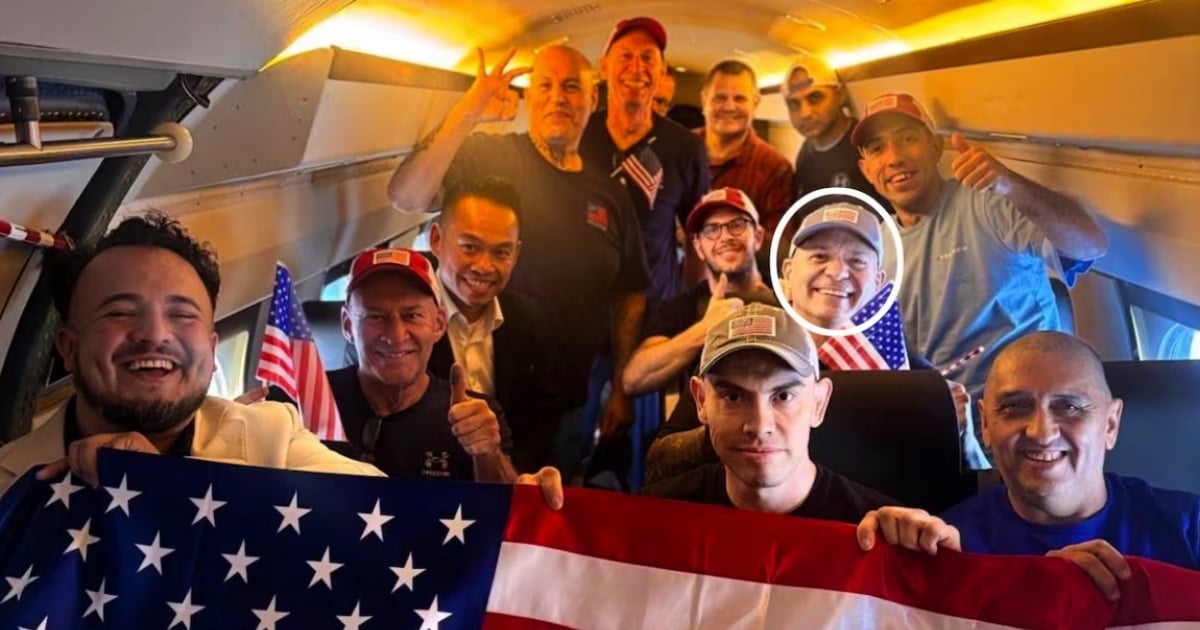
Dahud Hanid Ortiz, a former marine of Venezuelan origin but a naturalized American citizen, sentenced to 30 years in prison in the South American nation for the murder of two Cubans and an Ecuadorian in Madrid in 2016, has just been released by the regime of Nicolás Maduro as part of a swap of “political prisoners” with the U.S.
"Until July 18, there were more Americans unjustly detained in Venezuela than in any other country in the world. Every American unjustly detained in Venezuela is now free and safe on U.S. soil," can be read in a triumphant post on X this Tuesday from the U.S. Embassy in Venezuela.
However, unfortunately, one of those released is a dangerous murderer.
The triple murder of Usera
On June 22, 2016, the Madrid district of Usera became the scene of a massacre. In a law firm located at Marcelo Usera Street 40, three people were brutally murdered.
The victims were the Cubans Maritza Osorio Riverón, secretary of the firm; lawyer Elisa Consuegra Gálvez; and a client of Ecuadorian origin identified as John Pepe Castillo Vega.
The author of the triple murder, who was actually being sought—motivated by jealousy—was the lawyer Víctor Joel Salas Cobeñas, a former Peruvian anti-drug prosecutor with whom Dahuh Hanid Ortiz's ex-wife was having a romantic relationship.
When he couldn’t find him, he mistook Castillo for the lawyer, attacked him, and then also murdered the two workers from the law firm. Afterwards, he set the office on fire, leaving a horrific scene that shocked the Spanish capital.
Obviously, the crime had no political motivation. According to the sentence issued years later in Caracas, it was a planned act, born out of jealousy and a history of prior gender-based violence.
Hanid Ortiz had managed to hack his ex-partner’s devices and install microphones in her home.
"We feel betrayed": The voice of the only indirect victim
Lawyer Víctor Joel Salas, the true target of the attack, survived by chance: he was delayed that day due to feeling unwell after lunch, and now, nearly ten years later, he fears for his life again upon learning that the man who wanted to kill him has just been released.
“Both my family and I feel deceived, betrayed, and frustrated,” Salas has stated to the Spanish press in recent hours.
“Dahud Hanid Ortiz was never a political prisoner; he was a murderer with a final sentence from the Venezuelan authorities”, he added, without crediting how a murderer with a 30-year confirmed sentence can escape justice.
Salas states that he has been living in fear since his release. He says that he has received support from German authorities - the country where he currently resides - who activated Interpol red alerts to prevent Hanid Ortiz from entering the Schengen area.
From military hero to killer
Born in Barquisimeto, Venezuela, in 1970, Dahud Hanid renounced his Venezuelan nationality to become a U.S. Marine.
He participated in missions in South Korea and Iraq and was awarded the "Purple Heart," one of the highest honors in the Army.
However, he was later expelled in disgrace for forging documents to obtain government assistance.
After committing the triple murder in Madrid, he fled to Venezuela, where he was captured in 2018 by the Anti-Extortion and Kidnapping Command in a mining area of Bolívar state.
For years he was held in DGCIM facilities, where he was accused of U.S. espionage, although his true identity and crime were later uncovered.
The extradition to Spain was denied by the Supreme Court of Justice of Venezuela.
In January 2024, a court sentenced him to 30 years in prison for multiple homicide, with a final ruling dismissing any political motivation.
International exchange with consequences
Despite this sentence, Hanid Ortiz was included in the list of “political prisoners” released by Venezuela in an agreement with the U.S. that included ten U.S. citizens.
The other nine released individuals, many of whom hold dual nationality, are: José Marcelo Vargas, USA and Bolivia; Jonathan Pagan González, USA and Puerto Rico; Wilberth Joseph Castañeda Gómez, USA and Mexico; Lucas Jonas Hunter, USA and France; Renzo Yasir Humanchumo Castillo, Peru and resident in the USA; Erick Alfredo Oribio Quintana, USA and Venezuela; Fabián Bugliones Reyes, Uruguay and USA.
Venezuelans with residency in the U.S., Juan José Faria Briceño and Ronald Oribio Quinta, were also released.
Criticism of Nicolás Maduro and José Luis Rodríguez Zapatero
In addition to the questioning of Nicolás Maduro, which has allowed the exit from the country of a convicted murderer sentenced to 30 years in prison, criticisms have also been directed at former Spanish president José Luis Rodríguez Zapatero, who has been identified as a key mediator between Caracas and Washington.
Zapatero is being accused today by Spanish media of having favored the freedom of Hanid Ortiz, despite his criminal past in Spanish territory.
“Zapatero has collaborated in an injustice. That murderer is on his way to the United States and can come to kill me,” denounced Víctor Salas.
Criticism is also directed at the passivity of the Spanish government
On the other hand, both the victims' families and their legal representatives harshly criticize the Spanish government's inaction following the release of the murderer.
They accuse the Ministry of Foreign Affairs of having done nothing to prevent the delivery of the criminal to the United States, nor to reverse the situation.
According to statements collected by Telemadrid, the family members describe the process as "a contradiction" and demand accountability.
“The message being sent is that anyone can enter, kill three people, and nothing will happen”, they assert.
Since the announcement became public, they have turned to international bodies to review the legality of the exchange.
The case of Dahud Hanid Ortiz is an extreme example of how secrecy in international agreements can lead to impunity for atrocious crimes.
Filed under: