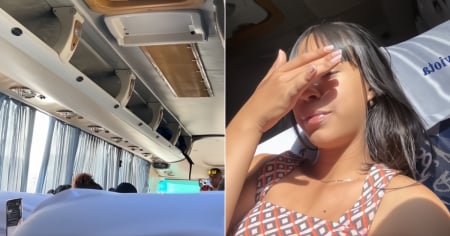
A Cuban woman shared on social media the distressing moment she experienced when her mother had to appear before an immigration court in the United States under the I-220A process.
"Today the court had my mom with I-220A and thank God and everything that exists, she came back home with her," he wrote in an emotional video posted on TikTok, where he shows his mother smiling as she leaves the courthouse.
According to what was explained in the comments, the hearing took place in the city of Miramar, in the northern part of Miami-Dade County, and it was the first time her mother had attended court after five years of being in the country.
“She has been here for five years; it was her first court appearance. Always working, without any incidents, reporting taxes. But I tell you, it's all about having a lot of faith and asking God every day that everything will turn out well,” the young woman expressed, revealing the blend of faith, uncertainty, and relief that many Cuban migrants experience during these legal processes.
The I-220A form is an order of release on parole issued by the Department of Homeland Security (DHS) to certain immigrants awaiting their hearings before an immigration judge, which does not guarantee them regular immigration status but allows them to temporarily remain in the country while their case is being decided.
The video, which has received hundreds of messages of support and solidarity, reflects the harsh reality faced by many Cuban families in the United States, marked by prolonged and uncertain legal processes, but also by the hope of a better life away from the authoritarianism and precariousness of the island.
Frequently Asked Questions about the I-220A Immigration Process in the United States
What is form I-220A and what does it mean for Cuban immigrants?
The I-220A form is a parole order granted to certain immigrants awaiting hearings before an immigration judge in the U.S. This form allows immigrants to temporarily remain in the country while their case is being decided, but it does not guarantee regular immigration status or immediate immigration benefits. Many Cubans find themselves in legal limbo under this status, facing uncertainties and long waits to resolve their legal situation.
How can Cuban immigrants cope with the uncertainty of the I-220A process?
The uncertainty of the I-220A process can be emotionally exhausting. It is advisable to stay calm, live each day normally, and not rush decisions. It is important not to be swayed by rumors and to stay informed through reliable sources. Many immigrants find support in online communities and social networks, where they share experiences and words of encouragement.
What experiences have Cubans shared about the I-220A process on social media?
Numerous Cubans have used platforms like TikTok to share their experiences with the I-220A. Testimonials range from stories of hope and resilience to accounts of anxiety and uncertainty. Many videos showcase the excitement of those who have received their residency after years of waiting, while others provide messages of faith and unity for those still in the process.
What impact does the I-220A process have on Cuban families in the U.S.?
The I-220A process profoundly affects Cuban families, causing separation and anxiety. Many are forced to live far from their loved ones for years, facing uncertainty about their legal future. However, there are also stories of hope, where families support each other and maintain faith that they will eventually be able to reunite and regularize their immigration status.
Filed under: