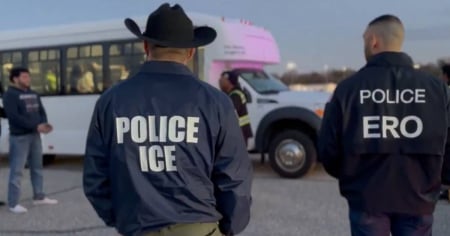
A Cuban citizen with drug trafficking convictions and other offenses in the United States is facing deportation after being arrested by the New Orleans Immigration and Customs Enforcement (ICE), the agency announced on Sunday.
Robert Santiesteban has a criminal record for manufacturing and selling controlled substances, a serious offense; as well as illegal possession of a firearm and theft of services, ICE indicated in a post on X, which was reposted on the White House's account on the same social media platform.
The statement concluded with a sarcastic tone: “He called it trafficking. We call it a one-way ticket,” referring to the forced deportation process that Santiesteban will undergo as part of the Trump administration's policy to expel immigrants with illegal status from the country, especially those with criminal convictions and pending charges.
ICE has emphasized that there will be no tolerance for illegal immigrants with a criminal history, and "all available legal authority" will be applied to remove them from U.S. territory, even to third countries in the event that their home governments refuse to accept them.
Recently, two more Cubans with criminal records for drug-related offenses were also arrested by U.S. immigration authorities.
ICE arrested Eduardo Luis Machín Pozo, 64 years old, in New Orleans, whose criminal record includes previous convictions for drug trafficking, possession of marijuana, and dangerous drugs in Russellville, Alabama.
In the same city, Lianet Peña Font was taken into custody, who had been sentenced for conspiracy to possess with the intent to distribute more than 500 grams of cocaine and served 24 months in a federal prison.
His cases are set against the backdrop of the stringent immigration crackdown by the government of Donald Trump, which has multiplied raids, arrests, and deportations of undocumented immigrants, including a significant number of Cubans, with criminal charges or past convictions in the U.S.
The number of island citizens with a final deportation order reached 42,084 as of December 2024, according to statistics from the Department of Homeland Security (DHS).
Last Thursday, 118 people were deported to Cuba, in the seventh air operation carried out by the Trump administration since January of this year.
However, the Havana regime refuses to accept Cubans who have been outside their country since before the immigration agreements of January 2017 or those with criminal records in the U.S.
In response to this refusal, Washington began to deport citizens from the island to third countries. Three ineligible Cubans with extensive criminal records were recently sent to South Sudan and the Kingdom of Eswatini in Africa; while an unspecified number have been transported on deportation flights headed to Mexico.
Frequently Asked Questions about the Deportation of Cubans with Criminal Records in the U.S.
Why will ICE deport Robert Santiesteban?
Robert Santiesteban will be deported due to convictions for drug trafficking, illegal possession of firearms, and theft of services in the United States. These criminal activities are considered serious, and under U.S. government policy, immigrants with criminal records and illegal status are subject to immediate deportation.
How does Trump's deportation policy affect Cuban immigrants?
Trump's deportation policy has intensified efforts to expel immigrants with criminal records and illegal status. This has resulted in a significant increase in the deportation of Cubans, especially those with convictions for serious crimes. The administration has emphasized that there will be zero tolerance for illegal immigrants with criminal histories.
What happens if the Cuban government refuses to accept the deportees?
If the Cuban government refuses to accept deportees, the U.S. has chosen to send them to third countries. This strategy has recently been implemented with deportations to nations like South Sudan and Eswatini. Cuba's reluctance to accept its citizens with criminal records in the U.S. or those who remained outside the country prior to January 2017 has led to these alternative actions.
How many Cubans are at risk of deportation from the U.S.?
As of December 2024, more than 42,000 Cubans had deportation orders in the U.S., according to official figures from the Department of Homeland Security (DHS).
What measures is ICE taking against immigrants with criminal records?
ICE is intensifying raids and arrests of immigrants with criminal records, exercising all legal authority for their deportation. These measures are part of a broader offensive to expel those who pose a threat to public safety, according to U.S. authorities.
Filed under: