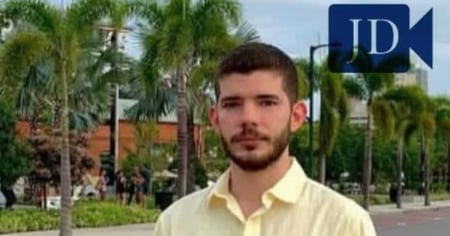
The Cuban Eduardo Luis Machín Pozo, with a criminal record for drug trafficking in the United States, was arrested on Saturday by agents of Immigration and Customs Enforcement (ICE) in New Orleans, and is facing deportation proceedings.
The Department of Homeland Security (DHS) announced this Monday in a statement the arrest of Machín Pozo, 64, along with others among “the worst illegal foreign criminals, including pedophiles, rapists, and drug traffickers from American communities.”
The Cuban has a criminal record that includes previous convictions for drug trafficking, possession of marijuana, and dangerous drugs in Russellville, Alabama. The DHS did not specify when Machín Pozo committed the crimes or the sentence or sentences that were imposed on him.
Numerous Cubans with criminal records or pending charges against them, as well as irregular status in the U.S., have been detained in recent months and have either already been deported or are awaiting expulsion. If the Cuban government does not accept them back, they are deported to third countries.
ICE agents arrested a Cuban woman identified as Lianet Peña Font in New Orleans, who had spent two years in prison after being convicted of conspiracy to possess with intent to distribute more than 500 grams of cocaine.
In Miami, Border Patrol officers apprehended a Cuban man with a history of indecent behavior with a minor, prostitution, and theft. He had a deportation order since 2012, but he never left the country.
Juan Félix Yanes Montano, 56 years old, with convictions for armed robbery, burglary and kidnapping with a deadly weapon, was arrested by ICE in Miami-Dade and classified as a "serious threat to public safety."
Federal immigration agents in New York took Geraldo Lunas Campos, 55, into custody. He has an extensive criminal record that includes sexual abuse of an 11-year-old, assault with a weapon, illegal possession of firearms, and drug trafficking.
Everyone will be expelled from the U.S. ICE has reiterated that there will be zero tolerance for illegal immigrants with criminal histories and will use "all available legal authority" to remove them from U.S. territory, even if that means sending them to countries that are not their own.
The number of deportable Cubans has risen to over 42,000, however, the regime in Havana refuses to accept many of them, particularly those with criminal records or who have been out of the country since before 2017.
In response to this refusal, Washington has started deporting some citizens from the island to third countries, as seen in recent deportation operations to South Sudan and Eswatini in Africa, a measure supported by the Supreme Court.
Frequently Asked Questions About the Detention of Cubans with Criminal Records in the U.S.
Why was Eduardo Luis Machín Pozo arrested in New Orleans?
Eduardo Luis Machín Pozo was arrested due to his criminal history related to drug trafficking. Machín Pozo, 64, has prior convictions for drug trafficking, possession of marijuana, and other dangerous drugs in Alabama, which led to his detention by ICE in New Orleans.
What happens if Cuba does not accept the deportation of its citizens with criminal records?
The U.S. may choose to deport these individuals to third countries if Cuba does not accept them. The Cuban government typically refuses to accept citizens with criminal records or those who have been outside the country since before 2017, which has led the United States to deport some Cubans to countries such as South Sudan and Eswatini.
What measures is ICE taking against immigrants with a criminal record?
ICE is intensifying operations to arrest and deport immigrants with criminal records. The agency has reiterated that there will be zero tolerance for illegal immigrants with a criminal history and is utilizing all available legal authority to expel them from the country.
How many Cubans are at risk of deportation in the U.S.?
It is estimated that more than 42,000 Cubans have deportation orders in the U.S. These Cubans are under supervised release but face the possibility of being deported due to their irregular status and, in many cases, their criminal records.
Filed under: