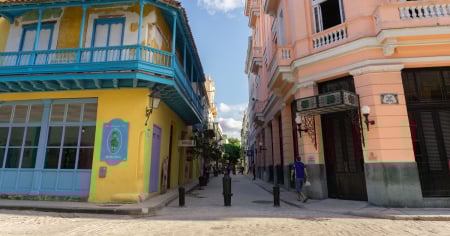
A young Cuban has raised alarms about the dramatic decline of tourism in Cuba with a video that takes viewers through the almost deserted streets of Varadero, the main jewel of the national tourism sector.
“Tourism here is declining every day”, states the user from TikTok @briana_matancera, as she showcases the empty avenues and closed establishments of what was once the island's most vibrant destination.
In her spontaneous account, recorded on the way to the beach, Briana invites her followers to reflect on the causes of this decline. “I don’t know what’s happening. Or well, I do know, but I want you to share your thoughts in the comments.”
Its tone, a blend of irony and sadness, resonates with a reality that strikes thousands of Cubans: the structural crisis of the country, which has also reached a breaking point in one of its key sectors.
The contrast with the recent past is striking. "In the past, you couldn't even walk down the streets because they were full of people," the young woman recalls, while the images depict a beach resort that today seems frozen in time.
"Judge for yourselves with your own eyes", he adds, appealing to the judgment of his audience and sparking a debate that has already erupted on social media.
What stands out the most in their testimony is that it is not just the absence of foreign tourists. Also, the Cubans are conspicuously absent, who in previous years filled Varadero during July and August on day trips from nearby provinces such as Villa Clara, Cienfuegos, or Havana. Today, many cannot make that trip again due to high transportation costs, the lack of fuel, and the general crisis in the country.
The free fall of tourism in Cuba is supported by official figures. Just between January and June of 2025, more than 319,000 visitors arrived on the island compared to the same period the previous year, representing a decline of 25%.
The national hotel occupancy barely exceeds 24%, and even in the case of Cubans, destinations like Punta Cana have become the new meeting point for families divided by emigration.
Varadero no longer seduces: discrimination and disappointment
The issues do not only affect foreign tourists. The Dominican influencer @toxicaliz27, known as "the most Cuban Dominican," also shared her disappointment after being treated as a local in several establishments in Varadero.
"I was in shock," he said as he recounted how a waiter informed him of the price of the mojito before serving it, and how he was denied entry to a bar while others were allowed to pass.
His testimony, far from being anecdotal, reflects an increasingly widespread perception: tourism in Cuba has lost competitiveness, appeal, and humanity.
Meanwhile, the authorities, led by Prime Minister Manuel Marrero, insist that tourism is the "economic salvation" of the country, while citizens witness a visible collapse.
The phrase "more hotels and less food" has become a mantra among Cubans, tired of seeing resources allocated to infrastructure that does not generate income or social improvements.
Power outages, food shortages, low wages, and the collapse of public services make official statements sound increasingly hollow. As one internet user put it: “How much longer will Marrero keep telling that story?”
Frequently Asked Questions about the Tourism Crisis in Varadero and Cuba
Why is Varadero, Cuba's main tourist destination, empty?
Varadero is empty due to a combination of economic and structural factors that have impacted tourism in Cuba. The economic crisis, fuel shortages, high transportation costs, and the lack of basic services have reduced the appeal of the destination for both foreign tourists and Cubans. Moreover, official figures report a significant decline in the arrival of visitors compared to previous years.
What are the main causes of the decline in tourism in Cuba?
The decline of tourism in Cuba is due to economic problems, poor service quality, and inadequate infrastructure. Factors such as blackouts, food shortages, urban deterioration, and insecurity have discouraged tourists. Furthermore, the government's discredit and lack of investment in key sectors have contributed to this crisis.
How has the tourism crisis affected Cubans and the local economy?
The tourism crisis has negatively impacted the local economy and the lives of Cubans. The low influx of tourists has reduced income in cities such as Varadero and Havana, affecting those who rely on tourism for their livelihoods. Furthermore, investment in hotels does not translate into social improvements, leaving the population in precarious situations.
What measures has the Cuban government taken to address this situation?
The Cuban government has insisted on promoting tourism as an economic salvation, but these strategies have not yielded visible results. Despite the construction of new hotels and promotional campaigns, the lack of solutions to structural problems has hindered an effective recovery of the sector.
What do Cubans think about the current tourism situation on the island?
Many Cubans criticize the government's lack of attention to fundamental issues while investing in tourism. Social media reflects the frustration of citizens regarding the scarcity of basic resources and the deterioration of infrastructure, contrasting with the investment in the tourism sector that does not yield tangible benefits for the population.
Filed under: