
Related videos:
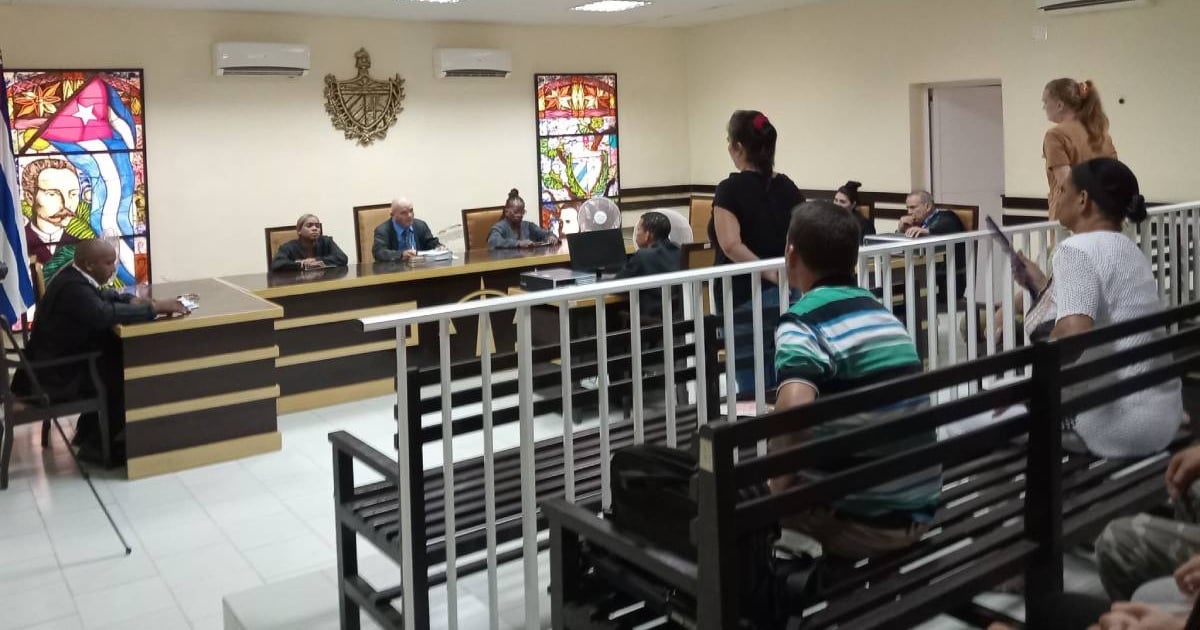
The Provincial Popular Court of Matanzas sanctioned two former officials of the Municipal Housing Directorate in Cárdenas for the crime of embezzlement, after it was confirmed that they authorized and certified the payment of more than half a million pesos for works that were never carried out.
The trial, held on August 7 in the First Criminal Court, was "exemplary, oral, and public" and was attended by officials from the Housing departments of Matanzas and Cárdenas.
The accused, identified as the former director and investor of the entity, were charged with falsifying banking and commercial documents as a means to commit embezzlement.
The investigation revealed that the former director signed an irregular contract with a self-employed worker for the rehabilitation of multi-family buildings, without a bidding process or approval from the Contracting Committee. The document omitted basic details such as the scope of work, schedule, responsible parties, and materials.
The assigned project was for the structural reinforcement of the "Transporte" building, located in the 13 de Marzo neighborhood, and it was never carried out. However, the former investor falsely certified the quality of the work and endorsed the payment of 531,486 pesos with 19 cents, an amount that was transferred to the private contractor.
The court imposed a five-year prison sentence on the former director and a four-year sentence on the former investor, with the possibility of serving their sentences in a correctional work program without imprisonment. Both were disqualified from holding positions that involve the management of material and financial resources.
During the process, relatives of the accused returned the defrauded amount, so the entity did not suffer any financial losses. The ruling highlights the “undeniable social harm” of the act, as it improperly disposed of state funds.
A case that emerges amidst criticism of the state media
This judicial process is taking place in a context where even figures close to the government have acknowledged the limitations of the state media in addressing cases of corruption.
The host of Con Filo, Michel Torres Corona, recently surprised everyone by acknowledging that "the media often do not have timely information or cannot cover cases of corruption that have even become public."
Torres' statements align with similar criticisms from pro-government journalist Cristina Escobar, who called for a rethinking of resource use and television programming, denouncing the priority of "filling the schedule" over providing useful and critical content.
These statements reveal internal tensions within the state media apparatus, where the narrative of resource scarcity coexists with substantial support for propaganda projects, while space for critical journalism is restricted.
In a country where reports of corruption often go unaddressed on the official agenda, the Cárdenas case not only implicates two officials but also reveals the cracks in an information system that admits, through the words of its own spokespeople, that it does not always convey what it should.
Frequently asked questions about corruption trials in Cuba
Why were the former housing officials in Cárdenas sanctioned?
The former officials were sanctioned for embezzlement, after authorizing and certifying the payment of more than half a million pesos for work that was never carried out. This was done through the forgery of banking and commercial documents.
What penalties did the former housing officials in Cárdenas receive?
The former director was sentenced to five years of imprisonment, and the former investor to four years, with the possibility of serving the sentence in a corrective work program without internment. Both were disqualified from holding positions in resource management.
What is the context of corruption in Cuba?
Corruption in Cuba is a widespread issue that affects multiple levels of the state apparatus. Recent cases have exposed the misappropriation of resources, influence peddling, and document forgery. Despite the government's attempts to present a tough stance, the structural causes of corruption, such as the lack of resources and failed management, remain inadequately addressed.
How does corruption affect the Cuban economy?
Corruption leads to significant economic losses, as evidenced by the gasoline spill at the Ñico López refinery, where the losses exceeded 5 million pesos. These issues are exacerbated by the scarcity of resources and the lack of transparency in state management.
Filed under: