
Related videos:
Thousands of people, including young individuals wishing to study abroad, professionals seeking to validate their degrees, or citizens applying for Spanish nationality under the Democratic Memory Law, remain trapped in a system that, despite official statements, does not provide clear guarantees or adhere to deadlines for the legalization of university degrees.
In theory, legalizing an academic document, whether it be diplomas, grade certifications, or syllabi, should take 45 business days from the receipt of the application at the university. However, in practice, this timeframe is rarely adhered to, according to a report from Cubahora.
The causes are numerous and range from the uncontrolled increase in requests since 2019, shortage of staff in archives and secretariats, lack of transportation between university campuses, power outages during working hours, and, in many cases, absence of files in the archives.
In a press conference, authorities from the Ministry of Higher Education (MES), according to a report by Cubahora, acknowledged that they are not meeting deadlines, and that often mistakes in the documents require restarting the entire process.
Despite the establishment of a temporary working group and the intention to update the regulations in force since 2014, bureaucracy and bottlenecks continue to prevail.
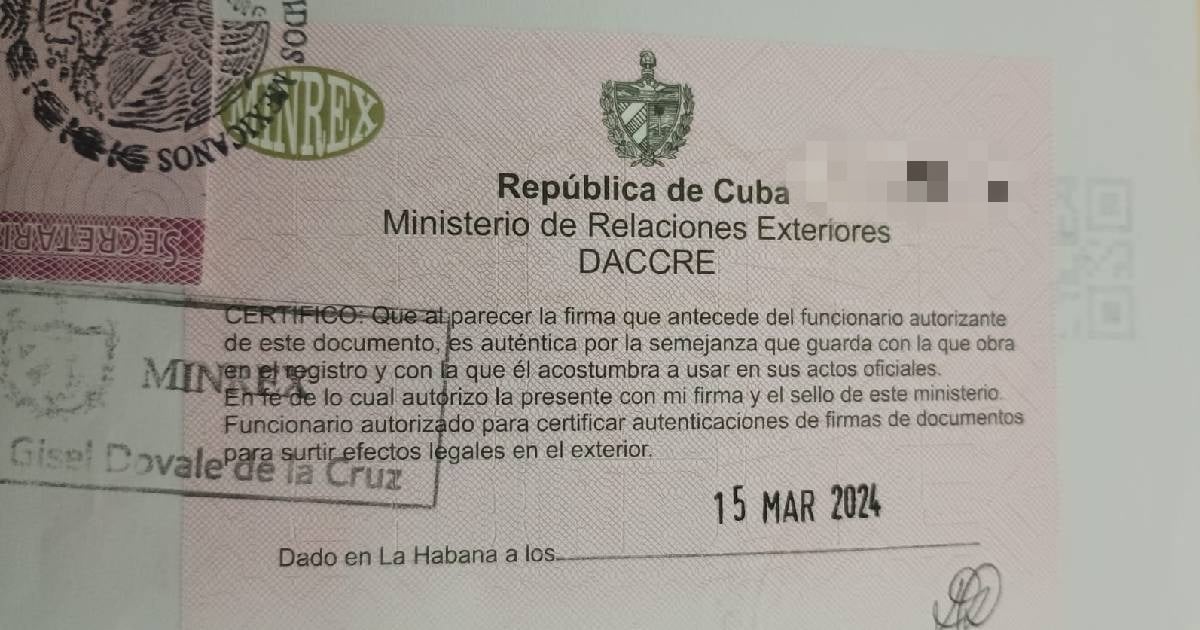
Since February 2025, the Ministry of Justice (Minjus) has taken over the legalization of documents that previously fell under the Ministry of Foreign Affairs. According to official figures, more than 600,000 documents were legalized in just six months this year, but that number does not reflect the anxiety of those who are still waiting for theirs.
Minjus itself acknowledges that the greatest delays are in the initial acquisition of documents, particularly those from universities, where the backlog is widespread.
The daily processing limits, 100 documents for some firms, 50 for others, along with the irregular arrival of bags with paperwork from the provinces, worsen the situation.
In desperation, many Cubans turn to the black market, where the same documents can be obtained in days if the price is right. While it is an open secret that bribery is rampant and justified by the need to leave the country, gain access to education, or meet legal requirements for urgent immigration processes.
Among Cubans experiencing this situation, there's a recurring phrase: they just want their diploma. It's not just a piece of paper; it's a chance to start a new life.
Legalizing a document should not be a test of endurance. However, in a country where every procedure turns into a struggle, obtaining a notarized title can take months, sweat, and often, money under the table.
Frequently asked questions about the legalization of degrees in Cuba
How long should the legalization of degrees take in Cuba?
In theory, the legalization of an academic document in Cuba should take 45 business days from the receipt of the application at the university. However, in practice, this timeframe is rarely honored due to multiple factors such as an increase in requests, staff shortages, and logistical issues.
What are the main causes of the delay in the legalization of documents in Cuba?
The main causes of delays in the legalization of documents in Cuba include the overwhelming increase in applications, the shortage of staff in archives and offices, the lack of transportation between university campuses, power outages during working hours, and, in many cases, the absence of files in the archives. All of this has contributed to a collapse of the system.
What changes have been made to improve the document legalization process in Cuba?
Since February 2025, the Ministry of Justice (Minjus) has taken over the legalization of documents that previously fell under the Ministry of Foreign Affairs. Additionally, a plan for the progressive digitization of documents has been announced, although there are still no clear dates or visible results. So far, these changes have not addressed the fundamental issues of the system.
How does the situation regarding document legalization affect Cubans seeking Spanish nationality?
The situation of delays in the legalization of documents in Cuba directly affects Cubans seeking to obtain Spanish nationality, especially under the Law of Democratic Memory. Obtaining legal documents is a crucial requirement to initiate or complete their nationality procedures, and delays can prevent applicants from meeting the deadlines set by law.
Filed under: