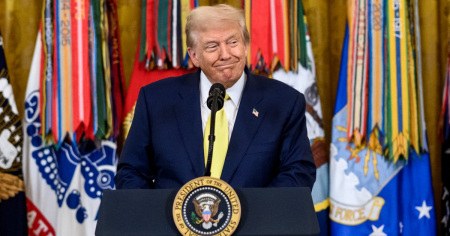
The President of the United States, Donald Trump, ordered the Pentagon to use the military to combat drug cartels that Washington has designated as foreign terrorist organizations.
The measure, signed in secret, paves the way for military operations not only on U.S. soil but also abroad and in international waters.
The New York Times cited informed sources about the initiative and reported that the presidential directive empowers the Armed Forces to carry out actions that until now were the responsibility of police agencies, such as the pursuit, capture, and neutralization of members of these criminal groups.
The White House justifies the order by the need to curb fentanyl trafficking, a substance that has caused the worst addiction crisis in decades in the U.S., along with other illegal drugs.
The Trump administration views this flow of narcotics, largely from Mexico and Latin America, as a national security threat and even supports the imposition of tariffs on Mexico and Canada.
Sources cited by the New York newspaper indicate that high-ranking U.S. officials are already working on proposals to carry out these military operations, although details regarding the possible intervention scenarios and their timeline have not been disclosed.
Trump's initiative is part of a broader strategy to intensify the fight against drug trafficking.
Among the recent measures is the reward of 50 million dollars for the capture of the president of Venezuela, Nicolás Maduro, whom Washington associates with a drug cartel and accuses of being “one of the biggest drug traffickers in the world.”
In July, the U.S. government's Office of Foreign Assets Control (OFAC) designated the so-called Nicolás Maduro's Cartel of the Suns as a foreign terrorist organization (FTO).
In February, the United States government officially designated six Mexican drug trafficking cartels, the Venezuelan gang Tren de Aragua, and the Mara Salvatrucha (MS-13) gang as foreign terrorist organizations.
The authorization for the U.S. Army to act against Latin American cartels marks a new milestone in the security policy of the Republican president and demonstrates his willingness to use the military as a central tool in the war against drug trafficking, both inside and outside U.S. borders.
Frequently Asked Questions about Trump's Authorization for the Military to Act Against Cartels
What does Trump's authorization for the military to act against the cartels imply?
The authorization allows the U.S. military to conduct military operations against drug cartels designated as foreign terrorist organizations. This includes actions such as pursuing, capturing, and neutralizing members of these groups, both inside and outside the United States.
What is the objective of this measure against the cartels?
The main objective is to stop the trafficking of fentanyl and other illegal drugs coming into the United States, which is regarded as a threat to national security. The Trump administration has identified narcotics trafficking from Mexico and Latin America as one of the primary issues.
What repercussions could this measure have on relations with Mexico and Canada?
This measure could increase diplomatic tensions between the United States, Mexico, and Canada, especially in a context where there are already ongoing trade and tariff disputes. Trump has stated that both countries have not done enough to combat fentanyl trafficking and illegal immigration.
How does this measure fit into Trump’s security policy?
This measure is part of a broad strategy by Trump to intensify the fight against drug trafficking. It also includes the imposition of tariffs on Mexico and Canada and a reward of 50 million dollars for the capture of Venezuelan President Nicolás Maduro, who is linked to drug trafficking.
Filed under: