
Related videos:
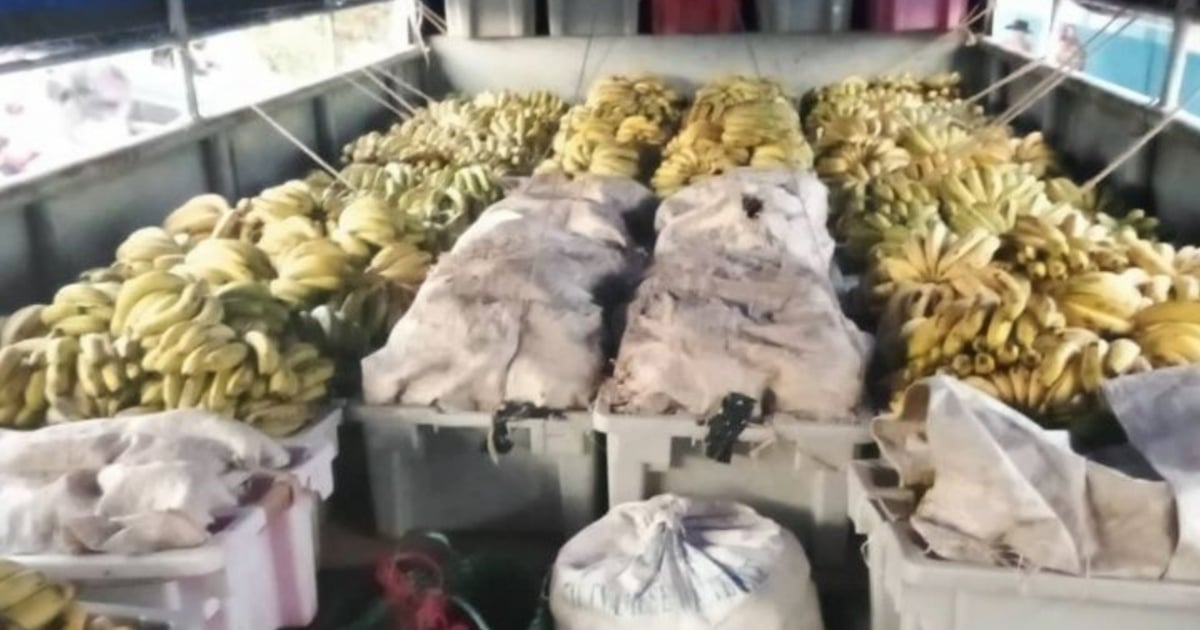
An official profile reported the seizure of tons of ripe bananas in the municipality of Guisa, in Granma, and dozens of Cubans have criticized what they consider "an abuse."
“Occupy what would be used for illegal sale in Guisa. Granma. This time, I received an image of the seizure of tons of ripe bananas in Guisa, which they intended to transport to Bayamo in a private truck for illegal sale at inflated prices by the street vendors,” reported on Facebook by the officialism-associated profile Entérate con Aytana Alama.
The official information stated that "now the product will be sent to Acopio for legal sale at lower prices to the people of Bayamo."
However, the people of Granma do not share the same opinion and reacted with anger to this attempt to criminalize producers and sellers.
"And you find that to be an achievement, of course they sell it cheap since it didn't cost them anything. I see no progress when they continue to watch those who are dedicated to bringing food to the people, something you do not do. These are products purchased from the farmers since you cannot buy from them," commented a user.
Another user confronted the government leaders: “They are shameless; they confiscate to keep the money. Let everyone sell their goods, stand against drugs, and let the people do what it takes to get ahead. They are abusers; they only want to enrich themselves—the corrupt, criminal, and shameless leaders of this country.”
For another, "thieves are not punished," while "the farmers who fight are not allowed to live; it's a competition between the government and the people."
A user believes that “every time agricultural products are confiscated, it means one less producer will sow, which will drive up the cost of the product.”
“This is what I never get tired of criticizing. If there are 100 producers selling tons of bananas or another product, the price is sure to drop... That never fails, it meets the demand so you can see how the price falls,” he adds.
A resident of Granma opines that “what happens is that the government lacks the backbone and the money to go buy from the farmers and then sell it at a reasonable price, and if they do, they don't pay the farmers, it’s all credit, this is not sustainable, it’s better to confiscate it. God, how long will this situation last?”
While farmers struggle to bring food to the population, seizures pose an additional obstacle for those who rely on selling their products to survive.
Situations like this are not new.
Also, at the end of last year, Carlos Díaz and Joelkis Díaz, a Cuban couple both 58 years old, suffered the confiscation of two cows they had owned for twenty-five years, by the Agriculture delegate in Boyeros, Yisel Rodríguez.
The confiscation of several trucks containing food belonging to farmers in Santiago de Cuba sparked a wave of outrage on social media.
Frequently asked questions about the confiscation of bananas in Granma
Why did the Cuban government seize tons of bananas in Granma?
The government of Cuba seized tons of bananas in Granma arguing that they were intended for illegal sale at inflated prices. According to the official profile Entérate con Aytana Alama, the product will be sent to Acopio for legal marketing at lower prices. However, this action has sparked criticism from citizens, who believe that the seizure is an abuse and negatively impacts local producers.
How has the population of Granma reacted to the seizure of bananas?
The population of Granma has reacted with anger and criticism to the confiscation, labeling it as an abuse and pointing out that these measures affect producers and increase the costs of agricultural products. Many believe that the government does not purchase directly from farmers and that these actions discourage agricultural production, which could have a negative impact on food prices and availability.
What implications does the seizure of bananas have for producers in Cuba?
The seizure of agricultural products, such as bananas, discourages producers, as it poses an obstacle for those who depend on the sale of their products to survive. This is compounded by the lack of government support to purchase directly from farmers at fair prices, which could lead to reduced production and an increase in market prices.
What is the impact of the Cuban government's policies on food distribution?
The policies of the Cuban government, such as the confiscation of agricultural products, negatively impact food distribution by criminalizing informal sales and restricting producers' ability to bring their products to market. This results in a reduced supply and potentially higher prices for the population, exacerbating the food crisis on the island.
Filed under: