
Related videos:
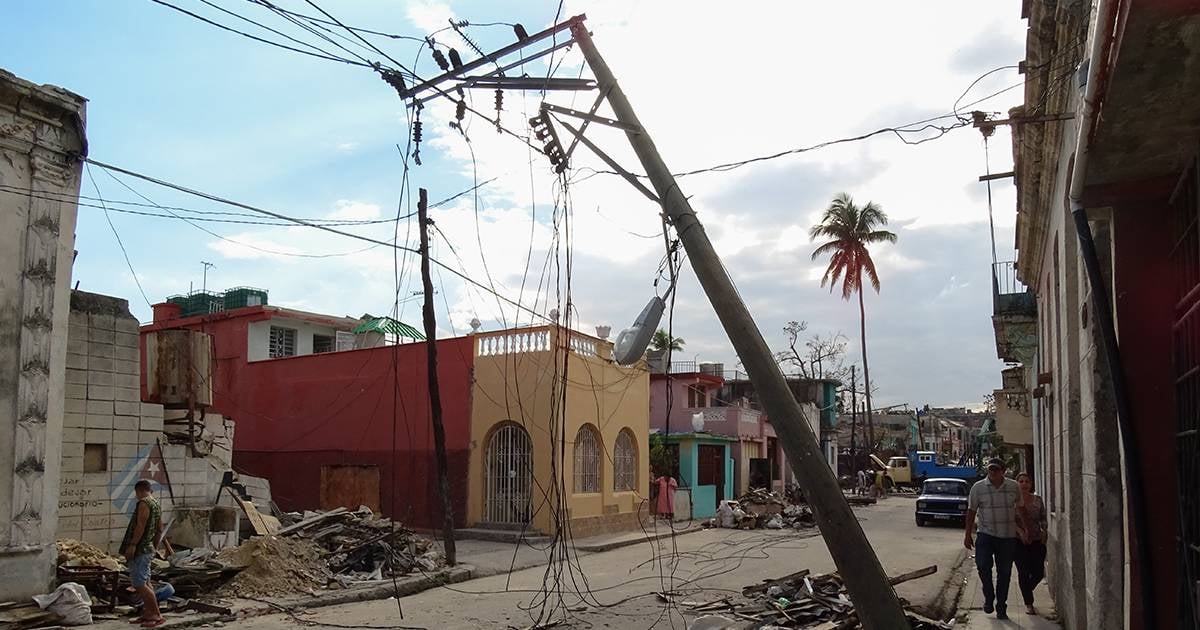
Six years after the tornado that struck Havana on January 27, 2019, residents of the community at Calzada de Luyanó No.167, in the municipality of Diez de Octubre, continue to live in disappointment and indignation due to the lack of solutions for their homes, despite numerous efforts made to the Housing authorities and the Government.
Orlando Cámbara Hernández, one of the affected individuals, recalls that after the disaster, they went to the designated points for victims in the hope of repairing their homes.
A brigade from the non-agricultural cooperative Santa Fe began work in 2019, partially constructing two apartments before withdrawing. Since then, the construction has been interrupted several times, with minimal progress and materials arriving and disappearing uncontrollably, revealed the Acuse de Recibo section of the newspaper Juventud Rebelde.
In some cases, like Cámbara's own, the apartments remain filled with unused materials, while bathrooms and kitchens are left destroyed and unfinished.
His family, consisting of three members, including a pregnant daughter and a five-year-old child, is forced to live with relatives.
The complaints lodged at municipal and provincial levels have not resulted in the definitive resumption of the construction work. In January 2025, Cámbara reported that even blocks and cement had been removed from the site, leaving only sand, gravel, pipes, doors, and windows.
Today, the situation remains the same. The neighbors claim to understand the country's economic difficulties, but they describe it as inhumane that, after so many years, entire families are still without their own roof, living in partially uninhabitable homes, without any real response from the authorities.
"The families of the citadel feel let down. Years have gone by with the same problem without anyone giving us an explanation, and even more so, a solution," he emphasized.
The EF4 tornado that struck the Cuban capital in 2019 was the strongest since 1940, according to Cuban Dr. José Rubiera in statements to Prensa Latina and devastated areas such as Santos Suárez, Luyanó, Regla, among others.
Behind him, he left not only four dead and 195 injured, but also considerable material damage, primarily to homes, street lighting, and roads.
In October 2022, residents of a building in Diez de Octubre also complained about countless bureaucratic procedures and lack of institutional response that were hindering the installation of water tanks damaged by the weather phenomenon.
Two and a half years after the incident, the Cuban Carlos Luis Pozo Vaillant reported that he had no place to live and was relying on the charity of neighbors, family, and friends after losing his home due to the tornado.
Thousands of people in Cuba have been waiting for years for a housing solution after the collapse of their homes, a clear example of the unfulfilled promises of the system.
The authorities, who are theoretically supposed to guarantee the right to adequate housing, leave many people in neglect, demonstrating the inefficiency and bureaucracy that characterize the Cuban government.
While the government invests billions in the construction of luxury hotels, ordinary citizens suffer the consequences of a failed administration and a lack of transparency in resource allocation.
At the end of March, the Cuban leader, Miguel Díaz-Canel, visited a community of wooden houses built in Guantánamo for the victims of Hurricane Oscar, which struck the eastern region of the island in October 2024, causing widespread destruction in the province.
More than 1,000 homes suffered significant damage due to strong winds and flooding caused by the weather phenomenon.
Despite the construction of new homes, the housing crisis continues to affect numerous victims. According to reports, many families in Imías are still living in tents after losing everything due to the hurricane.
Images have shown makeshift camps where these people live under precarious conditions, without stable access to drinking water or basic services.
Those affected have expressed their concern over the lack of long-term solutions and the uncertainty regarding when they will be able to access safer housing.
Frequently Asked Questions about the Housing Crisis in Cuba
Why are the families of Luyanó still without homes six years after the tornado?
The families affected by the 2019 tornado in Luyanó still remain homeless due to the inefficiency and bureaucracy of the Cuban government. Despite the efforts made, the construction has been halted and materials have vanished uncontrollably, leaving many families living in inhumane conditions.
What has the Cuban government done to address the housing crisis?
Despite the promises, the Cuban government has shown a failed management by prioritizing the construction of luxury hotels over the housing needs of its citizens. The deficit of materials such as cement and the lack of transparency worsen the situation.
What are the consequences of the government's lack of response to natural disasters in Cuba?
The lack of effective government response to natural disasters leaves thousands of Cubans in precarious conditions and without access to safe housing. This translates to families living in makeshift camps, tents, and in unsanitary conditions, without long-term solutions.
How does bureaucracy affect basic services in Cuba?
The bureaucracy and inefficiency of the Cuban government severely affect the provision of basic services in the country. Examples include the lack of response to infrastructure issues, such as the repair of housing and the installation of promised telephone services, leaving citizens in complicated situations.
Filed under: