
Related videos:
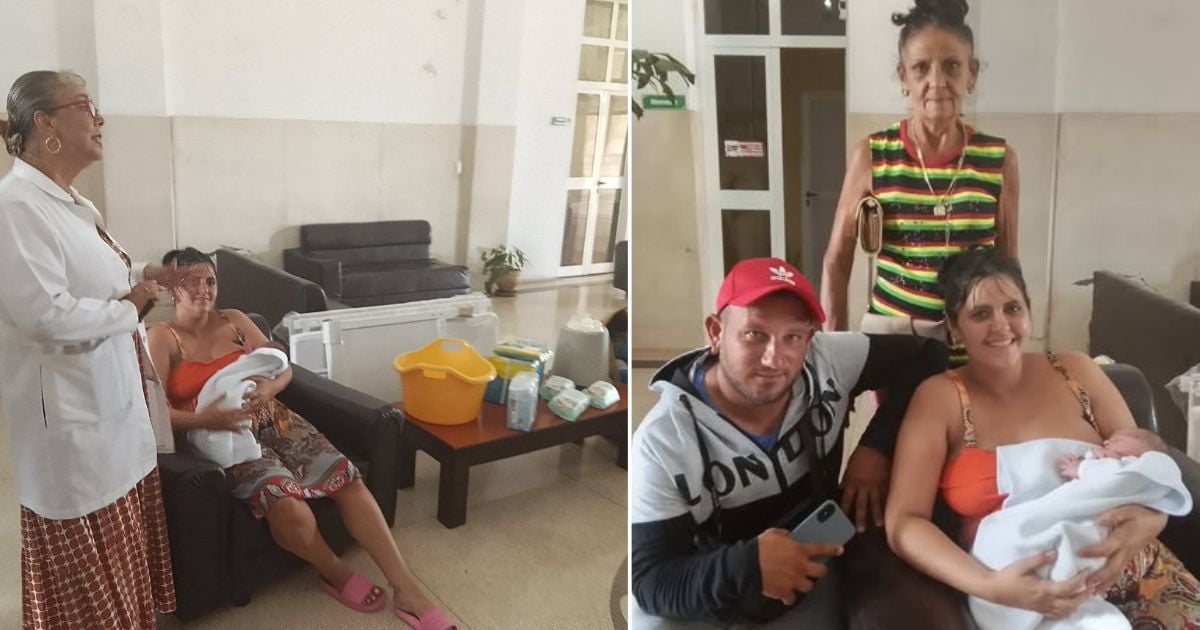
In the early hours of this Wednesday, August 13, a date that the official press dedicates each year to commemorate the birth of Fidel Castro, Milán Daimel Montejo Machado was born in Matanzas, the son of Liliana Machado Alfonso, a first-time mother at the age of 33 who received the greatest blessing of her life.
The story was disseminated by the officialist journalist Yuni Moliner, who emphasized that the birth occurred exactly at 1:30 am, highlighting the –unfortunate– coincidence with the 99th anniversary of the deceased dictator, turning into "news" a fact that holds no weight beyond being anecdotal.
As part of the activities commemorating the anniversary, local officials presented the mother with a basket of baby care items, a gesture that the regime promotes as a "tradition of support and solidarity" towards families welcoming new members on this date.
The happy event of the birth was accompanied – purely by coincidence – by an "official" baby basket that undoubtedly serves as a relief for the young mother amidst the acute economic crisis.
But in Cuba, the propaganda machine seizes every opportunity to either pay tribute to – or make a mockery of – the personality of one of the worst dictators in the history of the continent.
Even a birth ultimately becomes a symbolic act serving the official machinery of the regime, a terrible contrast that links the life of an innocent with the anniversary of a dictator's birth who has plunged millions into extreme poverty.
"I feel great, I was treated very well. Everything has been very beautiful and truly, thank you so much to everyone," said the mother to the media while posing for the event in an atmosphere – surely – carefully prepared for the commemoration.
Every August 13th, amidst slogans, flowers, and archival photos, the Cuban government adds another episode to the decadent and ridiculous ritual of exaltation for Fidel Castro, the dictator who humorously requested not to have a cult of personality created around him.
This year, amidst diapers and speeches, a newborn was added to that script. However, this was not the only snapshot of the day.
In a regime where neurons are increasingly scarce among its leaders, official propaganda always finds new ways to sink into absurdity and irrelevance, reaching extremes like that of the Young Communist League (UJC) in Santiago de Cuba, which on August 13 decided that the best way to pay tribute to the “legacy” of the dictator Fidel Castro was to take a dip at Berraco beach.
Similarly, the current leader, Miguel Díaz-Canel, emphasized on social media that the notorious Fidel Castro is in "full afterlife" and is even celebrating his 99th birthday as if he were an active mummy on social media and in pyramid schemes of ideological fraud.
Frequently Asked Questions about the Cult of Fidel Castro's Figure in Cuba
Why does the birth of a baby on Fidel Castro's anniversary generate so much media attention in Cuba?
The birth of a baby on Fidel Castro's anniversary becomes a symbolic act used by the Cuban regime to reinforce the cult of personality around the dictator. Each year, the authorities hold commemorative events that turn everyday occurrences, such as the birth of a child, into opportunities to exalt Castro's figure. This year, coinciding with the 99th anniversary of the leader, it has been used as an excuse to strengthen his legacy, despite the increasingly critical economic situation in the country.
What does the delivery of gift baskets represent at symbolic events in Cuba?
The distribution of gift baskets at symbolic events in Cuba appears as a gesture of solidarity, but in reality, it is part of the regime's propaganda machinery. The gift baskets are given out on significant dates, such as the anniversary of Fidel Castro's birth, to portray an image of social support that contrasts with the reality of scarcity and poverty faced by the majority of Cubans. This is used to divert attention from current issues and to highlight the government's alleged commitment to its people.
How does propaganda influence the perception of Fidel Castro's figure in Cuba?
Propaganda in Cuba plays a crucial role in keeping the figure of Fidel Castro alive as a symbol of the Revolution. Through events, exhibitions, and media campaigns, the regime seeks to perpetuate the cult of personality surrounding Castro, presenting him as an eternal leader whose legacy remains relevant. This is done despite criticisms and the rejection from many Cubans who believe that this idolization is an attempt to mask the shortcomings of the current system.
What impact does the worship of Fidel Castro have on the current situation in Cuba?
The cult of Fidel Castro in Cuba has a significant impact on the current situation, as it diverts resources and attention from the real issues facing the country, such as the economic and social crisis. The perpetuation of his figure is used by the regime as a mechanism for social control and political legitimization, while the population suffers the consequences of a system that prioritizes the glorification of the past over the needs of the present.
Filed under: