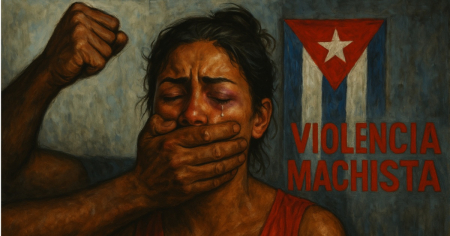
The Cuban regime sentenced a citizen to 25 years of imprisonment for violently assaulting their ex-partner in their home, in an attempted feminicide, an act that is not classified as such in the Penal Code.
The Provincial People's Court of Havana sentenced the man for the crimes of robbery with violence and intimidation against individuals, injuries, threats, and violation of domicile, as reported this Friday by the official Canal Caribe.
According to the court ruling, the accused broke into the victim's home, threatened her with a sharp weapon and physically and verbally assaulted her, causing her serious injuries.
Additionally, he removed several assets with the intention of increasing his personal wealth at the expense of the woman.
The Second Chamber of Criminal Law of the court assessed the recidivism of the aggressor as an aggravating circumstance and determined, alongside the main sentence, additional penalties such as monetary compensation for the stolen goods.
"Given this typical criminal behavior, the Cuban justice system continues to take action to maintain citizen tranquility through prevention, confrontation, and the rigor of the law," the report highlights, without mentioning gender-based violence as the basis of the case.
The lack of transparency and action regarding femicides has defined the Cuban government for decades, which does not officially recognize the term "femicide" and has not classified the crime in its Penal Code.
Despite the establishment of a non-public registry of femicides, this institutional opacity limits access to data and hinders effective prevention and protection for women.
Independent platforms like YoSíTeCreo en Cuba and the Observatory on Gender of Alas Tensas have taken on the task of documenting femicides due to the lack of governmental transparency.
These organizations work with limited resources and face constant scrutiny, but they continue to fight to bring visibility to and demand justice for the victims.
So far in 2025, 25 femicides have been reported on independent platforms.
The latest reported case involved a young Cuban woman murdered in a home in Central Havana, after allegedly being stabbed by her partner, who left her lying in the bathroom.
According to local reports, after the crime, the alleged assailant spent the day walking around the area and selling a dog he had as a pet.
Frequently Asked Questions about Femicide in Cuba
Why isn't the term "femicide" defined in the Cuban Penal Code?
The term "femicide" is not officially recognized in the Cuban Penal Code, despite pressure from activists and independent organizations. The Cuban regime has avoided classifying this crime, arguing that it is a media construct alien to the reality of the country. This lack of recognition limits the ability to prevent and specifically punish these crimes.
How are femicides documented in Cuba?
In Cuba, femicides are primarily documented by independent platforms such as Yo Sí Te Creo en Cuba and the Gender Observatory of Alas Tensas. These organizations collect data and verify cases independently, due to the lack of transparency and action from the government in publishing official statistics. They operate under limited resources and face constant surveillance.
What actions has the Cuban government taken regarding gender-based violence?
The Cuban government has announced the establishment of an administrative registry of femicides, but this is not public. The regime has been criticized for its lack of transparency and its refusal to declare a national state of emergency due to gender violence. Although they have officially acknowledged figures on gender violence, concrete actions to address the problem are limited and ineffective.
How many femicides have been confirmed in Cuba during 2025?
Until August 2025, 25 femicides have been confirmed in Cuba, according to independent feminist platforms. These cases have been verified through citizen reports and documentation provided by activists, due to the lack of official figures from the State.
Filed under: