
Related videos:
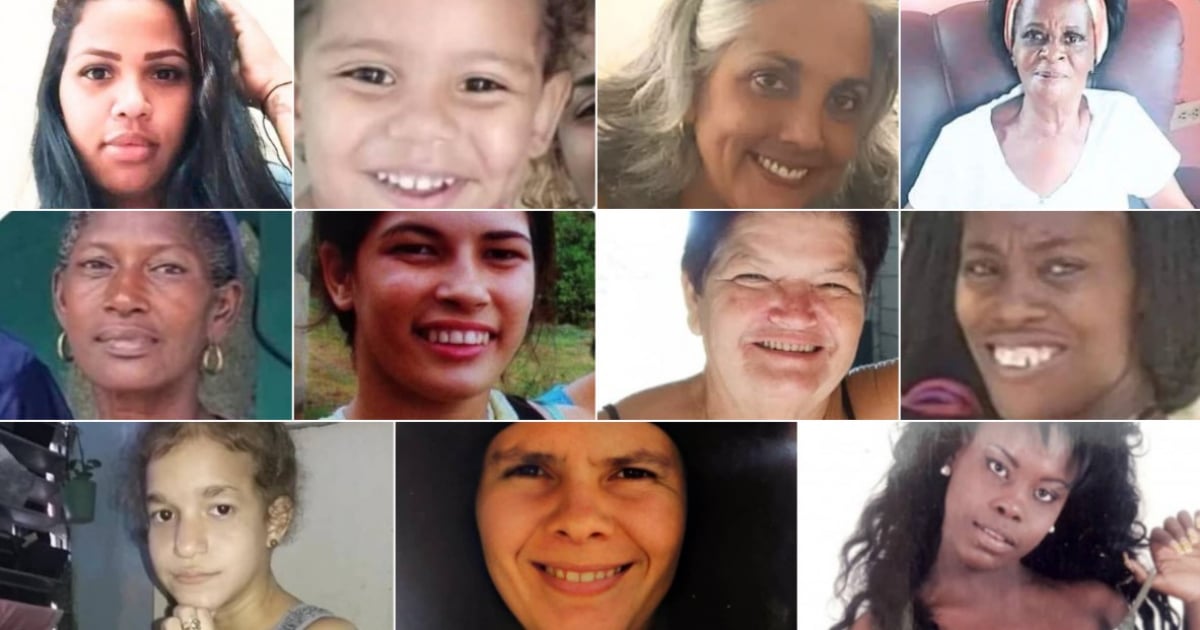
Cuban feminists lamented the lack of effective protocols to alert about disappearances of women in Cuba in light of several ongoing cases.
As months passed after her disappearance, the case of Doraiky Águila Vázquez, a 48-year-old woman from Havana whose whereabouts have been unknown since March 15, was finally mentioned on state television, and activist Laura Vargas expressed her sorrow over the lack of “public mechanisms, the clear and swift actions that should be activated as soon as a woman goes missing.”
"And what about the alert protocols? Where are they? Why isn't there a transparent institutional pathway to respond to these emergencies?" he lamented.
Vargas believes that “the country needs a real early warning system, with immediate dissemination in the media, mobilization of the authorities, support for families, and monitoring of cases.”
"It cannot be that we have to rely solely on social media posts or collective solidarity to search for a missing person," he said.
The creative director of the medium Subalternas criticized the state-run Federation of Cuban Women (FMC) for not demanding these mechanisms.
"The FMC should be demanding that and not celebrating its 65th anniversary with a 'feminist crusade' —Pause, what the hell is that, sir?— as if there were so many achievements. It's not thanks to the FMC or the state media that Doriaky's case came to light through an official channel. It's due to citizen push, activism, and collective pressure," she asserted.
"And the rest of the cases? Why haven't they spoken out? Where are the investigations, the active search, the support for the families?" they concluded.
In addition to the case of Doraiky, Vargas mentioned the case of Maydeleisis Rosales Rodríguez, a girl who disappeared more than four years ago in Centro Habana.
Furthermore, that of Damaris Ricardo Frómeta, 56 years old, who went missing in October 2009 in Wajay, Boyeros municipality, in Havana.
Also that of Beysi Moraima Pedroso Ramírez, who disappeared in Havana in May 2017. Since then, her mother and other family members have kept her search alive in the hope of finding her.
The establishment of effective protocols in cases of women's disappearances in Cuba is a longstanding demand from the Cuban feminist activism.
Last January, an editorial from the Gender Observatory of Alas Tensas (OGAT) argued that “the absence of effective protocols, limited legal resources, and the inability to turn to independent organizations, all of which are criminalized within the country, to promote searches, have created an institutional void that leaves families in a state of vulnerability and helplessness.”
"Investigations often come to a halt without clear explanations, and families lack legal tools to demand that they resume. In a context where gender-based violence can lead to voluntary, involuntary, or forced disappearances, the lack of an adequate response exposes victims and their families to a system that neither protects nor provides justice," they added.
Frequently Asked Questions about Disappearances in Cuba
Why is the lack of effective protocols for disappearances in Cuba criticized?
The criticism focuses on the lack of clear and rapid institutional mechanisms that should be activated upon reporting a disappearance. Activists and family members lament that searches mainly rely on citizen solidarity and social networks, rather than an efficient official system that includes immediate alerts and mobilization of state resources.
What is the Yeniset Alert and when is it activated?
The Yeniset Alert is a response mechanism for the disappearances of women, activated by independent feminist platforms such as Yo Sí Te Creo (YSTCC) and the Gender Observatory of Alas Tensas (OGAT). It is activated when there is a perceived risk to the life or physical integrity of the missing person, especially in contexts where the absence of effective protocols hampers investigations.
How does the energy crisis in Cuba affect the search for the missing?
The energy crisis, characterized by prolonged blackouts, impacts communication and limits search resources. The lack of electricity hinders the timely dissemination of missing person alerts and complicates the rapid mobilization of both state and community resources, further exacerbating the situation of searching for missing individuals.
What has been the Cuban government's response to the cases of disappearances?
The response from the Cuban government has been criticized for being insufficient and delayed. The families of the missing persons are denouncing the lack of official reports and progress in the investigations, as well as the inaction of the authorities, which has led many to hold the government accountable for the lack of results in the search for their loved ones.
Filed under: