
Related videos:
Amid the economic crisis and increasing insecurity affecting Cubans, a gesture of solidarity in Santiago de Cuba has restored hope to a humble family and touched an entire community.
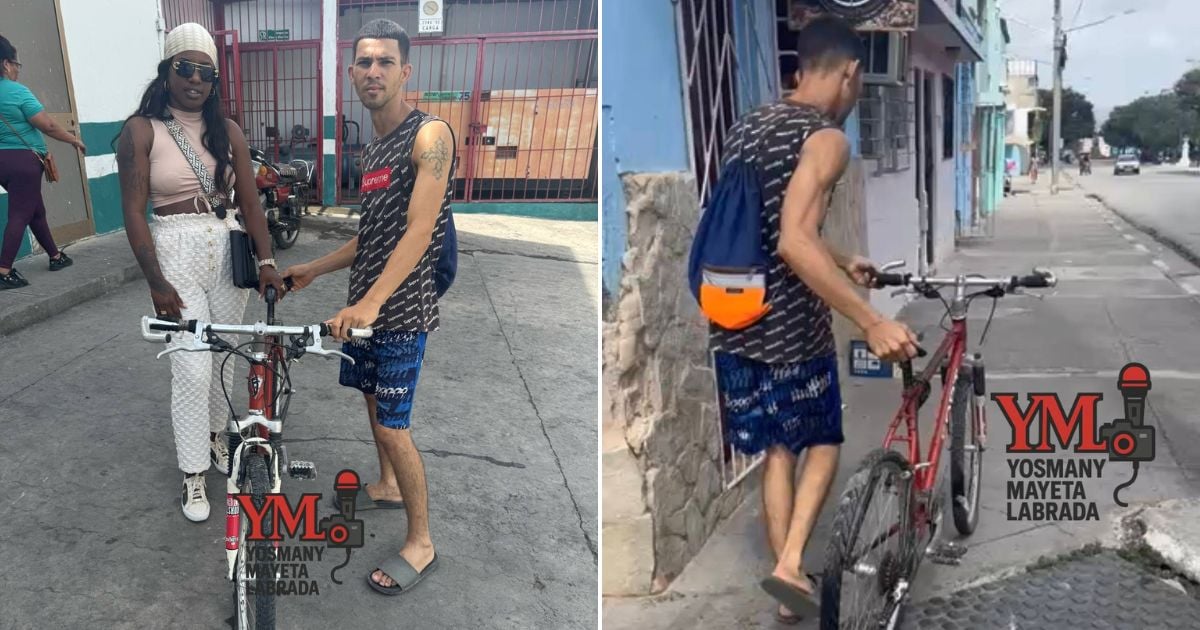
The independent journalist Yosmany Mayeta recounted on his Facebook profile the story of Odelkis Baró Mustelier, a 30-year-old woman who decided to donate a bicycle to Yoeldis Zayas Suárez, a father from the neighborhood of Altamira, after it became publicly known that he had lost his in a theft that occurred inside the church where he also resides.
Zayas used the bicycle as his sole means of transportation and work tool: loading bread in the early morning and selling it to ensure the food for his two young daughters.
However, on Monday reported that unknown individuals forced the temple door and took the vehicle, which was already loaded with a box of bread ready for the day.
"I suspect they may have been neighbors from the neighborhood, but I can't say who," declared the victim, who even offered a monetary reward for its return.
The robbery not only left this father without his means of support, but also sparked outrage among the residents of Altamira, who were alarmed that the incident occurred within a religious space, considered by many to be a safe place.
Several residents reported that thefts in the city are becoming increasingly frequent and that the inaction of the authorities fosters an atmosphere of impunity and a lack of protection for citizens.
It was then that the story took an unexpected turn. Moved by the testimony shared on social media, Odelkis Baró decided to give her own bicycle to Zayas.
"I have been very poor since I was a child; my mother had to sell candies and peanuts at parties to support my sister and me. This boy reminded me of my mother, struggling honorably to bring food to the house. I don't want those girls to go hungry just because their dad doesn't have a bicycle to sell bread," she confessed as she handed over the vehicle.
Odelkis' gesture not only addressed an immediate material need but also became a lesson for the community.
"Today I can help, tomorrow perhaps that same boy will lend me a hand. We must help from the heart, without expecting anything in return. Money is worth no more than good deeds and a pure heart," he expressed.
In a country where most families survive on little and where money has become an absolute priority, this act of generosity was received as a powerful lesson.
"Let this be a lesson for us Cubans. Let us not fight among ourselves. Help your friend, help your neighbor if they are in need. There is strength in unity. Actions speak louder than words," Odelkis emphasized, also expressing gratitude for the blessings received from those who learned her story.
Thanks to his actions, Yoeldis Zayas will be able to continue working and providing for his daughters. For the community, this episode has become a reminder that, even in the toughest times, empathy and solidarity are still alive in Cuba.
Community support gestures are echoed in various corners of the country. A few weeks ago, a boy who was cleaning windshields in Havana received a bicycle as a gift, a gesture that not only eased his daily journeys but also became a symbol of hope for his family.
Months ago, neighbors from Camagüey presented another bike to a boy who was selling tamales to help his family. The community came together in an event that showcased how solidarity emerges even in the most precarious situations.
Similarly, in Sancti Spíritus, an activist turned a gift into a message of hope, highlighting that, despite the crisis, there are still Cubans willing to share what little they have.
These examples, along with the gesture in Santiago de Cuba, demonstrate that solidarity remains an essential value amidst the scarcity, insecurity, and economic difficulties that characterize daily life on the island.
Frequently asked questions about solidarity and insecurity in Santiago de Cuba
How a gesture of solidarity changed a father's life in Santiago de Cuba
A gesture of solidarity in Santiago de Cuba allowed Yoeldis Zayas Suárez, a family man, to recover his means of livelihood. Odelkis Baró Mustelier, moved by Zayas' story, donated her bicycle after hers was stolen. This act not only helped Zayas continue working but also inspired the community to value empathy and mutual support.
What is the security situation in Santiago de Cuba?
Insecurity in Santiago de Cuba has increased, with thefts becoming more frequent in the city. Citizens have expressed their frustration over the lack of effective action by the authorities, which has created an atmosphere of impunity. Cases like that of Yoeldis Zayas, whose means of transportation was stolen, reflect the growing concern for safety in the region.
What actions are citizens taking in response to the lack of institutional answers to crime?
In the absence of effective responses from the authorities, many citizens in Cuba have chosen to take justice into their own hands. Neighbors often organize to catch thieves and share information on social media to prevent crimes. This phenomenon reflects the desperation and the need for community protection in an environment where police action is perceived as inadequate.
How does the economic crisis influence the rise in crime in Cuba?
The economic crisis in Cuba has exacerbated crime by creating conditions of extreme need. The scarcity of resources and the lack of job opportunities have pushed some to resort to crime as a means of survival. This situation has generated an atmosphere of insecurity and distrust among citizens, who feel that the authorities are not adequately responding to their security concerns.
Filed under: