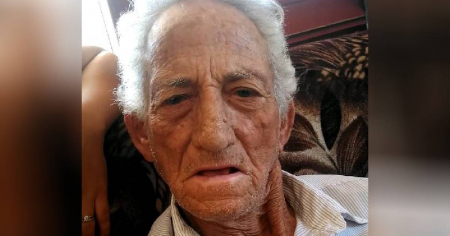
The Cuban YouTuber Iván Valdés Permuy, known as Listillo Cubano on social media, walked the streets of Havana giving cash to elderly people who disclosed their pensions, and through his actions highlighted the miserable amounts received by thousands of retirees on the island after a lifetime of work.
In one of the encounters, a man identified as Gabriel, sitting in a walker due to mobility issues, shared that his monthly check is 1,546 pesos. Valdés handed him two bundles of cash, double that amount, while neighbors witnessing the scene celebrated the gesture, as seen in the video posted on his Facebook profile.
To another elderly man, who claimed to have been born in 1939, he gave an extra amount with the promise that he would hand over his complete "checkbook" later.
A third beneficiary, a former economic planner, received cash and asked if it came from God; the YouTuber replied that although he does not belong to any church, he helps elderly people.
In another case, a retiree reported that his pension is 1,578 pesos a month, an amount that Valdés handed to him in cash.
Comments on social media, along with expressions of gratitude, reflected outrage over the situation of the elderly in Cuba.
Users lamented that, after decades of work, many are facing extreme needs, health issues, and the obligation to continue working to survive.
The scene of the money exchange, more than a mere act of solidarity, painted a stark portrait of the precariousness that defines old age in the country.
Listillo Cubano has become known for playing pranks with hidden cameras, conducting social experiments, and helping people in need that he meets on the streets.
Recently, he helped an elderly man who confessed to feeling dizzy and weak because he had not eaten breakfast. He gave him money to buy an ice cream and to ensure he could eat properly.
On another occasion, he surprised a street vendor in Havana on his 84th birthday. He congratulated him, but before leaving, he performed the same gesture he usually does in these cases: he gave him a generous amount of money.
In February, in one of his usual videos, he approached a young man named Damián, who shared that he was trying to find some food for the four chickens he raises.
Damián revealed that each bucket of food for the birds costs him between 200 and 300 pesos, and in response, Listillo gave him money. The young man, amazed, told him that he had his father hospitalized and that the money would help him with medicines.
"I fight, I sell flowers, whatever comes up. (...) I move around here and there to see what I can scrape up. Anything but stealing," Damián stated.
On July 16, Prime Minister Manuel Marrero Cruz announced before the National Assembly of People's Power that starting September 1, a pension increase will be implemented for retirees currently receiving up to 4,000 pesos per month.
According to the Resolution 14/2025 published in Official Gazette No. 71, the measure aims to “ensure” better protection for the most vulnerable sectors of the Cuban population.
According to the announcement, the measure will benefit 1,324,599 people, representing 79% of retirees in the country.
However, it does not resolve the precarious situation faced by thousands of retirees on the island, where the cost of living remains skyrocketed and access to essential goods is increasingly limited.
At the end of April, a report from the official newspaper Girón in Matanzas revealed the misery in which thousands of retirees live who, after decades of work, are forced to survive on the streets.
So far, according to official data, 39% of Cuban retirees receive the minimum monthly pension equivalent to 1,528 CUP per month, and they are highly likely to be added to the list of individuals at risk of extreme poverty.
Especially complicated is the situation of those who do not have family abroad to send them dollars in order to access a balanced diet in the final stretch of their lives.
They depend exclusively on what arrives at the stores, marked by extreme rationing, scarcity, and delays in the distribution of basic food items such as rice and sugar.
The unchecked inflation resulting from the failed Ordering task has increased the prices of essential products while the wages remain stagnant, deteriorating the purchasing power of Cubans, who are exhausted by the long lines, blackouts, hunger, and despair.
In the first semester of 2025, the food crisis in Cuba has ceased to be a temporary consequence and has solidified into a chronic humanitarian emergency, recently reported the Food Monitor Program (FMP), an independent organization that monitors food (in)security on the island.
In Cuba, a simple carton of eggs can exceed 3,000 pesos, while most essential items —such as oil, detergent, chicken, or powdered milk— are only sold in dollars or MLC, a currency that the government does not pay or sell to the population in their salaries or pensions.
This situation forces millions of citizens to rely on remittances from abroad.
The government itself has acknowledged this unsustainable gap. In February, Vice President Salvador Valdés Mesa stated bluntly: “Our retirees have an average pension of 1,525 pesos. You cannot live on that; with an average salary of 5,000 pesos, you cannot live, nor with 6,000 pesos... You cannot live given the current prices.”
Frequently asked questions about the situation of the elderly in Cuba
What is the current situation of pensions for retirees in Cuba?
The situation of pensions for retirees in Cuba is critical, with amounts that often do not exceed 1,600 Cuban pesos per month. This sum is insufficient to cover basic needs, especially in light of the high inflation and cost of living on the island.
What actions are citizens taking to help the elderly in Cuba?
Many citizens, including YouTubers and influencers, are taking the initiative to directly help needy seniors. Actions such as delivering food, money, or essential products have become common on social networks, showcasing the solidarity of the Cuban people in response to the lack of government support.
What measures has the Cuban government announced regarding pensions?
The Cuban government announced an increase in pensions for retirees receiving up to 4,000 pesos monthly, benefiting approximately 79% of pensioners. However, this measure does not address the precarious situation faced by many retirees, as the prices of basic products remain unattainable for most.
How does the economic crisis affect older adults in Cuba?
The economic crisis in Cuba severely affects the elderly, who must contend with a lack of food, medicine, and other essential products. Many rely on charity or relatives abroad to survive, which increases their vulnerability in old age.
Filed under: