
Related videos:
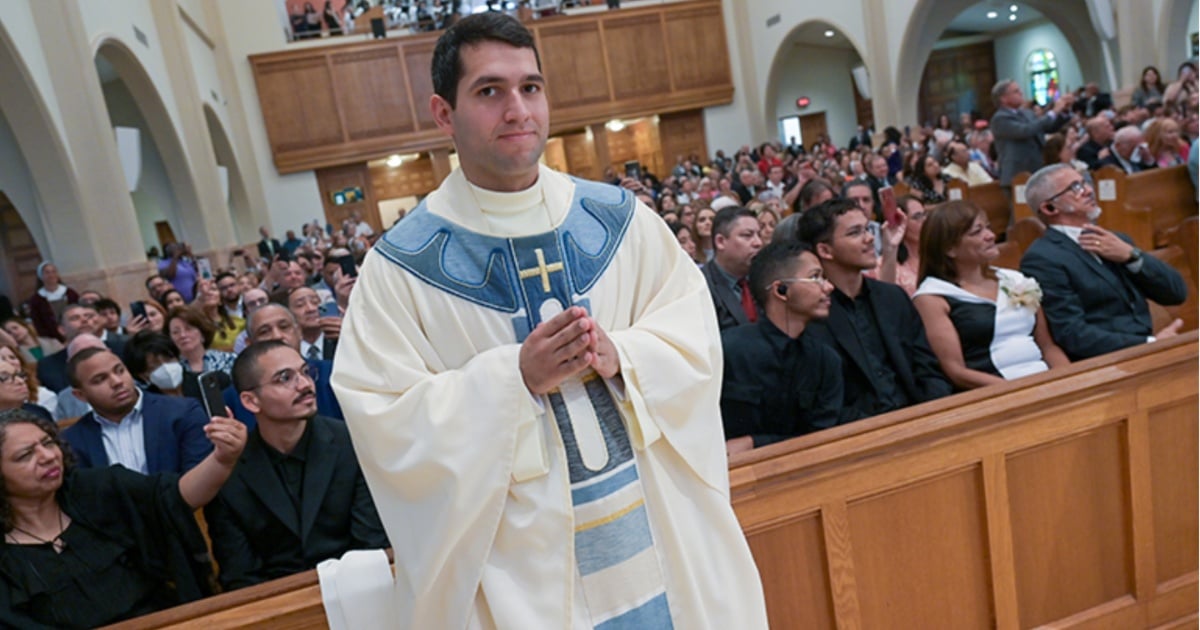
Father Gustavo Santos, a priest from St. John Neumann parish in Miami-Dade, announced his resignation following an incident in which immigration authorities initially denied him reentry to the United States, despite having a religious work visa.
The incident occurred last Tuesday when Santos, a native of Venezuela, was returning from a business trip via London and agents from the Customs and Border Protection (CBP) denied him entry into the country.
According to the Archdiocese of Miami, this Tuesday, the decision was “unexpected and unjust,” since the priest had all his documentation in order.
The parish priest had a valid R-1 visa for religious workers until November 2025; however, entry was initially denied to him.
The archdiocese explained in a statement that, after bringing the case before a federal judge, CBP reconsidered its decision and finally allowed Santos to enter.
However, the priest informed his parish community that he will leave his current position and move to another assignment, without providing details about the location or date.
The news came as a surprise to the parishioners of St. John Neumann, who expressed their sadness at his departure and highlighted the pastoral work he carried out in the parish.
Meanwhile, the archdiocese has not reported whether it will take additional measures regarding the incident with immigration authorities.
In June, the President of the United States, Donald Trump, signed a presidential proclamation that imposes new travel restrictions on citizens from several countries, citing "national security risks."
The measure completely prohibited the entry to the United States of citizens from 12 countries, including Afghanistan, Iran, Somalia, and Yemen.
In parallel, it imposed partial restrictions on individuals from seven nations, including Cuba, as well as Venezuela, Turkmenistan, Laos, Burundi, Sierra Leone, and Togo.
Frequently asked questions about the resignation of the priest from Miami-Dade and Trump's immigration restrictions
Why did Father Gustavo Santos resign from his position in Miami-Dade?
Father Gustavo Santos resigned after an incident in which he was initially denied entry to the United States, despite holding a valid religious work visa. Ultimately, after bringing the case before a federal judge, the decision was reconsidered and he was allowed to re-enter. However, he chose to step down from his position and move to another unspecified assignment.
What are the new immigration restrictions imposed by Trump that may have affected the priest?
In June 2025, Trump signed a presidential proclamation imposing travel restrictions on citizens from several countries, including Venezuela and Cuba, under the argument of national security risks. This imposed partial restrictions on individuals from seven nations, which could have influenced the immigration authorities' decision regarding the priest.
What implications do Trump's restrictions have for the citizens of Cuba and Venezuela?
Trump's restrictions impact citizens of Cuba and Venezuela by limiting entry into the United States under certain visa categories, such as B-1/B-2, F, M, and J. The issuance of new visas in these categories has been suspended, and the validity of others has been reduced. These actions have faced criticism for their impact on family reunification and the rights of migrants.
How has the religious community reacted to the current immigration policies in the U.S.?
The religious community, partly represented by the Archbishop of Miami, has harshly criticized U.S. immigration policies, arguing that they treat all undocumented immigrants as dangerous criminals. Archbishop Thomas Wenski has called for reforms that respect human dignity and promote the common good, rather than coercive actions that impact families and honest workers.
Filed under: