
Related videos:
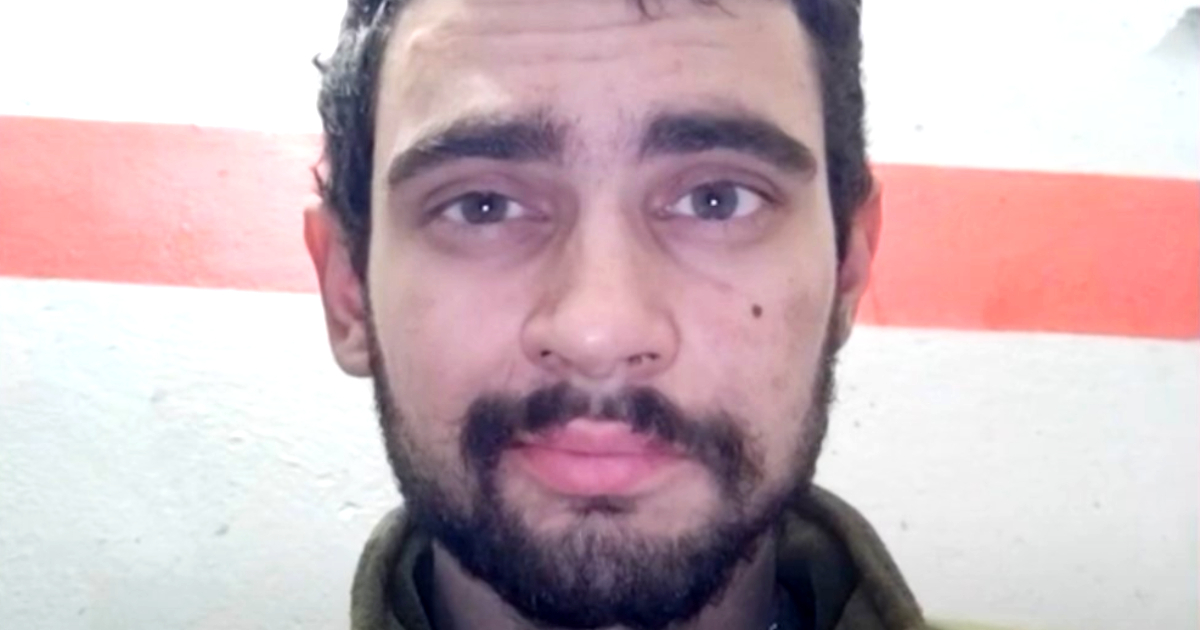
The Ukrainian soldier of Cuban descent Khuan Alberto Leyva Garsiya, 27 years old, regained his freedom after spending three years in the hands of Russian forces.
Their release came as part of a recent prisoner exchange between Kiev and Moscow, involving dozens of military personnel and civilians who had been held since the early months of the Russian invasion of Ukraine.
On August 14, the first of two exchanges carried out this month was finalized. That day, Leyva Garsiya was able to contact his family to confirm that he was among the 33 soldiers and 51 civilians handed over by the Kremlin.
The news was reported by the American network CNN, which highlighted the emotion of the young man's mother, a Ukrainian named Laritza.
"I was very surprised. As one of your colleagues said, the sun rose twice. The sun rose in my house twice," the woman recounted, confirming that she heard her son's voice after such a long time.
From Mariupol to the Russian prison
Leyva Garsiya joined the Ukrainian army in February 2022, following the invasion ordered by Vladimir Putin. Just three months later, he participated in the heroic defense of the Azovstal steel plant in the port city of Mariupol, which became a symbol of resistance against a devastating siege.
In May of that year, following weeks of intense bombardments, the last defenders of the steel plant surrendered to the Russian forces. It was at that moment that the young Cuban-Ukrainian became a prisoner. His name joined the long list of fighters captured in the bloodiest battle of the war up to that point.
In April 2022, Putin proclaimed that Mariupol was "liberated", although hundreds of soldiers still resisted inside Azovstal. For weeks, Russian troops besieged the 11-kilometer-square industrial facility, where fighters and civilians took refuge in a network of tunnels and bunkers.
The surrender of those combatants, among whom was Leyva Garsiya, became one of the hardest chapters of the war, which has already been ongoing for more than three years without a clear outlook for peace.
An exchange with significant symbolic weight
The second prisoner exchange of this month took place on August 24, a significant date for Ukraine, as on this day in 1991 the country declared its independence from the Soviet Union. Kiev regarded this coincidence as a gesture of hope amid destruction and uncertainty.
The release of fighters such as Leyva Garsiya occurs alongside an escalation of Russian attacks. Just two days after U.S. President Donald Trump met in Washington with Volodimir Zelenski and European leaders to promote new peace negotiations, Moscow launched 574 drones and 40 missiles against Ukraine, marking the most intense bombardment since July.
Diplomatic conversations are ongoing, but they have not succeeded in stopping the attacks or alleviating the suffering of the civilian population.
A life marked by war
Son of a Cuban emigrant who settled in Ukraine decades ago, Khuan Alberto grew up in a mixed family that, like thousands in the country, was torn apart by war. His mother described him as a determined young man who did not hesitate to enlist to defend his adopted nation when the invasion broke out.
Now, after three years of captivity, he returns to a country profoundly transformed by war. According to the United Nations, millions of people have been displaced, and entire cities, like Mariupol, have been reduced to rubble.
The case of Leyva Garsiya also highlights the international dimension of the conflict: thousands of foreign fighters and descendants of immigrants have participated in the Ukrainian defense, becoming symbols of a resistance that transcends borders.
A war with no clear end
The prolonged battle of Azovstal is still remembered as a milestone in the war. During this time, Ukrainian troops held their ground for weeks against the Russian offensive, as the world watched helplessly the destruction of Mariupol and the allegations of war crimes by Moscow.
Three years later, the situation shows no signs of immediate resolution. The war has turned into a war of attrition, characterized by intermittent offensives, inconclusive negotiations, and an increasing human and material toll.
The release of prisoners like Leyva Garsiya represents a breath of fresh air in the midst of tragedy, but it also serves as a reminder that thousands of soldiers and civilians remain in captivity. For his mother, however, the news is much more than just politics or diplomacy.
"I wanted to be sure it was my son, that there was no mistake," she said tearfully. On the other end of the phone line, Khuan Alberto's voice confirmed that, at least for one family, hope triumphed over captivity.
Filed under: