
Related videos:
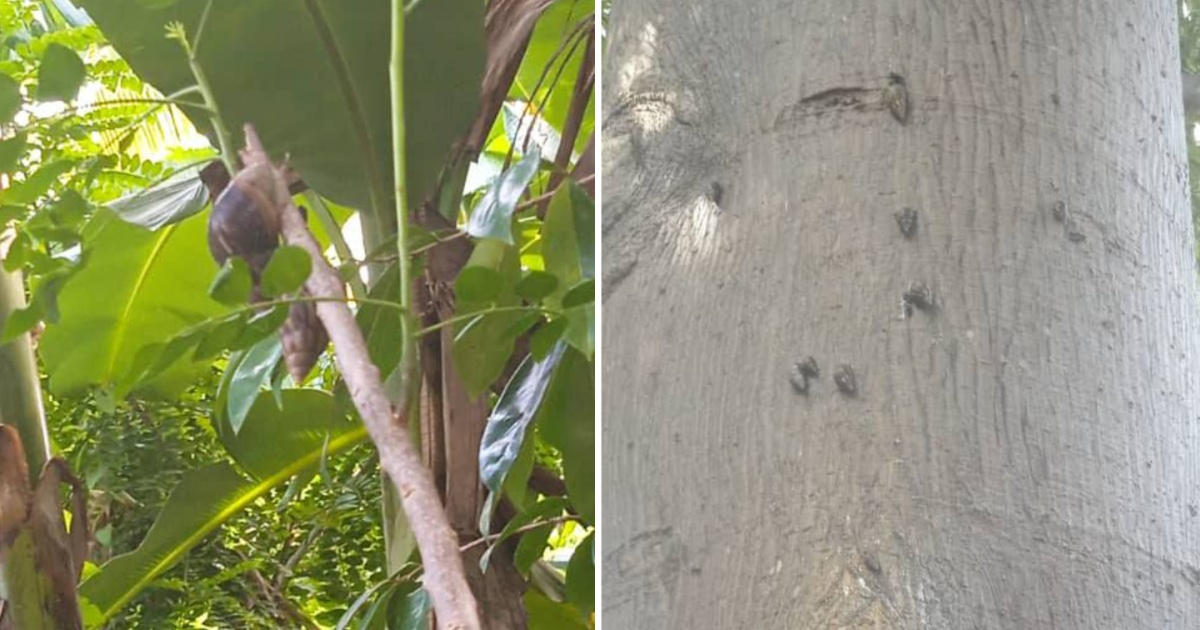
The appearance of the African giant snail in the La Caridad neighborhood of Camagüey has raised concerns among residents, who warn of the health risks this invasive mollusk poses to both human and animal health, as pointed out by independent journalist José Luis Tan Estrada, based on reports from local residents.
The African snail (Achatina fulica) is regarded as one of the most harmful invasive species in the world, as it can transmit dangerous parasites such as Angiostrongylus cantonensis, which is responsible for eosinophilic meningoencephalitis in humans.
Authorities and experts recommend not handling it with bare hands and preventing children from coming into contact with it.
Residents alerted through social media about their discovery in the area, calling for local institutions to take urgent action to control the proliferation of the mollusk.
“Be careful with the children. It poses a health risk, as it can transmit dangerous parasites to both people and animals,” said Tan Estrada.
The African snail has been detected in other provinces of the country and its spread poses a threat to agriculture as it consumes a wide variety of crops, seriously impacting local production.
The health authorities in Camagüey have not yet issued an official report on the case, although specialists remind us that prevention and proper management are key to avoiding a larger infestation.
Cubans stated in Tan's publication that there is an invasion of African snails in Havana and other provinces.
According to an internet user, in the Alturas del Casino neighborhood, right in Camagüey, the residents have managed to collect 300 snails in a single day.
When reporting it to the authorities, they have been told that they do not have salt or lime to exterminate them. The pest has managed to invade the backyards of homes and has reached a cheese factory.
"They eat the mangos, the annonas, the leaves, and everyone knows the health consequences it has," he warned.
Frequently Asked Questions about the Giant African Snail in Camagüey
Why does the African giant snail pose a health risk in Camagüey?
The giant African snail carries dangerous parasites such as Angiostrongylus cantonensis, which can cause serious diseases like eosinophilic meningoencephalitis in humans. Additionally, this invasive mollusk can impact animal health and agricultural production by consuming a wide variety of crops.
What actions should the authorities in Camagüey take to control the African snail?
Authorities must implement urgent measures to control the spread of the African snail, such as providing resources for its removal, educating the public about the risks, and promoting proper waste management. The lack of salt and lime to kill them, as reported by residents, highlights the need for a more effective response from local institutions.
How does the presence of invasive species like the African giant snail affect biodiversity in Cuba?
The presence of invasive species such as the African giant snail threatens local biodiversity and food security, as they displace native species and affect ecosystems. In the case of Cuba, the advance of these exotic species, such as the lionfish and African tilapia, causes significant damage to ecosystems and can result in the loss of native species.
What recommendations should residents of Camagüey follow in light of the appearance of the giant African snail?
It is recommended not to handle the giant African snail with bare hands and to prevent children from coming into contact with it to mitigate the risk of disease transmission. Additionally, residents should notify local authorities about its presence and cooperate in control and eradication efforts.
Filed under: