
Related videos:
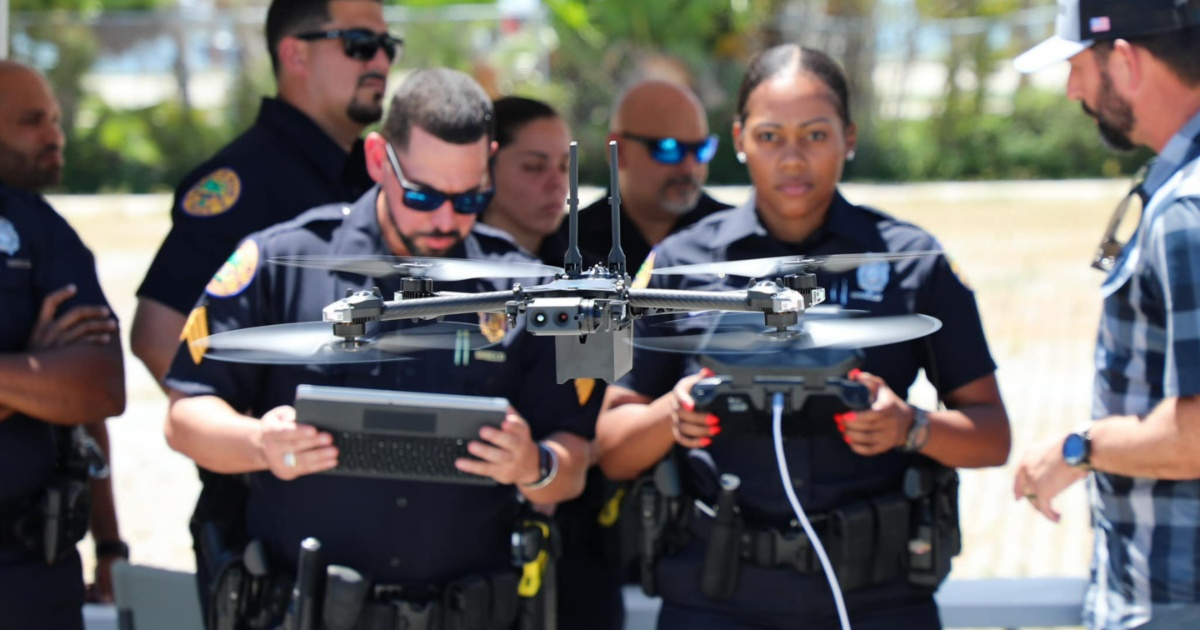
The Miami Police Department launched its official First Response Drones (DFR for short) program.
According to El Nuevo Herald, this innovative program involves remotely trained pilots from the headquarters using high-tech drones to respond immediately to the scene of an emergency after a 911 call.
In this way, the Miami police will have a real-time panoramic view, which facilitates the early detection of threats, dangers, or evolving situations, the information specifies.
Drones will arrive before ground patrols, thus contributing to a more accurate and faster assessment of the situation, which will enhance and refine the decision-making process of the responding officers.
This program will also be essential for traffic control, incident location, and operational coordination in complex environments.
The police emphasized that with first-response drones, the level of safety for officers is increased and the protection of citizens is significantly improved, according to the Miami police.
The pilots of these drones are responsible for: Alerting agents about imminent threats. Identifying crime scenes, vehicle accidents, and conducting perimeter searches. Assisting in searches for missing persons and water rescues, even using specialized floatation devices, concludes the statement from the Miami Police Department.
Drone regulation in Florida
Starting October 1, a new law signed by Governor Ron DeSantis will come into effect, tightening restrictions on the use of drones in sensitive areas such as prisons, military facilities, airports, dams, and other critical infrastructures.
The objective is to prevent risks to public safety and national threats.
The legislation is part of the HB 1121 project, introduced by Republican Representative Jennifer Canady from Lakeland County.
The regulation aims to curb dangerous and illegal activities, such as smuggling contraband into prisons, espionage at strategic facilities, or even the potential use of drones with chemical payloads.
"These modifications strengthen the state's ability to prevent illegal activities involving unmanned aircraft," Canady declared during the debate in the House of Representatives Criminal Justice Committee.
The law expands the definition of critical infrastructure to include airports, military bases, dams, telecommunications facilities, and correctional centers, and prohibits the use of drones that interfere with their operation, except with explicit authorization from the Federal Aviation Administration (FAA).
Modified drones designed to evade remote identification requirements will also be prohibited, as well as those equipped with weapons, explosives, or destructive devices.
The use of drones for unauthorized surveillance or to disseminate images captured illegally will also be punished with criminal penalties.
The law, however, allows law enforcement to use drones under certain conditions for crowd control or other security tasks.
During the legislative discussion, Republican representative Danny Alvarez, chair of the committee, defended the measure by stating that it is necessary to act swiftly in response to new technologies.
"Many times, we are criticized for not reacting in time and allowing technology to surpass us," Alvarez pointed out.
Frequently Asked Questions about the Miami Police Drone Program and Drone Regulations in Florida
What does the Miami Police Department's First Response Drone Program consist of?
The First Response Drone (DFR) program enables the Miami Police to utilize high-tech drones to respond rapidly to emergencies following 911 calls. These drones provide a real-time panoramic view, enhancing threat detection and optimizing decision-making for officers on the scene.
How do the new laws affect drone regulation in Florida?
Starting October 1, a new law in Florida prohibits the use of drones in sensitive areas such as prisons, military installations, and airports without authorization from the FAA. This regulation aims to prevent illegal activities and protect public safety by restricting drone use in areas deemed critical infrastructure.
What functions will the pilots of the Miami Police drones have?
The Miami Police drone pilots will be responsible for alerting officers about threats, identifying crime scenes, and assisting in search and rescue operations. These tasks include locating vehicular accidents and using specialized floats for water rescues.
What are the implications of the police collaboration with ICE in Miami?
The collaboration between the Miami police and ICE could increase distrust among immigrant communities, despite the fact that their involvement will be limited. Only three police officers will be trained to work with ICE, and the agreement aims to avoid financial penalties by complying with Florida state laws.
Filed under: