
Related videos:
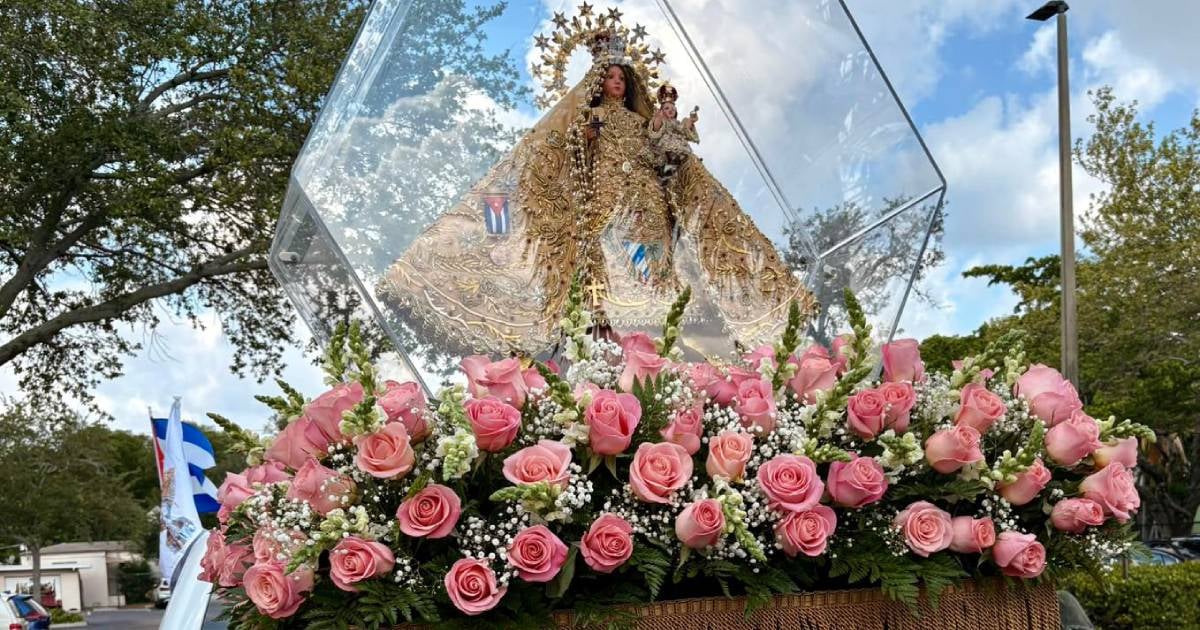
With prayers for the freedom of their homeland, hundreds of Cubans in exile began this weekend in Miami the celebrations for the day of the Virgen de la Caridad del Cobre, Patroness of Cuba, which is commemorated every September 8.
Gathered in the iconic store Sentir Cubano, on Calle Ocho, one of the stops of the traditional procession of the image through Miami-Dade, attendees raised pleas for the end of the crisis that the island is experiencing.
"May she liberate our country; it is time to leave this dictatorship that is destroying us. How many more years are we going to endure this?", expressed a devotee, as reported by Martí Noticias.
The father José Espino, rector of the Ermita de la Caridad, recalled that with the novena that began last Saturday, Cuban exiles dedicate nine days of prayer for Cuba. “We pray for hope to be reborn and for freedom to be reborn for our people,” said the priest.
Among those present were artists, community leaders, and activists such as Ninoska Pérez Castellón, who emphasized that the pilgrim Virgin traveling the streets of Miami is the same one that arrived in the United States at the beginning of the exile following the rise to power of the Castros.
“That is the faith, the devotion of Cubans to the Virgin, to the mother (...). It doesn’t matter what religion they practice, the Virgin is always in the hearts of Cubans,” stated Pérez Castellón.
The festivities will continue throughout the week with cultural and spiritual activities, culminating on September 8th at the Hermita, with a solemn mass presided over by the Archbishop of Miami, Thomas Wenski.
The Virgin of Charity, a symbol of identity and freedom for Cubans
The Virgin of Charity of El Cobre is much more than a religious figure; for Cubans, she represents companionship in their struggles for independence from the dictatorship that has overshadowed the island for over 60 years.
According to Catholic tradition, the image appeared in 1612 over the waters of the bay of Nipe, discovered by two Indian brothers and an enslaved child who were searching for salt. Since then, her veneration has spread and merged with Afro-Cuban practices, where she is revered as Ochún, the goddess of love and fresh waters.
During the wars of independence, the mambises referred to her as the Mambí Virgin, and in 1916, Pope Benedict XV declared her the Patroness of Cuba. In 1998, John Paul II personally crowned her during his visit to the island.
Today, each September 8th, thousands of Cubans, both on the island and in exile, lay yellow flowers, candles, and prayers at her feet. For many, Charity represents hope, faith, and freedom, values that permeate both the spiritual and political aspects of the Cuban nation.
Frequently Asked Questions about the celebrations for Our Lady of Charity of El Cobre and the situation in Cuba
Why is the Virgin of Charity of El Cobre important to Cubans?
The Virgin of Charity of Copper is the Patroness of Cuba and a symbol of identity, hope, and freedom for the Cuban people. Her veneration transcends religious boundaries and unites Catholics and practitioners of Afro-Cuban religions. Since her appearance in 1612, she has been an emblem of support in the struggles for independence and freedom in Cuba.
How do Cubans in Miami celebrate Our Lady of Charity of Copper?
Cuban-Americans in Miami celebrate Our Lady of Charity of El Cobre with a series of cultural and spiritual activities that culminate on September 8 with a solemn mass. The festivities include processions, prayers, and acts of devotion at iconic locations such as the Shrine of Charity and Calle Ocho. These events are an expression of faith and a call for the freedom of Cuba.
What is the message from Cubans in exile during these festivities?
During the festivities, Cubans in exile raise prayers for the freedom of their country and the end of the dictatorship. The main message is a call for hope and freedom for the Cuban people, reflecting a desire for political and social change on the island. This devotion becomes a platform to express their wish to see a Cuba free from oppression.
How is the devotion to the Virgen de la Caridad connected to the political situation in Cuba?
The devotion to Our Lady of Charity of El Cobre is deeply intertwined with identity and the struggle for freedom in Cuba. Historically, she has been seen as a protector in times of crisis and a symbol of resistance against the dictatorship. The celebrations in her honor become a space to express discontent with the Cuban regime and advocate for political change.
Filed under: