
Related videos:
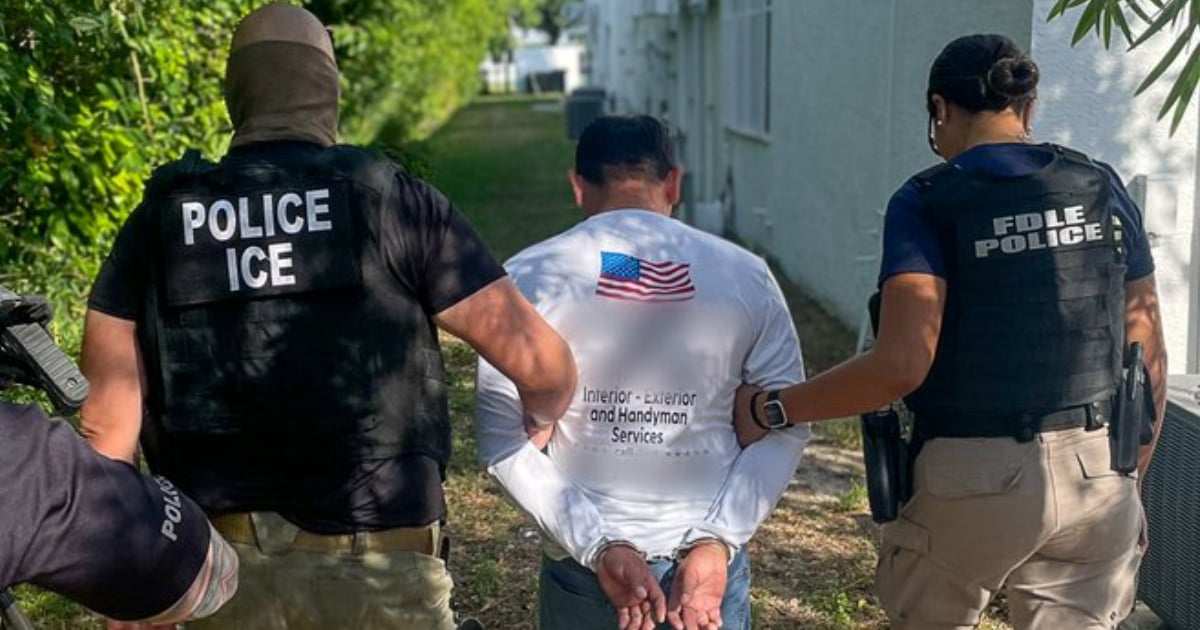
The United States Citizenship and Immigration Services (USCIS) will have armed agents with the authority to make arrests and conduct searches, following a new rule from the Trump administration.
According to a report this Thursday from USCIS on its official website, the final rule published grants the agency full law enforcement powers, delegated by the Secretary of Homeland Security, Kristi Noem.
The new officers, classified as special agents 1811, will have the authority to investigate, arrest, carry firearms, execute court orders, and file charges against those who violate immigration laws.
“USCIS has always been a law enforcement agency. This historic moment will allow us to better address immigration crimes, hold accountable those who commit fraud, and act as a force multiplier for DHS,” said the agency's director, Joseph B. Edlow, as quoted in the statement.
The measure also grants USCIS the authority to order expedited removals and to investigate civil and criminal violations within its jurisdiction, without the need to transfer cases to the ICE Homeland Security Investigations Division.
With this reform, ICE, HSI, and ERO will be able to focus on combating transnational crime and deporting undocumented immigrants, while USCIS takes on the responsibility of processing cases of immigration fraud and carrying out expulsions.
The agency also announced that it will recruit and train new special agents. The rule will take effect 30 days after its publication in the Federal Register.
USCIS recently announced the implementation of a significant change in payment methods for its immigration processes, which will impact both citizens and applicants for visas, permanent residency, and other immigration statuses.
Frequently Asked Questions about the new immigration measures of USCIS in the U.S.
What recent changes has USCIS implemented in its approach to immigration?
The USCIS has received authorization to have armed agents with the authority to arrest, investigate, and conduct searches. This change allows the agency to directly address immigration crimes, without the need to transfer cases to ICE, and is part of the new policies of the Donald Trump administration that strengthen immigration control.
What does the new ability of USCIS to make arrests and conduct searches imply?
With the new rule, USCIS agents can investigate, detain, and carry firearms, as well as file charges against those who violate immigration laws. This enhances their ability to tackle immigration fraud and carry out deportations, acting as an extension of the Department of Homeland Security (DHS).
How will this measure affect immigration processes in the U.S.?
The measure allows USCIS to order expedited removals and conduct investigations without the need to transfer cases to ICE. This means that immigration processes, especially those related to fraud, could become faster and stricter, increasing pressure on immigrants with irregular situations.
What consequences could the strengthening of immigration policies have for immigrants?
The strengthening of immigration policies could lead to an increase in deportations and greater scrutiny of immigrants, particularly those with ongoing cases or past records. Civil rights organizations have expressed concern over possible privacy violations and misinterpretations in these procedures.
Filed under: