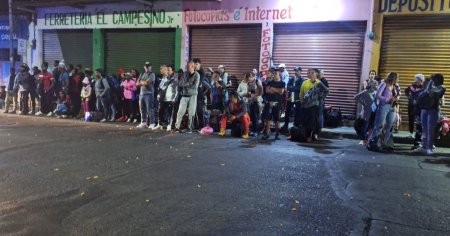
Dozens of Cuban families gathered this Sunday at the Versailles restaurant in Miami to demand that President Donald Trump put an end to the Travel Ban that has stalled the vast majority of family reunification processes.
The protest was marked by messages of denunciation against a measure that, according to the demonstrators, is “inhumane” because it hinders the reunion of children, grandparents, and parents with their relatives in the United States, despite being legal processes that have been processed over the years under strict immigration requirements.
The announcer Indira Solís explained on Facebook that the petitioners demanded from the media in South Florida that the categories of family reunification be excluded from the immigration ban.
"Thousands are affected in processes that involve years or even decades of waiting, reviewed by USCIS and the NVC with strict documentation and consular interviews prior to the final decision," he noted.
The Travel Ban, implemented in June following the Cuban regime's refusal to accept its citizens with deportation orders, only allows exceptions for immediate family members of U.S. citizens, such as spouses, parents, and minor children.
As a result, thousands of beneficiaries of reunification visas who had already begun their application process are now excluded.
The renowned immigration lawyer Willy Allen warned that the measure leaves thousands of applicants trapped who have followed all the legal requirements set by the U.S. system.
According to what was explained to CiberCuba, the ban is "a political punishment that has nothing to do with national security or compliance with immigration law."
The new travel bans represent an additional barrier in a program already marked by long waits and rigorous investigations.
Petitioners must have a validated financial sponsor and undergo diplomatic interviews before approval, which underscores the controlled nature of these processes.
Protesters in Miami insisted that the call for family reunification will continue to grow as long as the Trump administration maintains the ban.
"This is not about politics, but about separated families who only ask to be together," expressed one of the attendees.
Frequently Asked Questions about Immigration Restrictions and Family Reunification for Cubans in the U.S.
What is the Travel Ban and how does it affect Cuban families?
The Travel Ban is an executive order signed by President Donald Trump that imposes travel restrictions on citizens of several countries, including Cuba. For Cuban families, this means that many family reunification processes are stalled, affecting those who had hoped to reunite with their loved ones in the U.S. The restrictions particularly apply to permanent residents and their family members, with the exception of spouses, parents, and minor children of U.S. citizens.
What categories of visas are suspended under the Travel Ban for Cubans?
The categories of suspended visas include B-1 (business), B-2 (tourism), F (students), M (technical studies), and J (cultural exchange). Additionally, family reunification processes have been halted in certain non-immediate family categories, such as children over 21, married children, and siblings of U.S. citizens, leaving thousands of people in a migratory limbo.
Why was the Travel Ban specifically implemented for Cuba?
The Travel Ban for Cuba was justified on grounds of national security and the lack of cooperation from the Cuban government regarding consular matters and deportations. Cuba was designated as a "state sponsor of terrorism," and high rates of illegal residency of Cubans in the U.S. were cited. This has been criticized as a political punishment that affects thousands of families still hoping for the possibility of reunification.
What alternatives do Cuban families affected by the Travel Ban have?
Cuban families affected by the Travel Ban may consider seeking legal advice to understand their options and rights. It is important to verify the validity of current visas and maintain legal status in the U.S. In the long term, obtaining U.S. citizenship could allow them to petition for their relatives under the exceptions of the ban. Additionally, staying informed about changes in immigration policies is crucial.
How has the Cuban community in Miami reacted to the migration restrictions?
The Cuban community in Miami has organized peaceful protests to demand an end to the immigration restrictions imposed by the Travel Ban. These demonstrations aim to highlight the human impact of the policy, which has separated thousands of families. The frustration and the cry for family reunification are evident, reflecting a collective desire to find solutions through institutional and legal avenues.
Filed under: