
Related videos:
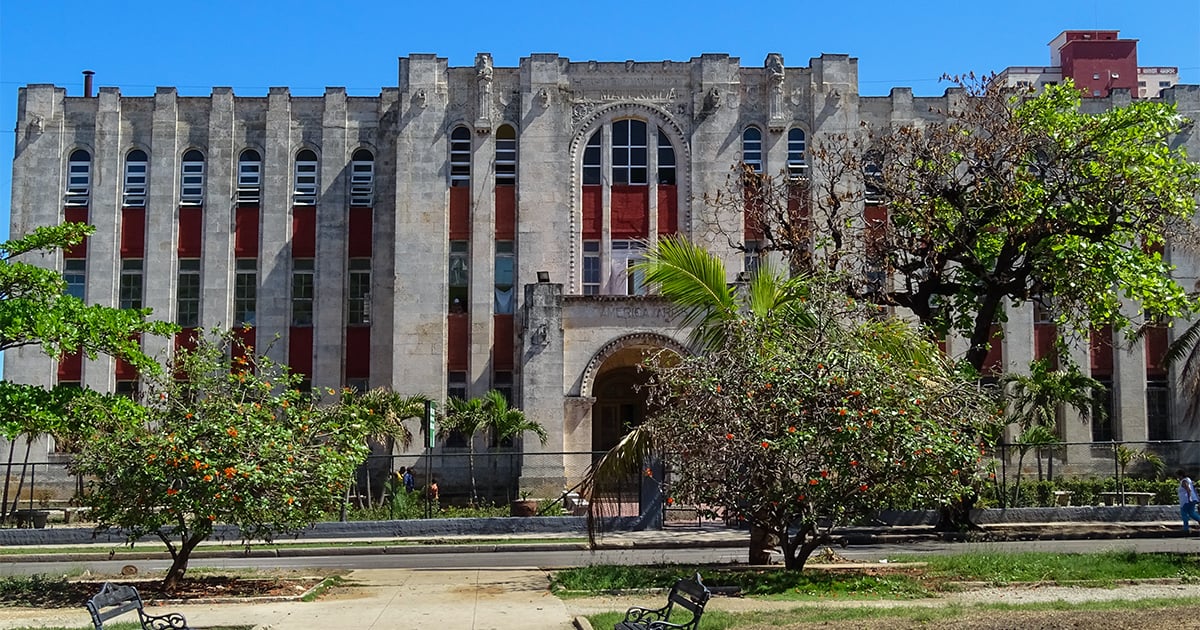
The closure of gynecology and surgery services at the América Arias gyneco-obstetric hospital, commonly known as Maternidad de Línea, in the Havana neighborhood of El Vedado, to convert it into a center for assisted reproduction, has sparked a wave of complaints that highlight the frustration of doctors and the outrage of patients.
The announcer Laritza Camacho shared through her Facebook profile that she has seen doctors cry out of frustration, not because of the death of patients, but because of their inability to care for them due to administrative orders that leave hundreds of sick women in limbo.
“It’s the cry of a doctor in the face of helplessness,” he summarized, after describing meetings where the closure of regular services was imposed, ignoring the voices of specialists and patients.
He pointed out that so far in 2025, the hospital had performed 763 surgeries, while over 1,000 women were waiting for surgery, many of them in critical condition: constant bleeding, cysts, giant fibroids, and urinary incontinence that compromise their quality of life or put their health at risk.
The center received cases from all over Havana and other provinces where these operations are not performed.
Camacho recalled that the medical team has sustained the hospital with extreme effort, facing blackouts, shortages of supplies, and exhausting shifts.
He assured that the professionals are "stars," capable of maintaining operations even when specialists fell ill or faced personal issues. But now all that sacrifice is crumbling with the decision to close the gynecology services.
According to Camacho, a first meeting was held and it was agreed to add the assisted reproduction center to the services offered by the hospital.
“Everything seemed to be going well, but another meeting was held, just two days after the first, and then everything changed. In that meeting, no one listened to anyone; there were warnings about the use of social media, and there was talk of notifying patients to ʻbe careful with protestingʼ.”
And the worst part, he added, “it was indicated that everyone who arrives next week with their scheduled appointment will receive an 'explanation' and a turn back home because there is nothing here... Termination of pregnancy? How many weeks? No, not anymore... Maternidad de Línea is now something else...”.
The complaint also highlighted the waste of public resources. Recently, four million pesos were invested in neonatology, but that service has been eliminated. The emergency room construction is only 60% complete, and the rooms have been remodeled, although they will no longer be used for their original purpose.
“Money wasted, money misused, our limited resources going down the drain,” wrote Camacho.
Indignation multiplied in the comments on the post. One user questioned, “Is there no respect for so many women in need who are on the waiting list? Are those with urgent needs condemned to die?”
Architect Abel Tablada drew attention to the fact that "poorly invested, wasted, or thrown away money is the worst thing that can happen nowadays with so many needs. It complements the damage caused by the (U.S.) blockade," referring to the so-called "internal blockade" or the collection of prohibitions, unilateral decisions, and failed policies that the government imposes on the population, for which it neither accounts nor apologizes for the consequences.
Other voices were harsher. One of the speakers claimed that in Cuba “there is no culture of profitability, conservation, or care for investments” and accused officials of being “ignorant and lacking vision, harming more than they benefit.”
In the same vein, another person criticized the exclusion of vital services: “Why remove gynecology? Assisted reproduction could be added without taking from one area to give to another. There are so many women who have been waiting for years for surgery to achieve a better quality of life.”
Nery Díaz went further and expressed suspicions: “A fertility clinic right on Línea street, in the heart of Vedado, means it will offer its services in hard currency (read dollars), and in that case, who cares if Cuban women bleed or perish?” Her words were supported by other users who doubt that ordinary Cuban women will be able to access the future services.
"Until when will we have 'ministers' who are incapable of analyzing and determining what is right... Until when will we be wasting the people's money? It's time to put an end to the ignorance, abuse, and incompetence that oppresses us," wrote Luis Lacosta.
While Reyner Laborí Gómez lamented the lack of humanity in official decisions: “That's why more and more professionals are emigrating, leaving their degrees behind to work in small and medium-sized enterprises; in short, this country is moving backwards like a crab.”
Frustration extends even to the hospital staff, where, according to users, doctors have sustained care through donations and occasional support from citizens, yet they now find themselves marginalized.
Osmany Moreno described the closure as "unnecessary" and questioned why establish a fertility service at the expense of eliminating a vital one for women who could die.
Others were more emphatic in pointing out the root of the problem. “For a long time, their interests have not been those of the people,” commented Nico Savón, affirming that health decisions are driven by interests unrelated to citizens' welfare.
For Camacho, what happens at Maternidad de Línea is yet another example of the bureaucratic nonsense in Cuba: officials making absurd decisions, doctors crying out of helplessness, and patients destined to wait indefinitely.
"A pretty headline will hide the tragedy," she warned, as voices on social media insist that what is at stake is not an administrative change, but the lives of thousands of women.
In May 2023, a family reported the death of a newborn due to alleged medical negligence at that medical institution.
A similar complaint surfaced in November 2018.
In December 2020, a pregnant Cuban admitted there showed the poor condition of the bathrooms in the facility.
This is not the first time that patients have reported the poor condition of maternity health centers in Havana.
In 2019, several women admitted to Maternidad Obrera in Marianao reported that there were cockroaches in the hospital's rooms and bathrooms, from where they also sent images of a dilapidated bathroom and a concerning level of dirtiness.
Additionally, they also reported that the medical staff washed the gloves and dried them for reuse.
In 2016, shocking photos revealed the condition of the Hijas de Galicia Hospital, where the bathrooms were unfortunately in an unsanitary state without running water, and the rooms and beds for the admitted patients were in unhygienic conditions.
Filed under: