
Related videos:
"Better not to include it anymore." That phrase, echoed in dozens of comments on social media, summarizes the sentiment of thousands of Cubans regarding the latest official announcement about the electrical system situation in the country.
Executives from the Unión Eléctrica (UNE) and the Ministry of Energy and Mines acknowledged this week the "harsh" reality that Cuba faces in terms of energy, and announced that the Antonio Guiteras thermoelectric plant will have to go offline in the coming months for maintenance.
The statement, released by the official journalist Ana Teresa Badía, was made following a massive blackout that affected the eastern part of the country, a reflection of the technical collapse experienced by the National Electric System (SEN).
According to the authorities, the crisis is due to a generation deficit, lack of financing, and technological obsolescence, although statistics and citizen testimonies suggest that the problem has gone beyond the technical aspects and has become a daily tragedy.
On social media, the outrage is overwhelming. The news post on the CiberCuba Noticias page has surpassed 13 thousand “likes” and more than 5,000 comments, with most reflecting frustration, despair, and demands for change.
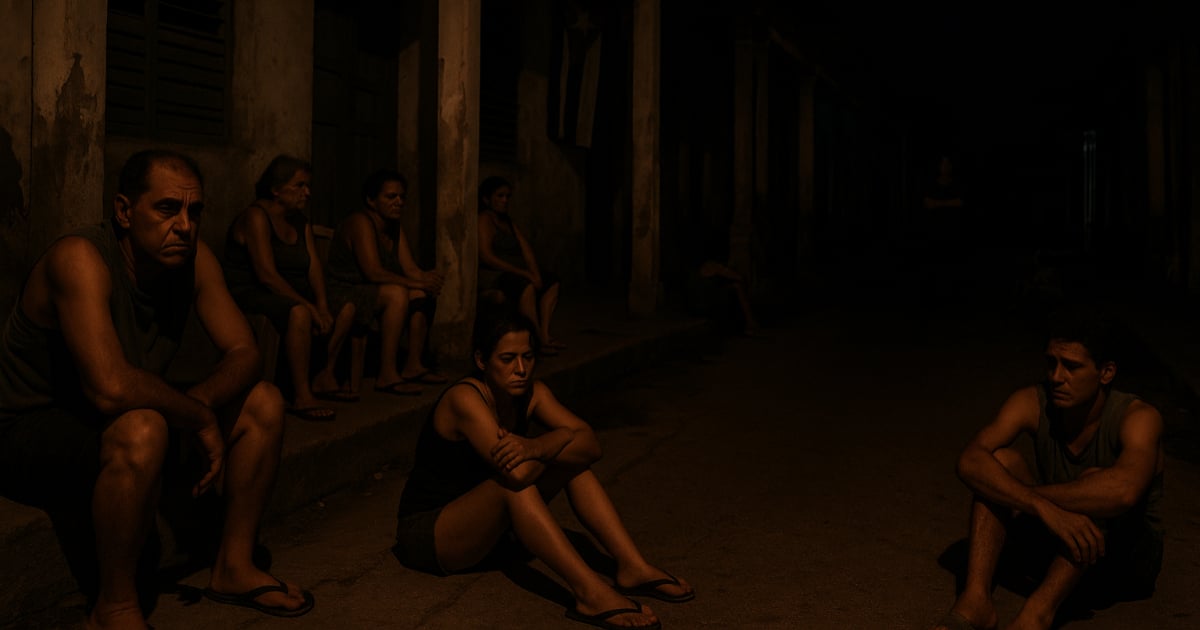
“This has become a psychological torture where human beings have lost the desire to live, to work, and even to breathe,” commented a Cuban from Matanzas, where blackouts last up to 40 hours without electrical service.
Another user expressed: "Every day in Cuba feels like a test of endurance. Life has turned into a race against the clock every time the power comes on: washing, cooking, charging phones... surviving."
Many question the lack of real solutions. “If they have no answers, why do they insist on staying? What needs to stop is not the Guiteras, but those incompetent individuals who are leading it,” pointed out another comment filled with frustration.
Citizen outrage is also directed straight at those in power. "What needs to stop are they, the damned leaders of this country. They are good for nothing," wrote one user. Another added: "It's no longer living, it's surviving. Just shoot us already, because this is not a life."
Many comments mention inequality: "They have power plants, gasoline, and food. And the people can just endure." There are also allegations of corruption and misappropriation of funds: "They are not going to use the millions that GAESA has to fix the thermoelectric plants because they prefer to continue stealing and building hotels."
Another voice expressed: "The children can't study, they can't sleep because of the heat, they have no snacks because there is no bread or electricity to cook. How can you expect anything from someone under these conditions?" Meanwhile, a mother lamented: "We can't go on like this, this is a massacre. Just kill us already, because we are being killed slowly."
From the eastern part of the country, where blackouts are more frequent, a citizen stated: “In my house, we have been without water and electricity since five in the morning for a week. What are we going to do?”
Even voices linked to the government have denounced the situation on their social media. Journalist Yirmara Torres Hernández posted on her Facebook profile: “How do you live with 28 hours of blackout for 2 hours of electricity? […] You can’t live.”
The recent widespread blackout in the eastern part of the country, which occurred on September 7, left all provinces from Las Tunas to Guantánamo without electricity. It also affected unit 6 of the Mariel thermoelectric plant and highlighted the collapse of a system that was already operating with a deficit of nearly 1,900 MW.
This event is just another one in a timeline of massive blackouts that dates back several years. Since 2023, Cuba has experienced multiple collapses of the SEN, with widespread blackouts across entire provinces, power plants out of service, and unfulfilled government promises.
The situation has generated increasing social unrest, expressed in publications, isolated protests, and direct calls for the end of the regime. “The blackouts are just the tip of the iceberg; they should be prosecuted for crimes against humanity,” wrote a visibly outraged user.
"Let them say no more that the people resist; the people survive. And that, under these conditions, is a condemnation," another one denounced.
For some time now, Cubans have been demanding not only technical solutions but also profound changes in the leadership of the country. In October 2024, following another nationwide blackout, a wave of comments openly called for the resignation of the leaders. “They should leave and hand over the country,” was one of the most shared phrases at that time.
Today, nearly a year later, and with the Guiteras thermoelectric plant about to shut down, the public perception is that nothing has changed. On the contrary, desperation has increased.
"We live in a Cuba of shadows, where hope has become a privilege," another comment stated. Meanwhile, official promises are reiterated, and the people continue to await a response that does not arrive. Or, as many say, will never come.
Frequently asked questions about the blackout crisis in Cuba
What is the main cause of blackouts in Cuba?
The main cause of blackouts in Cuba is the collapse of the National Electric System (SEN), due to a generation deficit, lack of funding, technological obsolescence, and issues with fuel supply. These factors have led to prolonged and frequent interruptions in electrical service across the island.
Why is the Antonio Guiteras thermoelectric plant crucial for the Cuban electrical system?
The Antonio Guiteras thermoelectric plant is crucial because it is the largest electricity generation unit in the country, with a capacity exceeding 200 megawatts. Its operation is essential to maintain the stability of the SEN, and its shutdown significantly exacerbates the energy crisis due to the loss of an important source of electricity generation.
How does the energy crisis affect daily life in Cuba?
The energy crisis has a devastating impact on the daily lives of Cubans. Prolonged blackouts make it difficult to preserve food, cook, supply water, and affect the health of children and the elderly. Additionally, the uncertainty regarding the availability of electricity adds stress and complicates the planning of everyday activities.
What has been the Cuban government's response to the blackout crisis?
The Cuban government has acknowledged the severity of the situation, justifying the crisis by the lack of resources and the obsolescence of the plants. However, the public perceives a lack of concrete and effective solutions, which has led to growing social discontent and distrust towards official promises of improvement.
What measures have been proposed to address the energy crisis in Cuba?
The government has announced the installation of solar parks and the purchase of mobile generation units as temporary measures. However, these solutions have not had a significant impact on reducing blackouts, and the public continues to demand structural reforms and more efficient management of energy resources.
Filed under: