
Related videos:
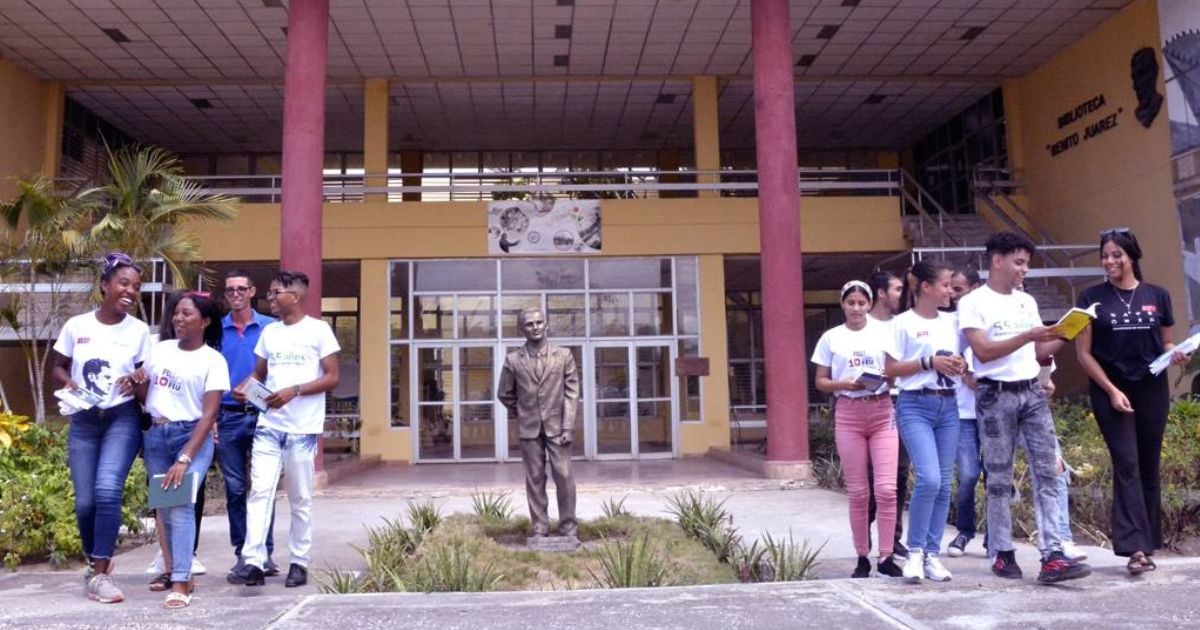
The universities of Holguín launched this week the political campaign "I Become Fidelista Here," a new "initiative" that glorifies one of the greatest dictators the continent has ever seen, designed to prepare the propaganda machinery leading up to the centenary of Fidel Castro in 2026.
The information was published by the state newspaper Ahora, which celebrated the start of the process with marches, events, and discussions at higher education institutions in the province.
According to the leadership of the University Student Federation (FEU), the goal is to “continue Fidel's legacy” through historical activities that will be replicated in all universities across the country.
The national vice president of the FEU, Litza Elena González Desdín, stated at the inaugural event that "the centennial generation of Fidel is called to promote active participation of students in the political, social, and cultural life of the country."
The statement is part of a discourse that reinforces the role of the university as a space for political indoctrination rather than as a place for plural and academic debate.
The commemorative calendar includes tributes to historical figures such as Julio Antonio Mella, Rubén Martínez Villena, and Rafael Trejo, although the central focus on Fidel Castro dominates the program, under the slogan "Here I become a fidelista."
The campaign is just another chapter in the regime's strategy to reinforce Castro's cult of personality among new generations, in a context of rising poverty, social crisis, and discrediting of the political system.
While students face power outages, a lack of resources, and academic limitations, the government prioritizes mobilizations and tributes in honor of a leader who passed away nearly a decade ago.
In the context of the propaganda campaign leading up to the centenary of the Cuban dictator, the regime has established a national ideological machinery aimed at glorifying his figure in all areas of public life.
The program “Fidel Among Us” was designed to be integrated into educational institutions, media, state agencies, and workplaces, through a network of activities that include contests, tributes, seminars, and indoctrination.
As part of this strategy, a national campaign was launched that seeks for all Cubans to “know, defend, and love Fidel,” as stated by official spokespeople.
The purpose is clear: to ensure the ideological reproduction of Castroism in new generations, amidst a scenario of structural crisis and growing social discontent.
To achieve this, student brigades have been activated, the use of personality cult on social media has been encouraged, and state media have been instrumentalized as vehicles for political exaltation.
In various locations across the country, symbolic acts and declarations of loyalty to the dictator's legacy have taken place. The most recent commemoration included ceremonies in schools, workplaces, and mass organizations, where the commitment to Fidelista thought was reiterated as the foundation of "revolutionary continuity."
Far from addressing a popular demand, these actions are part of a top-down campaign designed by the party structure to ideologically safeguard the regime.
Frequently Asked Questions about the "Here I Become a Fidelista" Campaign in Cuba
What is the "Here I Become a Fidelista" campaign?
The campaign "Here I Become a Fidelista" is a political initiative launched by the universities of Holguín to commemorate the centenary of Fidel Castro in 2026. It is designed to prepare the propaganda machinery and reinforce the cult of personality around Castro among new generations, in a context of social and economic crisis in Cuba.
What is the objective of this campaign in Cuban universities?
The goal is to "continue Fidel's legacy" through historically focused activities at universities in Cuba. The campaign aims to reinforce the role of the university as a space for political indoctrination rather than as a place for plural and academic debate, promoting the active participation of students in the political, social, and cultural life of the country.
How does this campaign relate to the current situation in Cuba?
The campaign takes place in the context of growing poverty, social crisis, and discredit of the political system. While students face blackouts, lack of resources, and academic limitations, the government prioritizes mobilizations and tributes in honor of a leader who passed away nearly a decade ago, instead of addressing the structural problems of the country.
What activities are included in the commemorative campaign calendar?
The commemorative calendar includes tributes to historical figures such as Julio Antonio Mella, Rubén Martínez Villena, and Rafael Trejo. However, the centrality of Fidel Castro dominates the program, under the slogan "Here I become a Fidelista," with activities designed to reinforce his figure as a symbol of the Cuban Revolution.
What is the Cuban government's stance regarding the criticisms of this campaign?
The Cuban government, led by Miguel Díaz-Canel, has reiterated its willingness to pursue and deactivate any critical manifestation. This includes both the digital realm and public spaces, under the pretext of defending the homeland from what it describes as "hatred" and "ignorance," reinforcing ideological control over the population.
Filed under: