In Láncara, Galicia —the birthplace of the father of the late dictator Fidel Castro— the Cuban regime's embassy in Santiago de Compostela celebrated this Wednesday the beginning of the Year of Fidel's Centenary, coinciding with the 99th anniversary of his birth.
The event took place at the "Ángel Castro" House Museum, home of the Galician Emigration Interpretation Center. The commemoration included the symbolic planting of a tree, which the regime presented as a tribute to the memory of its historical leader.
An event with a propagandistic focus
The ceremony, organized together with the Láncara-Cuba Friendship Association, was attended by the ambassador of Havana in Madrid, Marcelino Medina González, Galician authorities, members of political and union organizations, Cubans residing in Spain, and groups in "solidarity" with the Cuban government.
Political exaltation ceremony
During the interventions, the speakers praised the figure of the Cuban dictator, emphasizing what they described as the "significance" of his work and thought. They also highlighted the historical ties between Galicia and Cuba and took the opportunity to reiterate the official stance against the U.S. embargo, which they referred to as a "criminal blockade."
These types of celebrations abroad, especially in European countries, are part of the Cuban regime's strategy to project a sanitized image of its history internationally, while within the island, economic crisis, political repression, and social discontent persist.
The "Ángel Castro" House Museum, located in Láncara, was inaugurated in 2022 during a ceremony attended by special guests Emma Castro Ruz, the youngest child of the Galician emigrant in Cuba, and her niece Mariela Castro Espín.
The birthplace of Fidel's father, Raúl Castro, and his brothers could not be transformed until that year due to the difficulties in processing associated with a property divided among more than 20 heirs.
The obstacle was overcome with the free transfer of the property by the family to the Láncara-Cuba Friendship and Solidarity Association; a process that was facilitated by the efforts of Antonio Sobrado, president of the promotional team and entrepreneur from Láncara.
The regime kneels before the memory of Fidel
This Wednesday, the Cuban regime launched an intensive schedule of tributes across the country to commemorate the birthday of Fidel Castro.
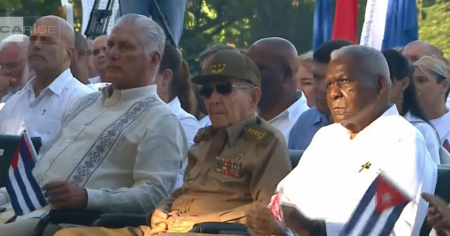
The ruler Miguel Díaz-Canel Bermúdez and his wife, Lis Cuesta, visited in Santiago de Cuba the stone that holds the ashes of Fidel Castro, in the Santa Ifigenia cemetery, as part of the official activities for the 99th anniversary of the dictator's birth.
At the same time, symbolic events were held in his father's hometown and in other key locations associated with the leader, such as exhibitions, conferences, and cultural galas, each aimed at celebrating his legacy and revitalizing his image as an essential ideological symbol.
The events are not limited to official venues: thousands of young communists each year, take part in recreations and street events.
These activities, supported by the Communist Party and cultural organizations, aim to keep the Castro memory alive among new generations, in a context marked by economic crisis and social discontent, once again highlighting the priority the regime gives to propaganda over the actual demands of the population.
Frequently asked questions about the commemoration of Fidel Castro's birth in Galicia
Why does the Cuban regime commemorate Fidel Castro's birthday in Galicia?
The commemoration of Fidel Castro's birthday in Galicia is due to the fact that Láncara is the birthplace of the Cuban dictator's father. The event, which included a symbolic planting of a tree, was organized by the Cuban regime's embassy in Santiago de Compostela and the Láncara-Cuba Friendship Association, as part of a tribute to Fidel Castro.
What is the objective of the Cuban regime in holding these tributes abroad?
The Cuban regime seeks to project a sanitized image of its history internationally, using these celebrations to exalt the figure of Fidel Castro and reinforce its historical narrative. However, within Cuba, economic crisis, political repression, and social discontent persist, contrasting sharply with the government's propaganda efforts.
How does the current crisis in Cuba affect the commemoration of Fidel Castro's birth?
Despite the severe economic and social crisis facing Cuba, the regime continues to prioritize propaganda and the glorification of Fidel Castro's figure. While the population suffers from blackouts, shortages, and repression, the government allocates resources to commemorate the past instead of addressing the current needs of Cubans.
What does the figure of Fidel Castro symbolize for the Cuban regime today?
The figure of Fidel Castro is used by the Cuban regime as a symbol of legitimacy and continuity. Through tributes and propaganda, the government seeks to maintain its ideological control and present Fidel Castro as an essential historical reference, despite the criticisms and social discontent that this exaltation generates.
Filed under: