
Related videos:
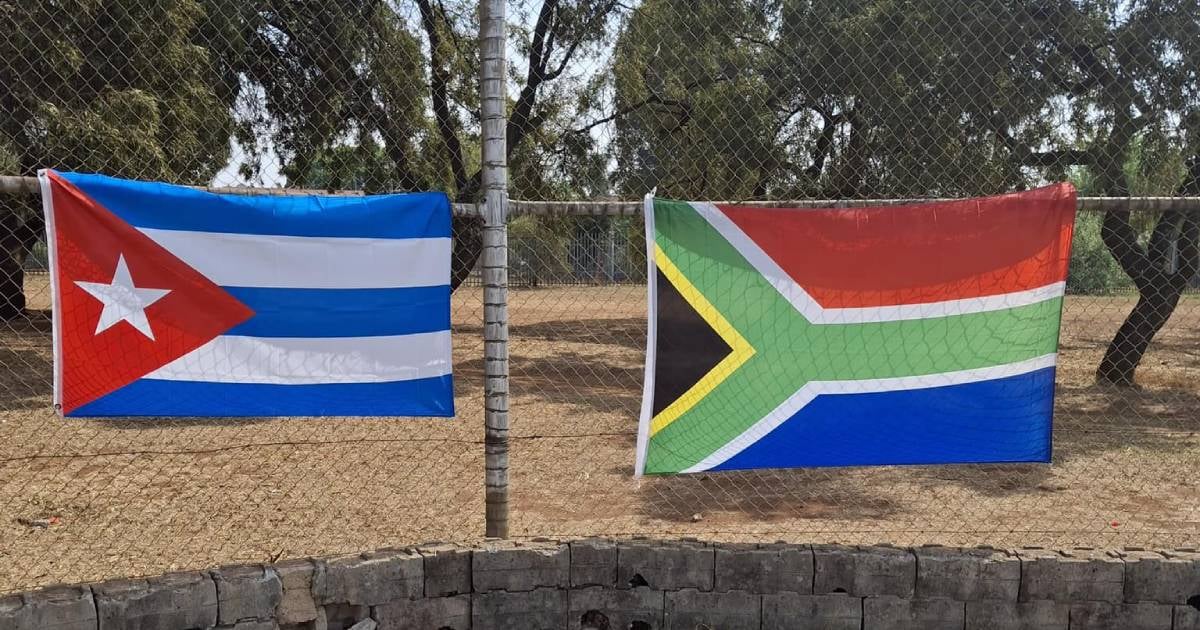
A new wave of criticism emerges against the military cooperation between Cuba and South Africa, now questioned as an “ideological vanity project” that drains millions of public resources while the people of both countries grapple with deep crises.
According to the specialized portal DefenceWeb, the South African opposition has accused that the Kgala Project, formerly known as the Thusano Project, will send 20 officers from the South African National Defence Force (SANDF) to the island next year for unaccredited training.
The Democratic Alliance (DA) MP, Chris Hattingh, described the initiative as a waste of 28 million rands (about 1.54 million dollars) that, in practice, delays the actual training of soldiers, as the first year is solely dedicated to learning Spanish.
"The armed forces have their own schools that offer exactly the same courses, and furthermore, with academic accreditation", warned the legislator, while defense experts consulted by the local press stated that the program in Cuba "is, at best, a waste of money and time."
A history of controversies with Havana
The statement does not come in a vacuum. Last July, public opinion in South Africa erupted when it was revealed that the Department of Defense spent 34 million rands (almost 1.9 million dollars) on a luxury charter flight to Cuba to attend a military graduation ceremony.
More than 200 military personnel traveled on a chartered plane from Cobra Aviation, equipped with business class seats, gourmet catering, and fine cutlery, amid a crisis where South African soldiers lack boots and basic uniforms. The opposition called the operation "an insult to the citizenry."
A week later, the South African government itself came forward to defend its actions, claiming that the flight aimed to repatriate 212 medical and engineering students trained in Cuba and did not attend the ceremony. However, the Democratic Alliance insisted that it was an unjustifiable luxury and called for a parliamentary investigation into the expenses of the Kgala Project.
Cuba, the most scrutinized partner
The military cooperation between Pretoria and Havana has been sustained for more than a decade and is framed within the historical political ties between the African National Congress (ANC) and the Cuban regime.
The agreements have included the deployment of hundreds of South African soldiers to Cuban academies, as well as the hiring of doctors, technicians, and engineers from the island for tens of millions of dollars.
But this closeness today generates rejection within South Africa, where opposing voices and analysts believe that Cuba represents “the costly and unproven exception” compared to other strategic partner countries such as the United States, the United Kingdom, India, or even local universities themselves.
While Pretoria spends millions on programs deemed unproductive, in Cuba the background is different because these agreements represent an influx of foreign currency for a regime suffocated by its worst economic crisis in decades, as the population endures daily blackouts, food shortages, under-resourced hospitals, and an unprecedented migration exodus.
The controversy in South Africa once again highlights how Miguel Díaz-Canel's government keeps its economy afloat through political and military agreements that have little to do with the reality faced by ordinary Cubans.
Filed under: