
Related videos:
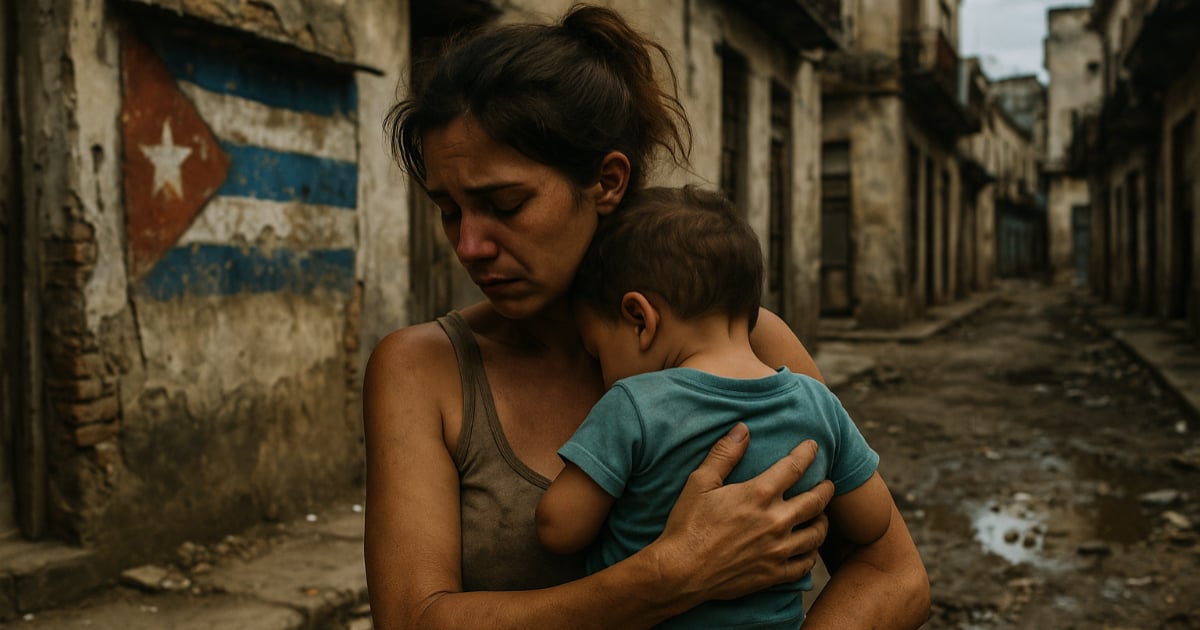
The desperation to leave Cuba has reached extreme levels: a mother confessed that she would be willing to give up a kidney just to be able to leave the country with her son.
According to a revelation made this Tuesday by journalist Mario J. Pentón on his social media, he received a message in which a woman asked if there was any institution that would allow her to make a contract to donate an organ in exchange for emigrating.
"I swear I am willing to give a kidney to get out of Cuba with my son," wrote the woman, who claimed to feel overwhelmed by the crisis.
In her testimony, the mother emphasized that she is not looking for housing or material assistance, but rather a way to emigrate: “I don’t want shelter, I don’t want anything, just take me, and I’ll go straight to the hospital and do it. Does that exist?”
His words reflect the anguish of thousands of Cubans trapped between economic hardship, blackouts, shortages, and a lack of future for their children.
Pentón, while sharing the messages, denounced what he described as a humanitarian crisis on the island.
"Look at the messages I receive daily and tell me if it's not true that the country has hit rock bottom. Only those who benefit from the Cuban tragedy refuse to see reality," he wrote, accompanied by the hashtag #SOSCUBA.
The journalist assured that he will continue to highlight these stories despite the attacks and threats he receives for his publications. "I've already made it clear: this is until the end," he concluded.
As unbelievable as this devastating story may seem, it is not the only nor the first time a parent is willing to make such a sacrifice for a better future for their children.
In August, the story of Iseilys Valdés Oña came to light, a resident of Santa Cruz del Norte, Mayabeque, who lives with her 11-year-old daughter in a borrowed room, with deteriorating walls and ceiling and a risk of collapse.
In a post on his social media, Valdés wrote: "I'm selling one of my kidneys to be able to buy a decent little house for my daughter, at least leaving her with something in this life. To those who will criticize, thank you, I'll lend you my shoes so you can wear them. You can imagine how I am when I make public what I'm going through."
In 2023, the Cuban father Jorge Yanko Heredia Oliveros, offered his son for adoption to someone living outside of Cuba because he does not want the little one to suffer further hardships.
"I'm looking for a serious and responsible person who lives in a free country and wants to adopt a 12-year-old child. I am his father and I already have permission from his mother to put him up for adoption because it pains us to see that we can't even provide him with breakfast," Jorge said on his Facebook profile.
In December of that same year, a Cuban mother with three children revealed that she was willing to sell a kidney to be able to feed them, a testimony that shocked many due to the harshness of her decision and the extreme precariousness her family faced.
Just a few weeks earlier, another woman had admitted that she felt capable of selling an organ to feed her child, reflecting the same pattern of desperation in the face of a lack of income and support to ensure the most basic needs.
Frequently Asked Questions about Desperation and Migration Crisis in Cuba
Why is a Cuban mother willing to donate a kidney to emigrate?
The Cuban mother expressed her willingness to donate a kidney as an extreme measure to leave the country with her son, due to the desperation caused by the economic crisis, blackouts, shortages, and lack of future in Cuba. This case reflects the level of distress many Cubans reach in search of a better life outside the island.
What does the migration crisis in Cuba reflect?
The migration crisis in Cuba reflects a profound economic and social deterioration, where many people are willing to sacrifice valuable possessions, such as their homes, to emigrate. The desperation is so great that properties are being offered in exchange for plane tickets, highlighting the lack of prospects and the feeling of having no future on the island.
How does the crisis in Cuba impact families and children?
The crisis in Cuba deeply affects families and children, creating situations of scarcity, malnutrition, and lack of access to basic needs. Mothers face the difficult task of explaining to their children the lack of resources and the constant blackouts, which are marking the childhood of many with deprivation and sadness.
What role does the Cuban government play in the current situation?
The Cuban government is criticized for its inability to resolve the health and economic crisis, which has led to a massive exodus and a decline in the quality of life. Despite official claims of improvements in the healthcare system, the reality is a constant shortage of supplies and basic services, leaving Cuban families in a state of extreme vulnerability.
Filed under: