
Related videos:
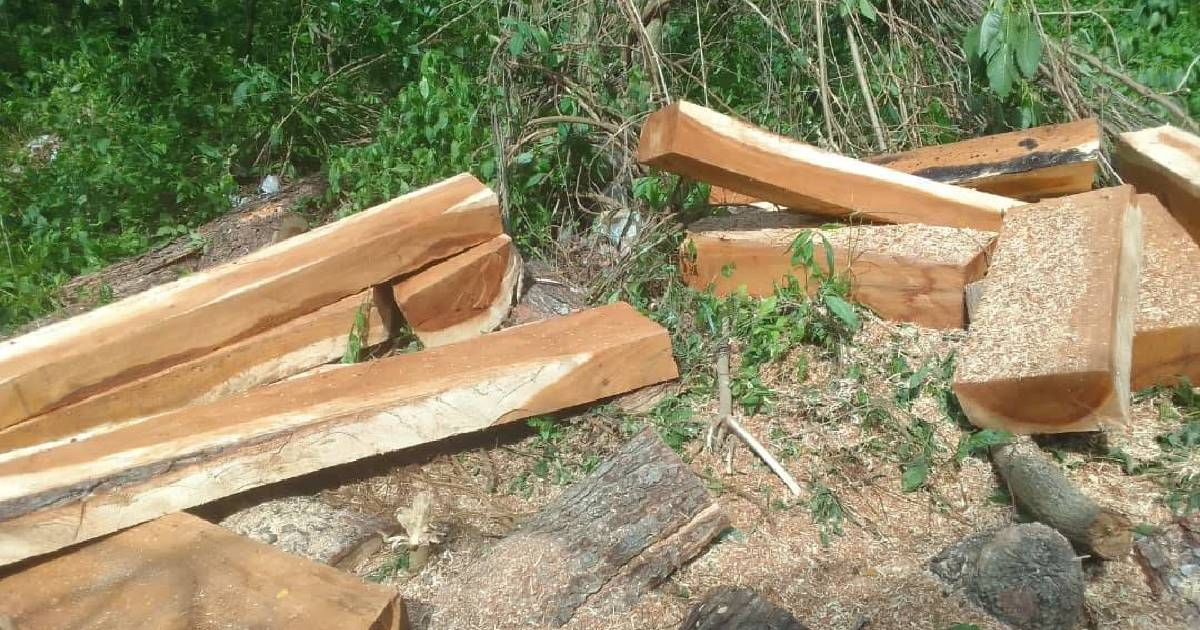
The illegal logging of forests in the province of Holguín resulted in several arrests, following joint operations by the Forestry Corps and other authorities in municipalities such as Mayarí, Cacocum, and Báguanos, reported the regime on social media.
The page of Facebook of the regime "Realidades desde Holguín" claims that the individuals involved "were caught engaging in the reception of sawn timber, logging in protected areas, and selling in the informal market."
According to the authorities, among the most affected areas is the hydro-regulatory belt of the Holguín River, where disruptions have been detected that jeopardize ecosystems and biodiversity. Legal proceedings have already been initiated against the involved citizens, the note emphasizes.
Illegal deforestation in natural reserves has been described as a direct threat to the environmental balance of the region. "Flora predators cannot jeopardize our surroundings," they stated in a statement.
This phenomenon of logging for sale in the black market is compounded by a widespread reality throughout the country: thousands of families resort to cutting down trees for cooking amid the energy and food crisis.
With power outages of up to 20 hours a day and the prolonged suspension of liquefied gas, many households have resorted to makeshift wood stoves, even using recycled furniture.
The Food Monitor Program (FMP) warns that the practice, driven by the urgency of survival, is causing a serious environmental impact: loss of biodiversity, soil erosion, prolonged droughts, and increased pollution.
The price of coal, which exceeds the amount of a minimum pension, has left many families with no choice but to resort to firewood. “How can we demand that a family not cut down a tree if the alternative is not eating?” states the report, which describes an ethical dilemma between food insecurity and environmental devastation.
The FMP reminds us that logging for cooking purposes is not exclusive to Cuba: similar situations have been documented in Venezuela during its energy crises.
In the Cuban case, the issue threatens fragile ecosystems in a country with high levels of endemism in both flora and fauna.
The report criticizes the state inaction and reminds that in 2019, the authorities themselves promoted firewood as a "patriotic solution" in response to power outages, a practice that has now become normalized and signifies a setback in the quality of life. “A society that consumes at the expense of its environment erodes the foundations of its future,” warns the organization.
Cuban mothers, overwhelmed by the crisis, are demanding solutions from the government and point out that turning to wood-burning stoves has become unavoidable to prevent their children from going hungry.
Frequently Asked Questions about Illegal Logging and the Energy Crisis in Cuba
Why is illegal logging occurring in Holguín?
Illegal logging in Holguín is driven by families' need to obtain wood for cooking due to the energy and food crisis facing Cuba. The shortage of liquefied gas and prolonged power outages force many people to cut down trees to use firewood as fuel. This has led to deforestation that threatens the region's ecosystems.
What impact does illegal logging have on the environment in Cuba?
Illegal logging is causing a severe environmental impact in Cuba. The loss of biodiversity, soil erosion, and increased pollution are some of the most direct consequences. Furthermore, deforestation reduces forest cover and increases vulnerability to natural phenomena such as hurricanes and droughts.
How does the energy crisis affect the daily lives of Cubans?
The energy crisis in Cuba has transformed the everyday life of millions of people. The lack of electricity and liquefied gas forces families to resort to outdated and unhealthy methods of cooking, such as using firewood or charcoal. This not only affects the quality of life but also poses health risks due to the inhalation of toxic fumes.
What responsibility does the Cuban government have in the energy and environmental crisis?
The Cuban government has faced criticism for its inaction regarding the energy and environmental crisis. The lack of modernization of the electrical infrastructure and the promotion of firewood as a solution to blackouts highlight inadequate management. This situation, worsened by the economic crisis, has resulted in millions of Cubans living without stable access to energy and in precarious conditions.
Filed under: