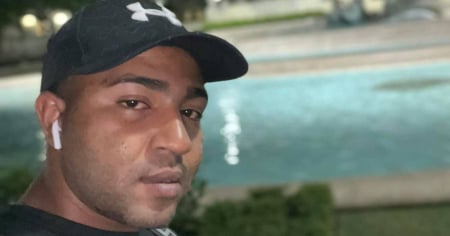
A Cuban citizen who benefited from the humanitarian parole program, allegedly “expired,” was arrested in Sarasota, Florida, after being caught driving under the influence of alcohol and with an expired driver's license.
The images, captured by the body cams of the officers at the end of August, and shared on the Instagram of UniVista TV, show the man visibly agitated as he repeatedly shouted: “Don’t do this to me! I’m going to be deported!”.
Aware of her immigration status, she knew that the consequences of her arrest could be devastating, as a charge of driving under the influence (DUI) could lead to the revocation of her legal status and a potential deportation process to Cuba.
The video shows the Cuban behind the wheel of a luxury car - a Mercedes-Benz SLK - when he is pulled over by the police. Following the officer's order, he got out of the vehicle and was subjected to a sobriety test on the street. The man had difficulty walking in a straight line and was ultimately handcuffed.
During the arrest, one of the officers, in a respectful manner, responded: “Iván, I know you’re not a bad person, but you made a bad decision. That was your decision,” making it clear that the consequences stemmed from his own behavior.
Driving under the influence is considered a serious offense in the United States, and even more so if the offender has temporary immigration status or is in the process of regularization. According to local media, the Cuban also had his Parole suspended, which further complicates his legal situation.
The case has sparked a wide debate on social media: while some demand that the law be upheld without exception, others point out that many migrants face highly vulnerable situations that ultimately lead them to lose the opportunities they gained upon arriving in the United States.
Otaola to Cubans with I-220A and I-220B: "The good ones won't be deported."
The case of the Cuban arrested in Sarasota occurs at a time of great uncertainty for the migrant community in the United States, especially after President Donald Trump granted new powers to Immigration and Customs Enforcement (ICE) to expedite deportation processes.
In January of this year, amid the growing fear among beneficiaries of immigration programs such as Parole or Cubans holding documents I-220A and I-220B, the host Alexander Otaola sent a message of reassurance through his program.
"You have your job, you've completed your paperwork, you are in the process of adjusting your status, your license is up to date, and your car insurance is current. You have no issues; you will not be deported," he stated, addressing those who meet the legal requirements and have no criminal record.
The influencer emphasized that those most exposed are individuals who have been in prison, have a criminal record, or have committed offenses in the United States, as they are considered a priority by the authorities in deportation proceedings.
In this context, the arrest of the Cuban in Sarasota takes on greater significance: an incident of driving under the influence not only carries criminal penalties but can also become a determining factor in his continued residency in the country.
Migration experts insist that Cubans under supervision status — such as those holding I-220B — must take extra precautions to avoid engaging in offenses that could expedite their departure from the United States.
Although the Cuban Adjustment Act opens the door to permanent residency after one year, the process can become complicated if the immigrant has a criminal background.
Filed under: